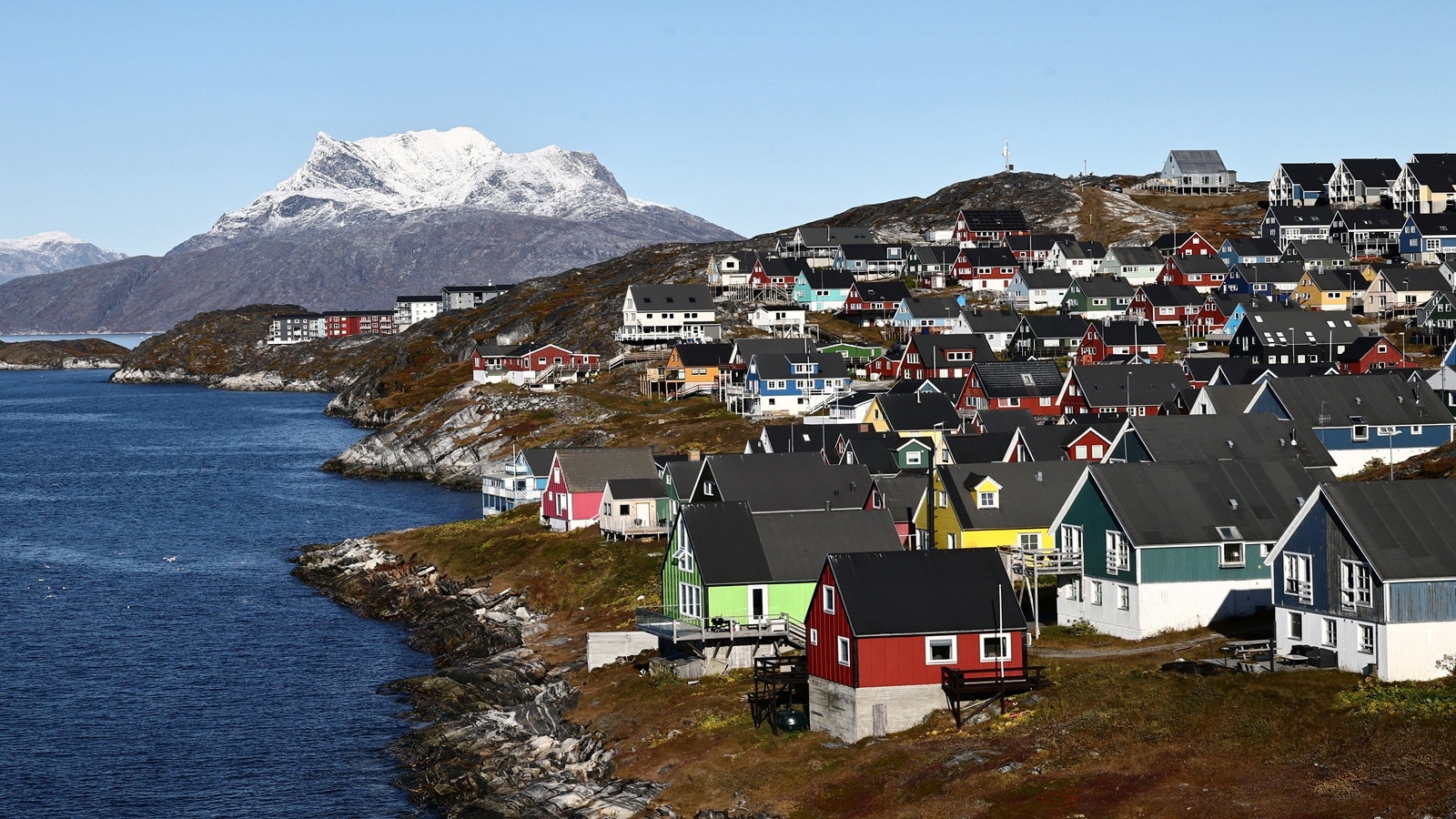
In early November 2026, lawmakers in Nuuk cast 16 votes in favor, zero against, and seven abstentions to ratify a trilateral security pact with Washington and Copenhagen. Two weeks later, on November 19, the Danish parliament followed suit with a unanimous 109-0 vote. On paper, the 2026 US-Denmark-Greenland agreement ends months of open hostility triggered by President Donald Trump’s repeated threats to annex the world's largest island. In practice, the accord hands the Pentagon permanent operational footprints in the High North without a single dollar of guaranteed economic compensation for the 57,000 people living there.
Diplomats in Brussels and Copenhagen celebrated the ratification as a triumph of alliance management. That celebration misses the structural reality of what just happened. When a superpower threatens to seize a territory by economic or military coercion, and the defending coalition responds by granting that superpower indefinite basing rights, underwater surveillance access, and an investment veto over local infrastructure, the transaction is not a compromise. It is an asymmetric settlement designed to pacify Washington while leaving Nuuk to absorb the domestic fallout.
The Anatomy of an Asymmetric Accord
To understand what Greenlandic lawmakers actually approved, look past the ceremonial signing at United Nations Headquarters in New York on September 22, 2026. Signed by Trump, Danish Prime Minister Mette Frederiksen, and Greenlandic Prime Minister Jens-Frederik Nielsen, the text operates as an amendment and supplement to the 1951 Greenland Defense Agreement. Because Washington classified the pact as an executive agreement, it bypasses the United States Senate entirely, taking legal effect the moment Denmark delivers a formal diplomatic note confirming domestic ratification.
The operational concessions inside the treaty alter the strategic geometry of the North Atlantic. First, the pact removes expiration dates. Unlike standard status-of-forces arrangements that require periodic renewal, this supplement has no end date. Second, it authorizes the United States to establish two new dedicated defense areas on the island, specifically at Narsarsuaq in the south and Mestersvig in the east. Third, the preamble and accompanying provisions clear the legal runway for Washington to deploy components of Trump’s Golden Dome missile defense architecture alongside expanded underwater access along Greenland's coastline.
Copenhagen and Nuuk secured one primary political concession in return. The text explicitly affirms Danish sovereignty and recognizes Greenlanders' right to self-determination. Yet even that recognition comes with a permanent tether. Under the agreement, if Greenland ever votes for full independence from Denmark, the island must remain inside NATO and keep the bilateral defense obligations intact.
| Provision | 1951 Defense Framework | 2026 Trilateral Supplement |
|---|---|---|
| Primary Footprint | Concentrated at Pituffik Space Base (formerly Thule) | Expands to new defense areas at Narsarsuaq and Mestersvig |
| Domain Access | Air, surface, and radar warning installations | Adds explicit underwater access and missile defense deployment |
| Foreign Capital | Subject to Danish and Greenlandic screening laws | Blocks non-NATO and non-EU states from strategic sectors |
| Duration | Tied to the duration of the North Atlantic Treaty | No end date; persists even after Greenlandic independence |
For defense planners in Washington, the geographic logic is obvious. Pituffik sits in the far northwest, ideal for ballistic missile early warning and space surveillance, but poorly positioned for monitoring maritime chokepoints in the Greenland-Iceland-United Kingdom gap. Adding Mestersvig on the rugged eastern coast gives American forces a direct window onto the Greenland Sea and Russian naval traffic exiting the Arctic. Narsarsuaq at the southern tip anchors airlift and maritime logistics where the North Atlantic meets the Labrador Sea. Together, the two sites turn Greenland from a passive radar outpost into an active, multi-domain forward operating platform.
Why Nuuk Blinked Under Pressure
The political theater surrounding the ratification masked deep fractures inside Greenland's parliament, the Inatsisartut. While Copenhagen’s Folketing passed the measure without debate or a single dissenting vote, Nuuk’s 16-0 tally with seven abstentions told a far messier story.
Since January 2025, Trump’s refusal to rule out military or economic force to acquire the territory had paralyzed local governance. Senior officials in Nuuk described the past two years as an exhausting siege that seeped into daily life. Faced with an American administration openly floating annexation, Nielsen’s coalition chose containment over confrontation. In a public statement defending the vote, Nielsen argued that Greenlanders had stood firm on their principles and chosen dialogue to protect their right to shape their own future.
Opposition lawmakers saw capitulation instead of statesmanship. The pro-independence party Naleraq boycotted the affirmative tally, demanding a public referendum and arguing that Greenland surrendered massive strategic territory without extracting concrete financial returns. The dispute turned bitter enough that Foreign Minister Múte B. Egede accused Naleraq members of leaking classified negotiation details, triggering a formal police report.
Outside the capital, skepticism runs even deeper. Local municipal leaders have pointed out a glaring omission in the treaty text. During the Cold War and subsequent decades, American bases in Greenland operated under arrangements that generated minimal direct tax revenue for the self-governing territory. The 2026 pact repeats that pattern. No guaranteed infrastructure fund exists in the articles. No local hiring quotas bind Pentagon contractors. Avannaata Municipality Mayor Lars Erik Gabrielsen summarized the prevailing mood across northern towns bluntly, noting that while the pact works well for Denmark and NATO, it delivers zero money and zero tangible benefits to Greenlandic society.
The Hidden Resource Trap and the Chinese Veto
Read the fine print on economic security, and the true strategic price of the agreement becomes clear. Beyond military bases, the pact prohibits nations outside NATO and the European Union from gaining influence or holding stakes in Greenland's strategic sectors.
This clause targets Beijing directly. For more than a decade, Chinese state-backed firms sought footholds in Greenlandic airport construction, rare earth mining, and port development. Washington and Copenhagen previously blocked those bids on an ad-hoc basis, often causing diplomatic friction with Nuuk whenever local officials wanted foreign capital to build basic transport infrastructure. The 2026 agreement codifies that exclusion into permanent international law.
The Friction Over Subsurface Wealth
By locking out non-Western capital, the treaty leaves Greenland entirely dependent on American and European investors to develop its vast deposits of rare earth elements, zinc, and uranium. That dependency collides immediately with domestic environmental law.
In October 2026, just weeks after signing the accord, Trump boasted publicly that massive oil, gas, and mineral exploration was set to begin across Greenland. The statement sparked immediate pushback in both Nuuk and Copenhagen. Greenland maintains a strict moratorium on new oil and gas exploration, alongside tight environmental restrictions on uranium mining. Danish officials quickly clarified that any commercial resource extraction must comply with local Greenlandic legislation.
Here lies the central contradiction that will test the agreement over the next five years:
- Washington's expectation: The White House views the security pact as an open door for American extractive industries to break China's global monopoly on critical minerals.
- Nuuk's legal reality: Greenland's government holds exclusive jurisdiction over subsurface resources under the 2009 Self-Government Act, and its electorate remains deeply divided over large-scale mining.
- The capital vacuum: Without Chinese state-subsidized financing, Western mining companies often balk at the astronomical costs of building roads, ports, and power grids in sub-zero terrain without federal subsidies.
If American mining firms fail to materialize—or if Washington pressures Nuuk to waive environmental bans to speed up extraction—the truce achieved in September will fracture fast.
What the Headlines Miss About Golden Dome and Arctic Warfare
Military analysts examining the text have noted an intriguing ambiguity. While the preamble explicitly cites a shared interest in establishing the Golden Dome missile defense system, the binding articles do not specify which weapons, interceptors, or radar arrays Washington will actually deploy.
That omission is deliberate. Building hardened missile defense silos in eastern or southern Greenland requires years of engineering, billions of dollars in congressional appropriations, and extensive environmental assessments. By placing Golden Dome in the preamble rather than the operative clauses, negotiators gave Trump a major rhetorical victory he could sell at home—claiming the United States effectively secured Greenland—while giving Pentagon planners flexibility over timelines and budgets.
Yet even without immediate interceptor silos, the authorization for underwater access carries immense operational weight. Modern Arctic warfare is fought beneath the ice pack and along the seabed. Subsea fiber-optic cables carrying transatlantic financial data and military communications run directly past Greenland's southern tip. Russian nuclear-powered submarines operating out of the Kola Peninsula regularly transit the deep trenches between Greenland and Svalbard.
Granting the U.S. Navy unrestricted legal standing to deploy acoustic sensor networks, unmanned underwater vehicles, and anti-submarine infrastructure in Greenlandic waters closes a critical intelligence gap. It also places Greenland squarely in the crosshairs of Russian strategic targeting. If conflict ever erupts between NATO and Moscow, Narsarsuaq and Mestersvig will not be quiet logistical backwaters. They will be primary targets.
Sovereignty in Name Only
Danish Prime Minister Mette Frederiksen and Foreign Minister Lars Løkke Rasmussen framed the unanimous vote in Copenhagen as the restoration of normal transatlantic relations. That framing relies on a legal fiction.
In international law, sovereignty means the supreme authority of a state within its territory. When a small nation signs an indefinite treaty allowing a foreign military to carve out autonomous defense zones, dictate which foreign companies may invest in its economy, and bind its future independent government to a military alliance, sovereignty becomes heavily conditional.
Copenhagen avoided an existential rupture inside NATO by trading away operational control over territory it no longer fully governs anyway. Washington neutralized the annexation crisis by getting almost everything a purchase would have delivered—bases, sea access, missile defense sites, and a strategic veto over Beijing—without paying a cent to buy the land or assuming responsibility for Greenland's social welfare budget.
Nuuk received a piece of paper promising respect for its self-determination, signed by a president who repeatedly claimed afterward that America now owns the island.
The Coming Test in Nuuk
Once the Danish Foreign Ministry transmits its final diplomatic note to the State Department, the 2026 agreement enters full force. That procedural step will close the diplomatic crisis of 2025 and 2026, but it opens a volatile new phase in Arctic politics.
Greenlandic leaders now face the task of explaining to skeptical voters why foreign troops are arriving in Narsarsuaq and Mestersvig while local schools, hospitals, and fisheries see no direct windfall from the deal. Simultaneously, Nuuk must negotiate side agreements covering environmental cleanup, criminal jurisdiction over American contractors, and commercial air access at dual-use airfields—the exact practical details left unresolved by the framework treaty.
Trust between Nuuk, Copenhagen, and Washington remains fragile. A treaty signed under the shadow of coercion rarely produces genuine partnership; it merely formalizes the balance of power at the moment the ink dries.