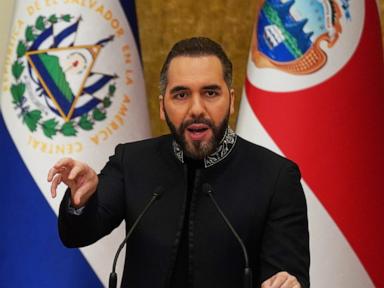
Two bodies discovered in the violent crossfire of gang-controlled Port-au-Prince are not the missing Salvadoran nationals feared dead, according to an urgent public denial from El Salvador’s President Nayib Bukele. The high-stakes clarification cuts through days of swirling rumors regarding a group of Salvadoran contractors and humanitarian workers who vanished while operating inside Haiti’s collapsing capital. While the remains recovered by local authorities belong to other victims of the country’s ongoing security breakdown, the fate of the missing Central Americans remains dangerously unresolved.
The confusion began when unverified reports circulated across regional media and social platforms, linking recently discovered corpses in Haiti to a group of Salvadorans reported missing earlier in the week. In a region where transnational crime, diplomatic friction, and information vacuums collide daily, a rumor of dead foreign nationals carries massive political weight. Bukele moved swiftly to shut down the speculation, stating unequivocally that forensic and diplomatic checks confirmed the bodies were not his citizens. If you found value in this article, you should read: this related article.
Yet a denial of death is not proof of life. Behind the immediate headline lies a much darker reality about why Salvadorans are operating in one of the most dangerous cities on earth, how diplomatic intelligence functions when a host state has virtually collapsed, and what happens when a government built on an image of total security confronts a crisis beyond its borders.
The Anatomy of a Diplomatic Scramble
When citizens vanish in a functional state, ministries of foreign affairs rely on police liaison officers, hospital registries, and formal intelligence sharing. Haiti offers almost none of that infrastructure. With armed coalitions controlling roughly eighty percent of Port-au-Prince, the traditional mechanisms of consular protection have disintegrated. For another look on this development, check out the latest coverage from BBC News.
Verifying the identity of recovered bodies in Haiti requires navigating a fractured network of international peacekeepers, private security contractors, overwhelmed morgues, and local informants. A body found on a street corner in the Haitian capital rarely comes with identification papers or a clean chain of custody.
For San Salvador, the stakes of getting this identification wrong were enormous. Had Bukele’s administration allowed the narrative of murdered Salvadorans to solidify, domestic pressure for an immediate, aggressive response would have skyrocketed. Conversely, prematurely declaring them dead before exhausting every intelligence channel would have triggered a public relations disaster if the men later surfaced in a ransom video.
By stepping in personally to refute the identification, Bukele bought his administration critical time. The statement served two distinct audiences. At home, it reassured families and a watchful public that the government had eyes on the ground. Abroad, it signaled to whatever armed faction might be holding the missing men that San Salvador was tracking the situation closely and would not be fooled by misdirection.
Why Salvadorans Are Inside a Failing State
To understand how Salvadorans ended up missing in Port-au-Prince, you have to look at the strange, shifting geography of modern security and contracting. For decades, El Salvador was known globally as an exporter of gang violence. Today, following Bukele’s massive domestic crackdown and the incarceration of tens of thousands of suspected gang members, the country has aggressively rebranded itself as an exporter of security expertise and regional stabilization.
That rebranding has put Salvadoran personnel on the ground in places most governments avoid. Earlier in the stabilization effort, El Salvador committed military and medical personnel to support the Kenya-led Multinational Security Support mission in Haiti. Alongside official deployments, a quieter wave of private contractors, logistics specialists, telecommunications technicians, and NGO workers from Central America has flowed into the Caribbean nation.
These individuals fill vital operational gaps. International missions and aid organizations desperately need Spanish- and Creole-adjacent logistical support, mechanics who can keep armored vehicles running in brutal conditions, and security veterans accustomed to operating in dense, hostile urban terrain.
Working in Port-au-Prince, however, bears little resemblance to patrolling San Salvador. In El Salvador, the state holds an overwhelming monopoly on violence, backed by suspended constitutional rights and unified military command. In Haiti, armed coalitions like Viv Ansanm operate with heavy weaponry, decentralized leadership, and zero fear of state retaliation. A wrong turn off a main artery in Port-au-Prince does not lead to a checkpoint; it leads to an ambush.
The Fog of Information in Port-au-Prince
Misinformation is not a byproduct of the Haitian crisis. It is a primary weapon used by every faction on the ground.
When gunfire erupts in a contested neighborhood, rival gangs, local journalists, and panic-stricken residents flood encrypted messaging apps with conflicting accounts. A single shooting incident can be reported simultaneously as a police victory, a gang massacre, and an attack on foreign workers. Without independent forensic teams able to safely enter contested zones, rumors harden into accepted fact within hours.
Consider a hypothetical scenario that plays out weekly in Port-au-Prince. A convoy carrying foreign technicians is halted near a barricade. Shots are fired, the vehicles are abandoned, and the occupants scatter or are taken into nearby buildings. Hours later, local residents find two bodies a few blocks away. Someone notices the victims are wearing tactical boots or carrying foreign currency. Instantly, social media connects the two events, declaring the missing foreigners dead.
In reality, the bodies might belong to local drivers caught in the crossfire, rival gang foot soldiers, or unfortunate bystanders. Yet for international news desks operating hundreds of miles away in Miami, Mexico City, or San Salvador, verifying that distinction in real time is nearly impossible.
This exact dynamic explains why Bukele had to intervene directly. Standard diplomatic channels move too slowly to counter viral panic. In modern crisis management, an executive social media post often serves as the only tool fast enough to override a false narrative before it dictates policy.
The Domestic Politics of Invincibility
Nayib Bukele’s political brand rests on a singular, non-negotiable promise: absolute control over the physical safety of Salvadorans. Through the Territorial Control Plan and the prolonged state of exception, his government dismantled the MS-13 and Barrio 18 street gangs, transforming El Salvador from the murder capital of the world into one of the safest countries in the Western Hemisphere.
That domestic triumph created an expectation of state omnipotence. Salvadoran voters have grown accustomed to seeing their government project effortless strength, whether constructing mega-prisons or deploying heavily armed soldiers to surround entire municipalities.
When Salvadorans go missing abroad, that aura of invincibility faces a severe stress test. Bukele cannot declare a state of exception in Port-au-Prince. He cannot deploy ten thousand troops to cordon off Haitian neighborhoods without triggering an international incident and a logistical nightmare.
Therefore, controlling the narrative becomes paramount to maintaining political authority. Confirming that the recovered bodies were not Salvadoran allowed Bukele to project competence and intelligence superiority without having to admit that his government’s reach has hard physical limits outside Central America.
The Ransom Economy and Hostage Dynamics
If the missing Salvadorans are not among the dead, the most probable alternative is kidnapping for ransom. In Haiti, abduction is not an opportunistic crime; it is an industrialized sector of the economy.
Armed groups systematically target foreign nationals, doctors, missionaries, and business owners because they represent high-value payouts in US dollars. Unlike street-level extortion, high-profile kidnappings are managed with cold, calculated patience. Gangs routinely hold captives for weeks or even months, using psychological pressure and intermittent proof-of-life calls to drive up ransom demands.
When a foreign government publicly confirms that its citizens are alive and being sought, it inadvertently alters the negotiation calculus. Captors immediately realize they hold high-leverage diplomatic assets rather than ordinary contractors. Demands escalate from tens of thousands of dollars to millions, often accompanied by political conditions that governments officially refuse to meet.
This explains why Bukele’s statement was tightly disciplined. He refuted the death reports to stop the spread of false grief and political panic, yet he offered almost zero operational detail about where the missing men might be or who is negotiating for their release. In hostage recovery, silence is oxygen.
Comparing Regional Responses to Foreign Abductions
El Salvador is hardly the first nation to face the nightmare of missing citizens in Haiti. Looking at how other countries have handled similar crises reveals the narrow, treacherous path San Salvador must now walk.
In 2021, when the 400 Mawozo gang kidnapped seventeen North American missionaries, the United States and Canada responded by quietly deploying FBI hostage negotiators and intelligence specialists to Port-au-Prince. Publicly, Washington maintained a wall of boilerplate statements, refusing to confirm ransom talks while applying relentless behind-the-scenes pressure through local intermediaries. Most of the hostages eventually escaped or were released after months of tense, opaque maneuvering.
Contrast that with how smaller nations with fewer intelligence assets have fared. When Haitian gangs abducted Filipino seafarers and Dominican diplomats in separate incidents, their home governments struggled to establish direct communication with the captors. Negotiations dragged out through layers of corrupt middlemen, each demanding a cut of the ransom while the hostages endured brutal conditions.
El Salvador sits somewhere between these two poles. It lacks the global satellite and signals intelligence apparatus of Washington, yet it possesses far more disciplined security forces and regional diplomatic clout than most Caribbean neighbors. Bukele’s administration has spent years cultivating ties with international security firms and regional intelligence agencies—relationships that are undoubtedly being called upon right now in the backrooms of Port-au-Prince.
What Comes Next in the Search
The immediate relief that the recovered bodies belong to someone else fades quickly when confronted with the harsh math of survival in Haiti. Every day a captive remains in the hands of a Haitian armed group increases the risk of illness, crossfire, or fatal miscalculation during a police raid.
Rescue operations in Port-au-Prince carry extreme risk. When Kenyan-led multinational forces and the Haitian National Police conduct sweeps into gang strongholds like Bel Air or Cité Soleil, they face barricaded streets, sniper fire, and dense civilian populations used as human shields. A loud, kinetic rescue attempt often results in captors executing their hostages before tactical teams can breach the compound.
Consequently, the real work happens out of sight. Diplomatic backchannels, church intermediaries, private security fixers, and financial intelligence units tracking cryptocurrency or wire transfers form the actual front line of recovery.
For the families waiting in El Salvador, Bukele’s denial offers a fragile lifeline of hope. Their loved ones are not lying unidentified in a Haitian morgue. Until those missing citizens step off a plane in San Salvador, however, the administration’s credibility—and the lives of its citizens—remain suspended in the chaos of a failed state.