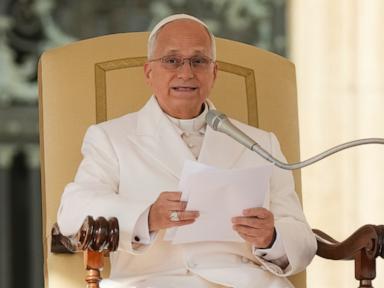
Pope Leo XIV spent twelve days from November 6 to November 17, 2026, traveling across Uruguay, Argentina, and Peru on his first papal visit to the Americas since taking office in May 2025. Surface-level previews treat the trip like a travel brochure or a warm sentimental reunion. They miss the real tension. This journey was a calculated test of institutional power, political friction, and personal physical endurance across three nations with radically different relationships to the Catholic Church.
Too many reports flatten a complex regional tour into predictable soundbites. A pontiff visits a country, waves from a popemobile, speaks about peace, and moves on. Anyone who has watched papal diplomacy for decades knows the choreography is rarely that simple. Every stop carries subtext. Every meeting with a head of state is a negotiation over moral authority in societies where politics, economics, and secularism are colliding in real time. Also making headlines in related news: What Most People Get Wrong About California's Death Penalty Moratorium.
Pope Leo XIV arrived in South America shortly after undergoing surgery to remove a cancerous tumor from the lower part of his right lung. He refused to postpone the trip. Even his transport along Montevideo's coastal avenue included a golf-cart-adapted popemobile tailored to his physical needs. Watching a pontiff push through a grueling multi-city schedule after lung surgery changes how you read every speech. Stamina itself became part of the message, signaling that his papacy will not retreat into caution just because his body has limits.
Uruguay and the Friction of Secularism
Montevideo is never an easy opening act for a pope. Uruguay built its modern civic identity around strict secularism, separating church and state more than a century ago and codifying policies like legal abortion and euthanasia that directly challenge traditional Catholic teaching. More details regarding the matter are detailed by Al Jazeera.
When Pope Leo XIV met President Yamandú Orsi at Estévez Palace and addressed officials at Plaza Independencia, the tone was polite, formal, and deliberate. Yet beneath the civic ceremony lay a sharp moral clash. Leo spoke on caring for the unborn and accompanying people until the natural end of life. In a country where Catholic practice is a minority tradition, those words were not routine platitudes. They were a reminder that the Church refuses to be treated merely as a nostalgic cultural club.
A secular state can legislate boundaries around public life, yet it cannot easily erase centuries of social memory or quiet moral dissent among its citizens.
The economic footprint in Uruguay looked modest compared with its neighbors, estimated around 2.7 million euros across the November 6 to November 8 events. That number reflects population scale rather than diplomatic weight. In Montevideo, Leo was testing how the Vatican speaks to post-secular societies without sounding like an angry scold. By quoting national figure José Gervasio Artigas on authority and public service while praising the quiet endurance of women passing down faith in families, he aimed for moral credibility rather than political shouting.
Still, there is a real limitation to that approach. In a nation comfortable with progressive social law, indirect moral appeals rarely flip policy overnight. The real audience in Uruguay was the local Catholic minority itself, reminding believers not to shrink into passivity.
Argentina and the Clash Over Austerity
Crossing from Montevideo to Buenos Aires shifted the temperature immediately. Argentina drew massive crowds—with estimates topping three million at the closing Mass in Luján and millions more across the four-day Argentine leg—making it a logistical spectacle and an emotional landmark, given that Pope Francis never returned to his homeland as pontiff.
Yet the biggest story in Argentina was not crowd size. It was the quiet collision between Pope Leo XIV and President Javier Milei over economic pain and social protection.
Milei's administration has pursued aggressive austerity and market overhauls while slashing state programs. Throughout his stops in Buenos Aires, Córdoba, Claypole, and Luján, Leo repeatedly argued that the economy must serve people rather than the other way around, warning against growing wealth concentration and urging support for the vulnerable, the working class, and universities.
What the Numbers and Crowds Show
Observers often treat huge papal gatherings as automatic endorsements of Church doctrine. That is a mistake. Crowds in Argentina turn out for faith, tradition, protest banners, family outings, and national catharsis all at once.
| Country | Dates (Nov 2026) | Core Political & Social Dynamic | Reported Economic & Crowd Scale |
|---|---|---|---|
| Uruguay | Nov 6–8 | Deeply secular civic culture; legal abortion and euthanasia; polite state diplomacy with President Yamandú Orsi. | ~2.7 million euros estimated economic impact; intimate minority-Church gatherings. |
| Argentina | Nov 8–11 | Sharp tension over austerity and vulnerable groups under President Javier Milei; calls for civic tone and prison/youth outreach. | ~256 million euros estimated economic impact; massive crowds including over 3 million at Luján. |
| Peru | Nov 11–16 | Deep personal homecoming for dual citizen Robert Prevost; high expectations amid political distrust and local poverty. | ~181 million euros estimated economic impact; huge turnouts across Lima, Chiclayo, the Andes, and the Amazon. |
Visiting Devoto prison in Buenos Aires was another deliberate choice. Breaking protocol to embrace inmates and tell them human beings can flourish through limits echoed a pastoral tradition Argentines know well, while quietly challenging punitive, purely transactional views of justice.
On his return flight, Leo insisted his message was not partisan politics, pointing instead to broader questions of human dignity, polarization fueled by algorithms, and safeguarding people in an era of rapid technological change. That distinction sounds neat from thirty thousand feet. Down on the ground in Buenos Aires, where families argue over grocery bills and state cuts, almost every line about the vulnerable gets read through a political lens.
Consider a hypothetical example of how that plays out in a working-class neighborhood outside Buenos Aires. A household facing utility hikes and reduced subsidies hears the pope say the economy exists for people and the poor must come first. Even if the Vatican frames the remark as timeless Catholic social teaching, local activists will cite it against the government by Monday morning, while supporters of austerity will argue that fiscal stability is the only way to prevent worse inflation later. That is the tightrope Leo walked every single day in Argentina.
Peru and the Weight of a Homecoming
If Uruguay was a diplomatic probe and Argentina was a high-wire act, Peru was personal history made public. Born in Chicago, Robert Prevost spent more than two decades in Peru as an Augustinian missionary and later served as bishop of Chiclayo, holding dual U.S.-Peruvian citizenship. To millions of Peruvians, he is not an abstract foreign dignitary; he is Padre Robert.
From Lima to Chiclayo, rural Santa Cruz de Succhabamba in the Andes, Cusco, and Pucallpa in the Amazon, the Peru leg felt less like an official state tour and more like a family return. Crowning the image of the Immaculate Virgin in Chiclayo Cathedral carried unmistakable emotional weight because it tied his global office directly back to the local church that shaped his pastoral instincts.
Yet personal affection brings its own trap. In a country worn down by political instability, institutional distrust, and steep regional inequalities between Lima, the highlands, and the Amazon basin, warm feelings toward a beloved former bishop can easily be mistaken for a cure-all.
Leo leaned heavily on themes of unity, missionary discipleship, and local community service—reminding Peruvians that the Church is built by everyday believers rather than grand buildings or political factions. That message is grounded in his own years on the ground. Still, affection for a pastor does not automatically resolve deep-seated civic cynicism or economic exclusion once the papal plane departs.
What This Tour Really Reveals About Leo XIV
Looking across all twelve days, three realities stand out for anyone tracking this papacy:
- Continuity without copy-pasting: Leo XIV honors the social concerns and synodal language of recent years while keeping a steady, measured tone that avoids theatrical confrontation.
- A bridge between worlds: Few modern popes carry this exact blend of U.S. upbringing, Roman institutional familiarity, and lived missionary experience in Latin America.
- Limits of papal visits: Huge crowds and emotional scenes generate real goodwill and economic activity, yet structural divisions in politics, secular culture, and local economies remain long after the cameras pack up.
The real measure of this South American journey will not be found in crowd estimates or farewell speeches at Callao Air Base. It will show up in whether local dioceses, civil groups, and citizens turn moments of shared presence into durable habits of civic decency when daily life turns hard again.