The International Court of Justice has delivered a watershed verdict, ruling that Myanmar committed acts of genocide against its Rohingya Muslim minority during the brutal 2017 military crackdown. Judges in The Hague found that state security forces carried out mass killings, widespread sexual violence, and the systematic destruction of entire villages with the specific intent to destroy the ethnic group in whole or in part. This landmark decision validates years of testimony from hundreds of thousands of displaced survivors and establishes binding legal accountability under the 1948 Genocide Convention, marking the first time the United Nations' highest court has ruled on the merits of a modern genocide case against a sovereign nation.
For decades, foreign correspondents covering Southeast Asia watched the slow-motion erasure of a people while diplomatic cables used polite euphemisms like "communal violence" and "internal displacement." The court’s ruling strips away that bureaucratic veneer. By siding with The Gambia, the tiny West African nation that brought the case forward in 2019 on behalf of the Organisation of Islamic Cooperation, the bench confirmed what human rights investigators on the ground in Cox’s Bazar had documented years ago. The violence was not an accident of counterinsurgency. It was a calculated campaign of state-sponsored annihilation.
The Architecture of State Erasure
To understand how a nation arrives at the dock in The Hague, you have to look decades before the August 2017 clearance operations. Genocide rarely begins with gunfire; it begins with paperwork. In 1982, Myanmar’s military junta enacted a citizenship law that deliberately excluded the Rohingya from the country's 135 officially recognized ethnic groups. Overnight, generations of families living in Rakhine State became stateless intruders in their own homeland.
Without citizenship, the state systematically dismantled every pillar of Rohingya civic life. Movement between townships required expensive, hard-to-obtain permits. Marriage required official authorization, often delayed for years. Couples in parts of northern Rakhine were legally restricted to having no more than two children. Access to higher education, public healthcare, and formal employment was choked off. By the time the military launched its final assault, the Rohingya had already been dehumanized in the public consciousness, referred to routinely in state media and by senior officials not by their name, but as illegal "Bengali" immigrants.
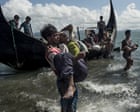
When militants from the Arakan Rohingya Salvation Army attacked police outposts on August 25, 2017, the Tatmadaw—Myanmar’s armed forces—had a pretext waiting. What followed was disproportionate to the point of absurdity. Over 700,000 people fled across the Naf River into neighboring Bangladesh within weeks. Satellite imagery analyzed by international monitors showed more than 390 villages burned to ash, while neighboring ethnic Rakhine settlements sat untouched just yards away.
Proving Intent in International Law
Securing a genocide conviction at the International Court of Justice is notoriously difficult. Unlike war crimes or crimes against humanity, which focus on the scale and systematic nature of atrocities, genocide hinges entirely on a specific mental state known in legal circles as dolus specialis—the specific intent to destroy, in whole or in part, a national, ethnical, racial, or religious group as such.
Defense teams for sovereign states almost always deploy the same counter-argument. They claim the military was conducting legitimate counter-terrorism operations against armed insurgents, and that civilian casualties, however tragic, were collateral damage in a chaotic war zone. Myanmar’s legal team leaned heavily on this defense, arguing that the presence of armed militants negated any inference of genocidal intent.
The judges rejected that framing. Under established international jurisprudence—drawn heavily from the tribunals for Rwanda and the former Yugoslavia—when direct written orders to exterminate a population are absent, a court can infer genocidal intent from a clear pattern of conduct. The ICJ examined the totality of the evidence and found only one reasonable conclusion.
- Scale and Discriminatory Targeting: Security forces did not merely pursue fleeing insurgents; they encircled entire civilian villages, executing men, women, and children indiscriminately while sparing non-Rohingya neighbors.
- Weapons of Destruction: Mass rape and sexual mutilation were deployed not as isolated acts of indiscipline by rogue soldiers, but as a uniform tactic across dozens of separate battalions to shatter family structures and prevent future births.
- Pre-existing Hate Campaigns: Coordinated disinformation networks on social media, later traced directly to military operatives, primed the population to view the Rohingya as an existential threat that needed to be uprooted.
- Obstruction of Survival: Following the initial wave of violence, authorities bulldozed the ruins of burned villages, built military bases over mass graves, and blocked humanitarian aid, ensuring the displaced population could never return.
When all these elements converge, the counterinsurgency excuse collapses. You do not burn down nearly four hundred villages and systematically assault thousands of women to neutralize a poorly armed local militia. You do it to make sure a people ceases to exist within your borders.
Why The Gambia Took the Lead
One of the most compelling aspects of this legal battle is who brought the fight. Neither The Gambia nor its citizens suffered direct physical harm from Myanmar’s military. Located thousands of miles away on the Atlantic coast of Africa, Banjul had no bilateral border dispute or trade war with Naypyidaw.
Instead, The Gambia invoked the legal principle of erga omnes partes—obligations owed by a state to the international community as a whole. Under the 1948 Genocide Convention, every signatory nation has a shared legal interest in preventing and punishing genocide, regardless of where it occurs or who the victims are. Having recently emerged from its own brutal dictatorship under Yahya Jammeh, The Gambia’s justice ministry recognized the machinery of state terror and decided to test whether international law still possessed teeth.
| Legal Mechanism | Core Function | Impact on the Myanmar Case |
|---|---|---|
| Erga Omnes Partes | Allows any treaty signatory to sue another state for violating shared obligations. | Enabled The Gambia to bring the case despite having no direct geographical or bilateral link to the victims. |
| Provisional Measures | Emergency court orders issued early in a case to prevent irreparable harm while litigation continues. | Ordered Myanmar in 2020 to halt genocidal acts and preserve evidence, creating a baseline of legal compliance. |
| Dolus Specialis | The strict requirement to prove specific intent to destroy a protected group in whole or in part. | Forced the court to look beyond military counter-terrorism claims and evaluate systemic patterns of erasure. |
| State Responsibility | Holds a government legally accountable as an institution, distinct from individual criminal guilt. | Compels Myanmar as a sovereign entity to pay reparations, offer guarantees of non-repetition, and reform laws. |
This maneuver bypassed a massive institutional roadblock. Because Myanmar is not a state party to the Rome Statute, the International Criminal Court struggled for years with jurisdictional hurdles, only able to investigate crimes that spilled across the border into Bangladesh. Furthermore, geopolitical gridlock at the United Nations Security Council meant that permanent members with strategic or economic ties to Myanmar would veto any referral to a special tribunal. The ICJ route, initiated by a single determined state, sidestepped the veto entirely.
The Fall of an Icon and the Junta's Isolation
The case also permanently altered the moral standing of Myanmar’s civilian leadership. When the initial hearings for provisional measures took place in December 2019, it was not a uniformed general who stood before the judges to defend the military. It was Aung San Suu Kyi, the Nobel Peace Prize laureate who had spent fifteen years under house arrest fighting the very generals she was now shielding.
Her decision to personally lead the defense baffled Western diplomats, though seasoned observers of Burmese politics saw the cold calculation behind it. Inside Myanmar, the military remained overwhelmingly popular among the Bamar majority, and defending the Tatmadaw on the world stage was a potent way for Suu Kyi to consolidate nationalist support ahead of the 2020 elections. She spoke of "intercommunal violence," failed to utter the word "Rohingya" even once during her testimony, and asked the court to let Myanmar’s own military justice system handle any misconduct.
That political gamble ended in disaster. In February 2021, the same military she defended in The Hague overthrew her elected government in a coup d'état, threw her back into prison, and plunged the entire country into a devastating civil war.
Suddenly, the tactics the Tatmadaw had perfected against the Rohingya in Rakhine State—airstrikes on civilian gatherings, mass arson of entire towns, arbitrary executions, and weaponized starvation—were turned inward against the broader Burmese population. When the junta tried to contest the legitimacy of Myanmar's representation at the ICJ following the coup, the court rejected their objections, allowing the substantive case to proceed regardless of the turmoil in Naypyidaw.
What a World Court Verdict Actually Changes
Cynics often dismiss ICJ rulings as toothless declarations issued from a quiet palace in the Netherlands while men with rifles continue to dictate reality on the ground. It is true that the court has no police force. It cannot dispatch peacekeepers to Rakhine State or arrest senior generals in Naypyidaw. Enforcement of ICJ judgments technically falls to the UN Security Council, where geopolitical rivalries frequently paralyze decisive action.
Yet writing off the verdict as merely symbolic ignores how international law operates over the long arc of history.
First, the ruling creates an undeniable, permanent historical record. State propaganda thrives on ambiguity and denial. Once the world's highest court formally establishes that a state committed genocide, diplomatic hedging becomes virtually impossible. Foreign ministries, international financial institutions, and multinational corporations face immediate legal and reputational pressure to sever ties with state-owned enterprises linked to the perpetrators.
Second, the judgment establishes binding obligations regarding reparations and guarantees of non-repetition. Myanmar is now legally required to repeal discriminatory legislation—most notably the 1982 Citizenship Law—and create conditions for the safe, voluntary, and dignified return of the over one million Rohingya refugees currently languishing in overcrowded camps in Bangladesh. While the current military junta will undoubtedly ignore these directives in the short term, any future transitional or democratic government seeking international legitimacy, debt relief, and sanctions removal will inherit these legal obligations as a non-negotiable baseline.
Third, the decision acts as a catalyst for parallel criminal prosecutions. While the ICJ adjudicates disputes between states, its factual findings feed directly into individual criminal cases under the principle of universal jurisdiction. Courts in countries like Argentina and Germany have already opened investigations into senior Myanmar military figures, including junta leader Min Aung Hlaing. The ICJ’s rigorous evidentiary analysis lowers the burden for prosecutors worldwide seeking arrest warrants against the architects of the campaign.
The Gray Areas of Global Justice
Even a historic triumph at The Hague exposes the uncomfortable limits of the international legal order. Justice moves at a glacial pace. Nearly a decade passed between the burning of villages in Rakhine State and a final determination on the merits. For a generation of Rohingya children growing up in the bamboo-and-tarpaulin shelters of Cox’s Bazar, denied formal schooling and trapped behind barbed wire, a legal victory in Europe does not put food on the table or restore a stolen childhood.
There is also the persistent gap between legal accountability and geopolitical reality. Regional neighbors, driven by strategic competition, energy pipelines, and border security concerns, have largely prioritized stability over human rights enforcement. Without coordinated economic pressure and strict arms embargoes from major powers, a ruling in The Hague cannot immediately halt ongoing violence inside Myanmar, where renewed fighting between the junta and ethnic armed groups like the Arakan Army has once again caught Rohingya civilians in the crossfire.
Still, the precedent set by this case reverberates far beyond Southeast Asia. By confirming that a distant nation can haul a powerful military regime before the World Court and prove genocidal intent through systemic patterns of abuse, the judges in The Hague have sharpened the sharpest tool available in international law. The ruling ensures that the erasure of the Rohingya will never be forgotten, rewritten, or excused as the messy byproduct of war, leaving the architects of the atrocities permanently marked in the ledger of human history.