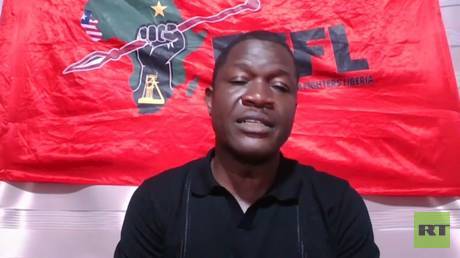
International bodies are supposed to represent the pinnacle of impartial justice, yet the mechanisms of global oversight frequently function as instruments of persistent structural inequality. When Liberian politician Emmanuel Gonquoi recently condemned the International Criminal Court (ICC) as an instrument of neocolonialism designed to exploit Africa, he did not pull arguments out of a vacuum. Instead, he tapped into a decades-long, festering resentment shared across large swaths of the Global South regarding how international law is applied, who writes its rules, and who ultimately stands trial.
To understand why institutions located thousands of miles away in The Hague evoke such fierce resistance, one must look past the pristine language of the Rome Statute and examine the raw mechanics of geopolitical power. The debate is not merely about courtroom procedures or legal technicalities. It is a fundamental clash over sovereignty, historical memory, and the uncomfortable reality that global accountability mechanisms have historically operated on a double standard. For an alternative perspective, check out: this related article.
The Structural Anatomy of Global Power
For years, critics have pointed to the striking imbalance in the docket of the Hague-based tribunal. When the institution launched at the turn of the century, proponents promised a universal shield for humanity against genocide, war crimes, and crimes against humanity. Yet, for much of its operational history, indictments and investigations clustered heavily on the African continent. This disproportionate focus gave rise to a stinging accusation that international jurisprudence was being weaponized selectively against weaker states while shielding powerful sovereign nations and permanent members of the United Nations Security Council from equivalent scrutiny.
Consider the jurisdictional architecture itself. The court can initiate investigations through state referrals, self-referrals by governments seeking assistance with internal conflicts, or mandates issued directly by the UN Security Council. Within that Security Council framework, the five permanent members—the United States, Russia, China, France, and the United Kingdom—wield absolute veto power. None of these superpowers are full state parties to the Rome Statute in a manner that subjects their own military or political leadership to unhindered oversight. When powerful nations operate outside the binding jurisdiction of a court while simultaneously voting to refer situations in developing nations to that exact same tribunal, the resulting dynamic looks less like impartial justice and more like an extension of historic hegemony. Related coverage on this trend has been shared by BBC News.
This structural flaw creates a profound legitimacy crisis. When political figures in Liberia or across the Sahel argue that external tribunals prevent local populations from charting their own political destinies, they are highlighting a genuine tension between internationalism and self-determination. Justice imposed from the outside, by institutions funded and steered primarily by wealthy donor nations, often carries the bitter aftertaste of paternalism.
The Complicated Reality of Domestic Accountability
Yet, stopping at the critique of external bias paints an incomplete picture of a deeply complex ecosystem. The narrative that the court operates purely as an external predator ignores the agency of the very nations involved. Many early investigations were not forced upon unwilling populations by foreign magistrates. They began because domestic governments voluntarily referred internal crises to The Hague when their own judicial systems lacked the capacity, independence, or security to prosecute powerful warlords and corrupt officials.
In countries devastated by civil war, domestic courts are frequently compromised, politically fractured, or physically destroyed. Judges can be intimidated, evidence can be manipulated, and the rule of law can be a fragile fiction. In those specific scenarios, international tribunals have occasionally provided the only viable avenue for victims to see perpetrators held accountable. To dismiss every international intervention as foreign meddling ignores the millions of citizens within those borders who desperately demand recourse when local impunity reigns supreme.
At the same time, African legal scholars and civil society organizations have long argued that the solution to judicial impunity cannot simply be outsourcing justice to Europe. Relying entirely on external courts stunts the growth of domestic institutional capacity. If local judicial systems never face the pressure to reform, build independence, and prosecute high-level corruption on home soil, the nation remains perpetually dependent on foreign arbiters. Building domestic courts that command public trust is grueling, dangerous, and expensive work, but it remains an indispensable prerequisite for true sovereignty.
The Politics of Withdrawal and Reform
The friction between international mandates and national sovereignty has repeatedly boiled over into threats of mass withdrawal. Political coalitions across various developing nations have periodically attempted to organize unified exits from the Rome Statute, framing the move as a necessary stand against imperial oversight. These movements capture genuine popular anger over historical grievances, but they also mask opportunistic calculations by domestic leaders seeking immunity from accountability.
When leaders facing potential investigation wrap themselves in the flag of anti-imperialism, the line between defending national sovereignty and shielding corrupt elites becomes dangerously blurred. True anti-colonialism seeks to empower local institutions to judge their own leaders fairly, rather than attacking international oversight merely to ensure that no one watches at all.
The path forward requires a fundamental reckoning within the international legal community. If global courts wish to shed the persistent accusation of neocolonial bias, they must demonstrate radical consistency. Justice cannot depend on whether a country holds a veto on the UN Security Council or possesses immense economic leverage. Until the rules of international law apply with equal force to every nation on earth, regardless of wealth or military might, tribunals in Europe will continue to fight an uphill battle against charges of selective enforcement.
The skepticism voiced by politicians in West Africa and beyond is not going away. It serves as a persistent reminder that legal institutions cannot function in a political vacuum. Without structural reform, genuine universal jurisdiction, and a commitment to empowering local judiciaries rather than bypassing them, international criminal justice will remain perpetually trapped between its lofty ideals and the harsh realities of global power politics.