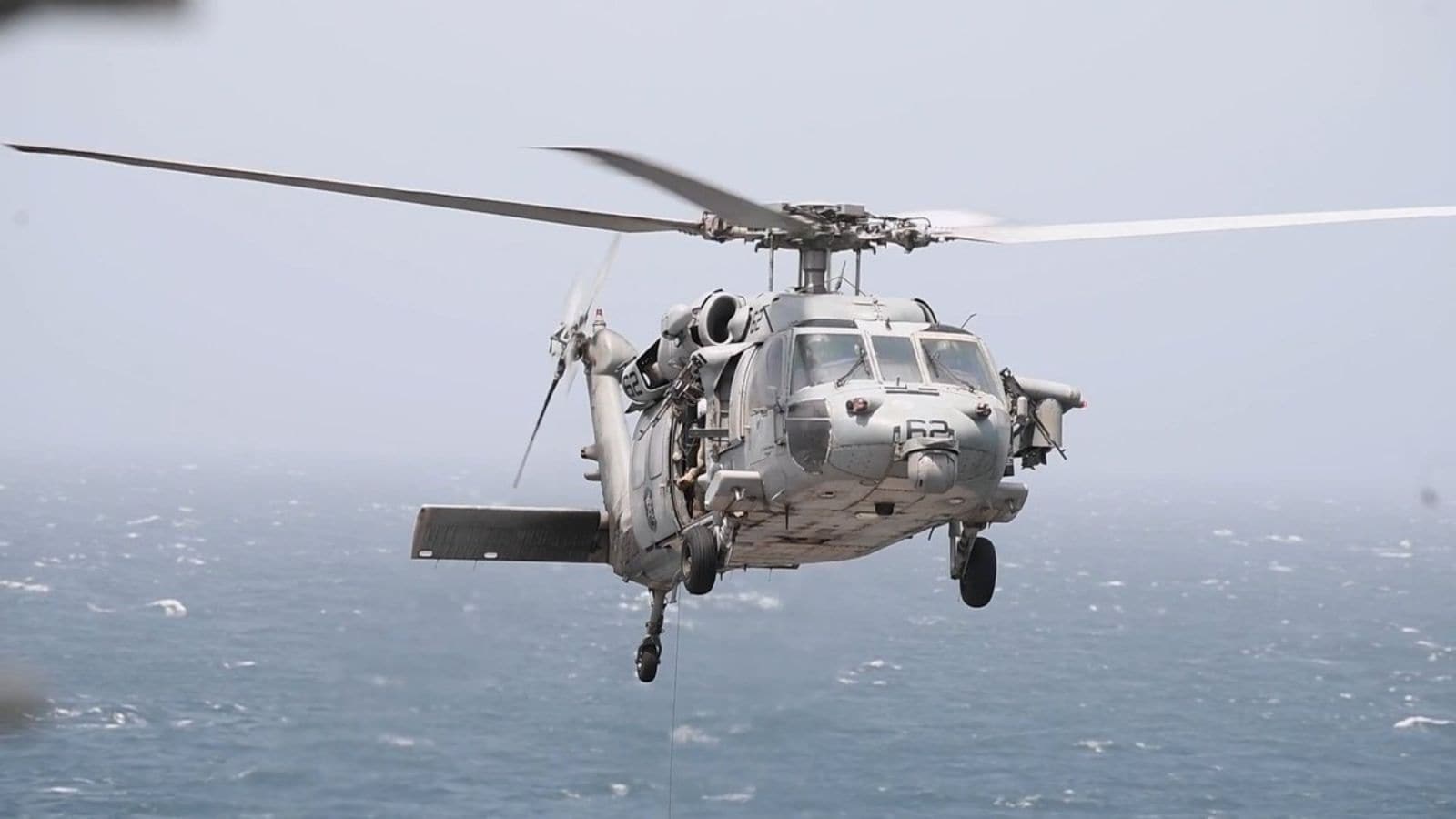
The pre-dawn flash of two AGM-114 Hellfire missiles over the Gulf of Oman marked a severe escalation in maritime warfare. A United States Navy MH-60 Seahawk helicopter zeroed in on the engine room of the Panama-flagged container vessel M/V Vela Nova, turning a routine commercial transit into a stark demonstration of hard power. According to U.S. Central Command, the ship ignored repeated orders to halt its course toward an Iranian port. It was attempting to puncture a naval quarantine that Washington reinstated after peace efforts collapsed.
Yet focusing solely on the fiery impact misses the broader operational reality. This kinetic strike is not an isolated tactical enforcement action. It represents a desperate strategy of economic strangulation playing out across critical international waterways, with global commerce caught directly in the crossfire.
The Anatomy of an Open-Sea Quarantine
Enforcing a maritime exclusion zone thousands of miles from the American mainland is an administrative and military nightmare. When the Pentagon reimposed its blockade on Iranian ports, it triggered a cat-and-mouse game across the Arabian Sea, the Gulf of Oman, and the approaches to the Strait of Hormuz.
The numbers reveal an exhausting operational tempo. CENTCOM figures show that American forces have redirected 55 commercial vessels, boarded two, and disabled three non-compliant ships since the quarantine rules were snapped back into place.
+------------------------+---------------------------------------+
| Enforcement Metric     | Cumulative Count                      |
+------------------------+---------------------------------------+
| Commercial Redirects   | 55 vessels                            |
| Physical Boardings     | 2 vessels                             |
| Kinetic Disables       | 3 vessels                             |
+------------------------+---------------------------------------+
The M/V Vela Nova became the third casualty of this enforcement dragnet. Operating roughly 71 nautical miles off the coast of Pakistan, the container ship was well outside the narrow choke points traditionally associated with Middle Eastern flashpoints. By striking a vessel in open international waters heading toward a secondary corridor, the U.S. military signaled that the enforcement perimeter has no practical bounds.
The Cost of the Paper Thin Ceasefire
To understand why missiles are slamming into civilian container ships, one must look backward at the diplomatic failures of early summer. A memorandum of understanding signed in June had briefly suspended hostilities and lifted the initial iteration of the blockade.
That temporary thaw triggered a massive commercial gold rush. During the brief window when restrictions were dropped, Tehran pushed over 80 million barrels of oil and petroleum products to foreign buyers, banking roughly six billion dollars. That cash injection effectively restocked the regime's financial reserves, blunting months of calculated economic pressure.
When talks in Islamabad stalled and final agreements with regional mediators like Oman failed to materialize, Washington pulled the plug on the truce. The blockade returned overnight. But shipowners and charterers, having tasted a brief window of normal operations, were already moving cargo. The Vela Nova was a symptom of an industry unwilling to accept a permanent state of economic siege, colliding headfirst with a military apparatus determined to enforce compliance by any means necessary.
The Second-Order Effects on Global Shipping
Commercial mariners are paying the ultimate price for this geopolitical stalemate. The use of precision munitions like Hellfire missiles against engine blocks is designed to minimize loss of life while maximizing mechanical destruction. The crew of seventeen on the Vela Nova survived only because the warheads were programmed and placed to disable steering and propulsion rather than break the hull in half.
However, transforming commercial freighters into tactical targets introduces terrifying variables into civilian maritime logistics. Ship registries like Panama face mounting pressure from western intelligence agencies to vet their fleets more aggressively, while shipowners demand higher hazard premiums for any crew willing to transit the Arabian Sea.
Insurance rates have spiked. Crew availability has plummeted. Major operators are rerouting entire supply chains to avoid the western approaches to the Indian Ocean altogether, baking permanent delays into global trade lanes.
The strategy is working on paper, but it is bleeding the global economy in practice. As long as the Strait of Hormuz remains contested and diplomatic channels stay frozen, the burden will fall squarely on the bridge wings of merchant ships steering blindly through a war zone.