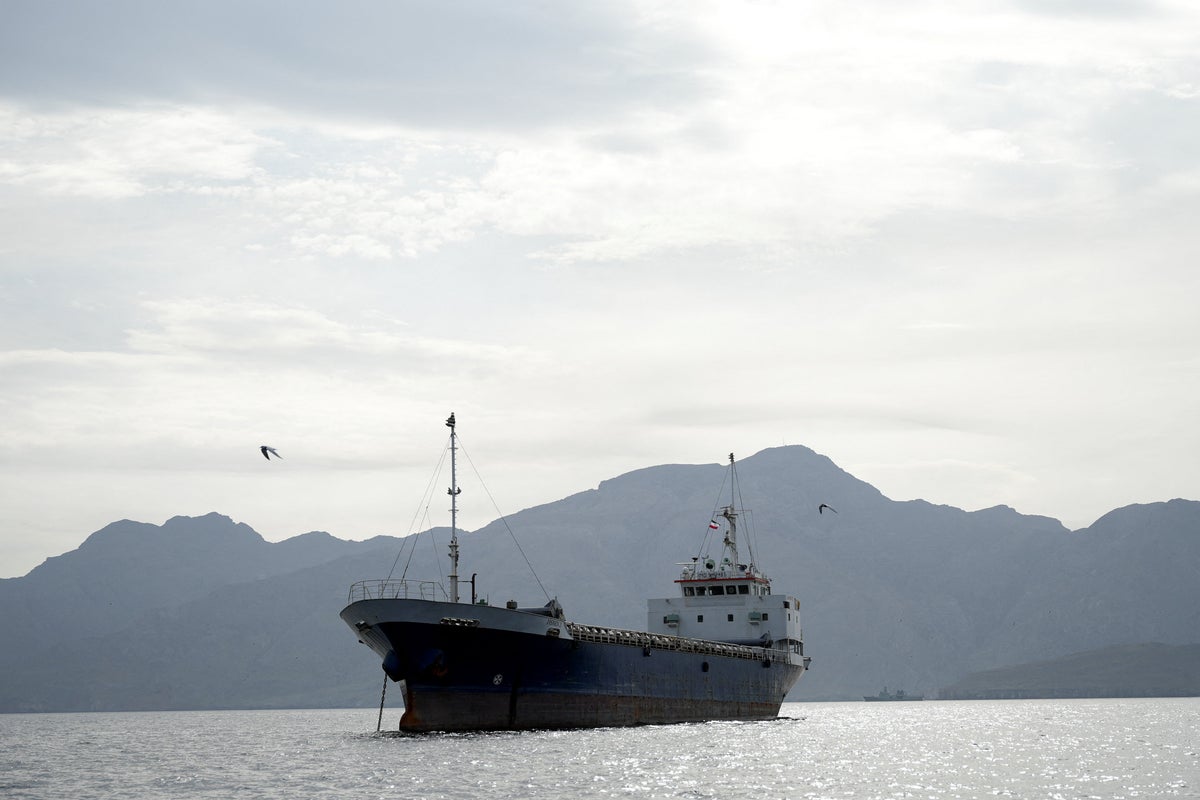
The maritime stand-off in the Strait of Hormuz has reached a point of high-stakes friction that the Pentagon’s official briefings are struggling to contain. While U.S. Central Command insists that its naval blockade, launched on April 13, 2026, has "completely halted" trade to and from Iranian ports, the reality on the water tells a more complicated story of cat-and-mouse maneuvers, spoofed transponders, and millions of barrels of crude oil slipping through the net.
At least eight vessels—and likely more—have successfully bypassed the American cordon in the first 96 hours of the operation. This is not a failure of naval power, but a testament to the sophistication of a "shadow fleet" that has spent years practicing for this exact scenario. These ships aren’t just running for it; they are using a combination of digital deception and geographical blind spots to make the world's most powerful navy look remarkably fallible.
The Ghost Fleet Strategy
The ships currently defying the blockade are not standard commercial tankers. They are the veterans of the "ghost fleet," a decentralized network of aging vessels with opaque ownership structures and a history of dodging Treasury Department sanctions. Since the blockade began, ship-tracking data has revealed a surge in "dark" activity—vessels turning off their Automatic Identification System (AIS) transponders long before they reach the Gulf of Oman.
Others are more aggressive. They use spoofing technology to broadcast false locations, appearing to be hundreds of miles away in the Arabian Sea while they are actually loading at Kharg Island or Bandar Abbas. This isn't just turning off a radio; it is a coordinated electronic warfare effort designed to create a "contested information environment" where the U.S. Navy cannot be entirely sure which blip on a radar screen is a legitimate neutral merchant and which is a sanctioned tanker carrying two million barrels of Iranian Light.
Why the Blockade is Leaking
The U.S. military is attempting to enforce a port-by-port blockade rather than a total closure of the Strait of Hormuz. This distinction is vital. By leaving the strait open for neutral traffic—essential for the economies of Kuwait, Iraq, and the UAE—the Navy has created a crowded "maritime highway" where Iranian-linked vessels can hide in plain sight.
The primary reasons for the leakage include:
- Floating Storage Transfers: Iran has moved massive amounts of crude into "floating storage" outside its traditional ports. TankerTrackers.com recently confirmed that nine million barrels were shipped from these offshore locations after the blockade deadline, essentially bypassing the port-based enforcement.
- The Larak Gap: Tracking data shows tankers using the narrow waters between Iran’s Larak and Qeshm islands. Navigating these shallow, treacherous passages allows ships to hug the coastline, making it difficult for deep-draft U.S. destroyers to intercept them without violating sovereign territorial waters.
- The "Grace Period" Confusion: In the early hours of the blockade, several ships were allowed to pass under what officials called a "limited grace period." This window allowed at least two supertankers to exit, likely carrying the last legal shipments before the door slammed shut.
The Economics of Desperation
For Tehran, the stakes are existential. Analysts estimate the blockade is costing the Iranian regime roughly $400 million per day in lost revenue. With only about 13 days of internal oil storage capacity, Iran faces a choice: find a way to ship the oil, or shut down its fields entirely. Shutting down an oil field isn't like flicking a light switch; reservoir pressure depletion and "waxing" can cause permanent damage to the infrastructure, potentially ending Iran's status as a major energy exporter for a generation.
This explains the bravery—or recklessness—of the captains currently testing the U.S. line. If a tanker successfully runs the blockade and reaches a refinery in East Asia, the profit margin is astronomical. The "sanctions premium" and the sheer desperation of the seller mean that a single successful voyage can fund the entire shadow fleet’s operations for a year.
Digital Yuan and the mBridge Loophole
Perhaps the most overlooked factor in this crisis is how the oil is being paid for. The U.S. Treasury traditionally controls the global flow of money through the SWIFT system, but the 2026 crisis has seen the emergence of mBridge, a cross-border digital currency platform. By settling trades in China’s digital yuan (e-CNY), Iran and its buyers can bypass the U.S. banking system entirely.
This digital infrastructure provides "finality" on a shared ledger that the U.S. cannot see or freeze. It makes the naval blockade a physical solution to a digital problem. Even if the Navy stops every ship, the financial transactions that drive the trade are happening on a plane where Washington has no jurisdiction.
The Limits of Naval Pressure
The U.S. is currently deploying over 10,000 personnel and a dozen warships to maintain this line. It is a massive expenditure of resources for an outcome that remains inconsistent. Every ship that slips through is a propaganda victory for Tehran and a signal to global markets that the American "maximum pressure" campaign has a ceiling.
The blockade is also straining relations with allies. While the U.S. claims to be acting "impartially," the disruption to global supply chains is causing friction with NATO members and regional partners like Saudi Arabia, who fear that a desperate Iran might lash out at other energy infrastructure in the Gulf. The risk of an accidental skirmish remains high. A single misunderstood signal or an aggressive boarding maneuver could turn a maritime enforcement action into a full-scale kinetic conflict.
The coming days will determine if the U.S. Navy can tighten the noose or if the shadow fleet's "zombie" tactics will make the blockade a hollow gesture. As Iran's storage tanks hit their limit, the frequency of these "runs" will only increase. The ocean is vast, and as long as there is a buyer willing to pay in digital currency, there will be a captain willing to turn off the lights and head into the dark.
Monitor the movement of "VLCCs" (Very Large Crude Carriers) near the Gulf of Oman over the next 48 hours. If the number of "dark" departures increases, the blockade is no longer a barrier—it’s a sieve.


