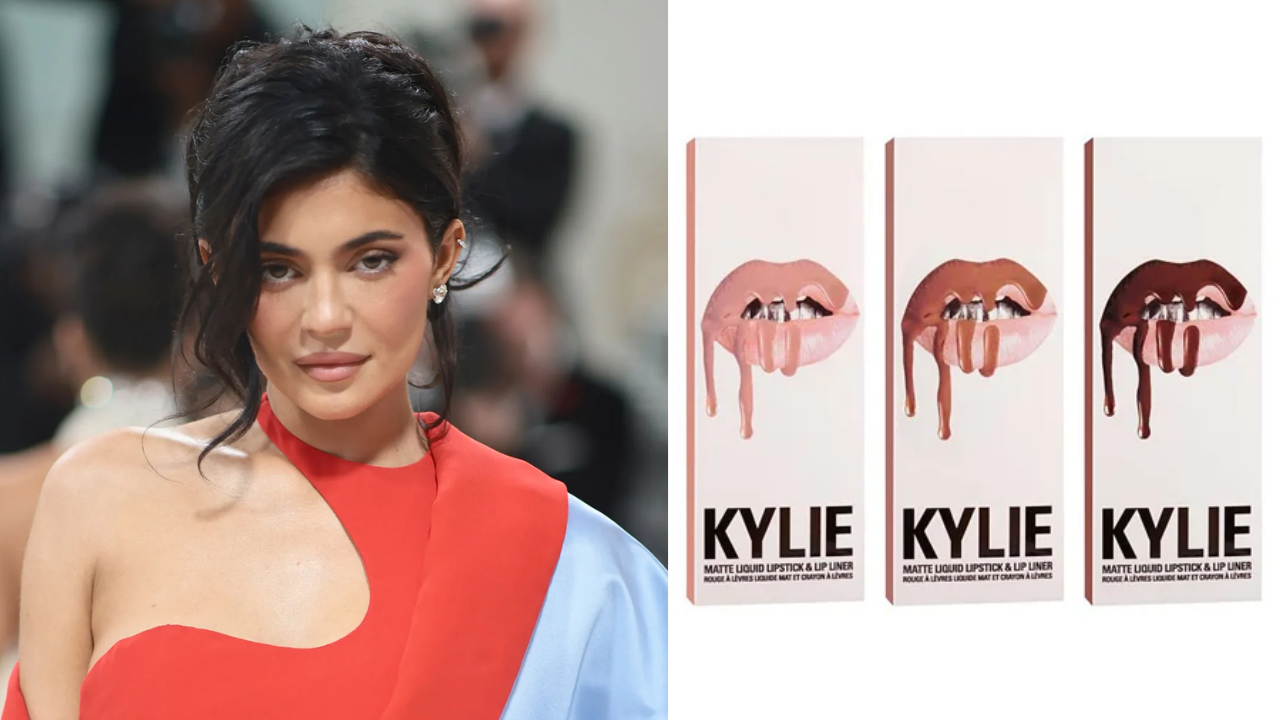
When Kylie Jenner launched a lip kit in November 2015, almost nobody on Wall Street saw a structural shift in consumer goods. Four years later, Coty agreed to pay $600 million for a 51% stake in the business, valuing the entire enterprise around $1.2 billion. That headline reads like a tidy fairy tale of social media stardom turning into corporate gold. Look closer at the filings, the manufacturing model, and Coty's balance sheet, and a far messier bargain comes into view.
A lip kit does not build a billion-dollar company by accident. It took artificial scarcity, a lean third-party supply chain, and a legacy conglomerate desperate for relevance.
Why a Lip Kit Looked Like a Goldmine
Before Coty stepped in, the business ran with astonishingly light overhead. Reports on the pre-deal operation indicate a tiny core headcount, Shopify handling direct-to-consumer checkout, and Seed Beauty managing formulation, packaging, and fulfillment. When a founder can post a swatch to tens of millions of followers and clear inventory in minutes without buying television spots or billboards, customer acquisition looks almost free.
High gross margins on paper can lull buyers into a false sense of security. Outsourcing production to a contract manufacturer keeps fixed costs low during rapid growth. Yet it also means the brand does not own the factory floor, the deep R&D moat, or the physical distribution muscle required when online hype cools off.
The timing of the November 2019 deal mattered just as much as the product itself. By late 2018, the brand had moved beyond pure drop-culture exclusivity into a major retail rollout with Ulta Beauty, and in 2019 Jenner added Kylie Skin. To an acquirer watching legacy mass-market makeup struggle against indie and digital challengers, buying majority control of a high-attention brand looked like a shortcut to youth appeal.
What Coty Actually Bought for $600 Million
Public filings tell a much more nuanced story than a simple cash-for-makeup swap. Coty's $600 million price tag purchased 51% of the equity in King Kylie, LLC, leaving the remaining 49% with Jenner's side of the table—spanning her entities and a family trust.
Crucially, you cannot put a person's face or social reach into a warehouse like inventory. In transactions of this kind, much of the economic value sits inside licensing, collaboration rights, and brand agreements rather than hard physical assets. Jenner stayed closely tied to creative direction and communications, which is standard in celebrity deals. Still, that arrangement creates a built-in tension: the buyer holds majority equity, while the founder's personal aura remains the primary spark plug.
Numbers also collided in public view shortly after the deal closed. Coty's disclosures put trailing twelve-month net revenue around $177 million at the time of the agreement, and subsequent reporting highlighted much smaller prior-year sales figures than earlier publicity had suggested. Paying roughly $600 million for just over half of a business generating $177 million in trailing net revenue meant Coty was underwriting steep future growth and global expansion, not merely buying past cash flows.
The Balance Sheet Reality Behind Coty's Bet
To understand why Coty wrote that check, you have to look at Coty itself. The conglomerate had spent years digesting massive acquisitions—most notably a large swath of Procter & Gamble's beauty brands—and carried heavy debt alongside operational headaches. When a legacy giant has sluggish organic growth and a bruised stock chart, buying a splashy, high-multiple growth story is often an attempt to change the narrative.
That bet came with immediate growing pains. In its first six months folded into Coty, the acquired business contributed $52 million in revenue and an $11.7 million net loss. Even strong top-line buzz does not guarantee smooth integration when a nimble, founder-driven operation meets corporate accounting, compliance, and global supply chains.
Consider a hypothetical example to see how valuation multiples punish optimistic assumptions. Suppose a buyer acquires a majority stake in a specialty brand on the assumption that international retail and skincare extensions will double profits within three years. If consumer tastes shift or retail shelf space grows more competitive, the initial multiple paid for expected expansion quickly looks expensive. Reality in consumer goods is rarely linear.
| Dimension | Pre-Deal Indie Model | Post-Deal Corporate Reality |
|---|---|---|
| Primary Engine | Founder social drops and direct web sales | Majority corporate ownership, broader retail, global reach |
| Operational Footprint | Lean internal team, external contract manufacturing | Consolidated corporate reporting, multi-category push |
| Key Risk | Reliance on viral momentum and single-founder attention | High entry multiple, integration drag, shifting beauty trends |
Celebrity Beauty After the Hype Cycle
The 2019 transaction remains a textbook case study of how celebrity beauty matured—and where its limits lie. A famous name can get a product in front of millions of people overnight. Keeping repeat buyers across lip kits, color cosmetics, skincare, and fragrances year after year requires repeat formulation quality, sharp pricing, and steady execution.
Over the years that followed, the wider celebrity beauty space proved unforgiving. Some founder-led brands surged, others stalled, and Coty itself spent years restructuring and pruning parts of its portfolio. Ownership structure matters enormously here: a majority stake gives a parent company operational control to push distribution, whereas a small minority stake can leave an acquirer with limited sway if momentum fades.
Anyone evaluating a founder-led consumer deal today should look past follower counts and launch-day sellouts. Check the durable unit economics, examine how much of the price relies on licensing rather than stand-alone brand equity, and ask whether the buyer actually knows how to run the business once the novelty wears off.