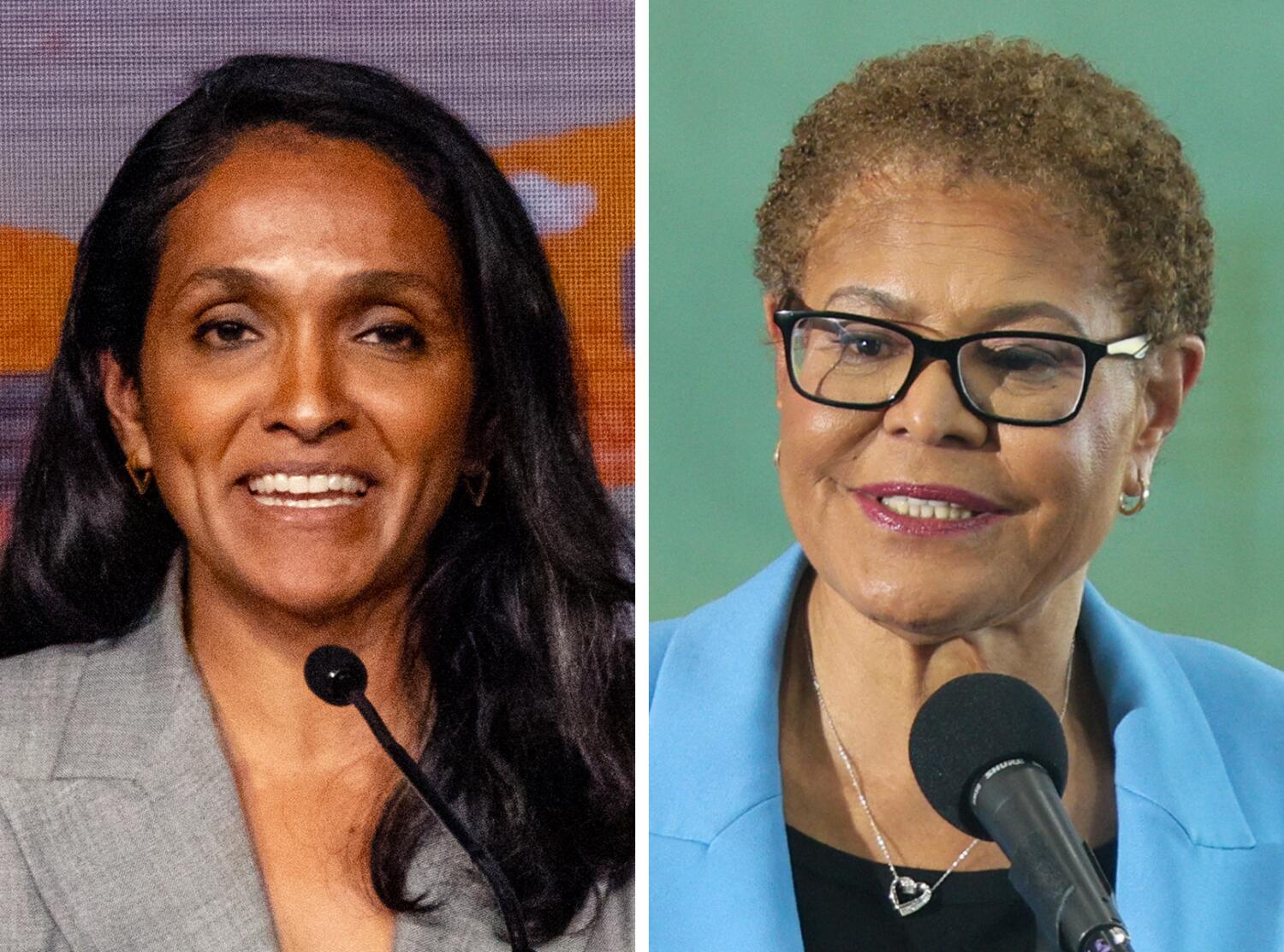
The 2026 Los Angeles mayoral race between incumbent Karen Bass and City Councilmember Nithya Raman was never just a routine municipal election. It was a brutal, high-stakes referendum on whether decades of institutional clout could survive a city buckling under acute crises. When voters went to the polls on November 3, 2026, they handed Raman a decisive 52.1% victory, making Bass the first sitting Los Angeles mayor in two decades to lose a reelection bid.
Most surface-level voter guides framed the contest as a neat ideological clash between an establishment pragmatist and a democratic socialist. That framing misses the real mechanics of how City Hall operates. To understand why a 73-year-old former Speaker of the California Assembly and U.S. Representative with the backing of almost the entire political establishment lost to a former ally who entered the race on the final filing day, you have to look beneath the campaign slogans.
The Collapse of the Institutional Shield
For decades, winning the Los Angeles mayor's office required assembling a specific coalition of labor unions, business groups, and Democratic Party stalwarts. Karen Bass mastered that formula in 2022 when she defeated billionaire developer Rick Caruso. By 2026, she had reinforced that wall even further, securing the backing of the police union that had previously opposed her, alongside endorsements from Governor Gavin Newsom, Vice President Kamala Harris, Representative Nancy Pelosi, and virtually every member of the Los Angeles City Council.
On paper, Bass was untouchable. In reality, that massive institutional shield became a liability.
When Nithya Raman shocked the local political class by filing to run on February 7, 2026—just weeks after endorsing Bass—she did not have a roster of heavyweight politicians behind her. City Controller Kenneth Mejia was the lone City Hall official to back her. Even the three fellow Democratic Socialists of America members on the City Council sided with the incumbent. Yet Raman recognized something the political insiders missed: Angelenos had grown deeply cynical about a political machine that promised coordination across city, county, and state levels while visible street conditions deteriorated.
The Turning Point That Undid an Incumbent
Mayoral administrations rarely unravel over a single policy white paper. They unravel when a crisis exposes operational dysfunction. For Bass, that fracture occurred in January 2025 when the deadly Palisades Fire tore through the city.
Bass was out of the country when the blaze ignited, and the subsequent scrutiny of the Los Angeles Fire Department's preparedness left a permanent mark on her administration. Voters did not just see an unfortunate scheduling conflict; they saw a breakdown in executive command during an emergency. The political fallout was immediate and severe, creating a vacuum so pronounced that TV personality Spencer Pratt, who lost his own home in the fire, mounted a surprisingly strong primary campaign before finishing third behind Bass and Raman in June.
Bass spent the fall campaign attempting to recover from that deficit. She acknowledged mistakes, promised better execution in a second term, and argued that changing leadership midstream would stall ongoing recovery efforts. Her supporters echoed that warning, arguing that starting over with a relative newcomer would force the city back to square one.
It was a rational argument, yet it failed to overcome a stubborn reality. By the final weeks of the race, roughly two-thirds of Los Angeles voters disapproved of Bass's performance in office. Even though half of voters also held unfavorable views of Raman, the incumbent's negatives proved insurmountable.
Homelessness and the Limits of Emergency Powers
When Bass took office in December 2022, she immediately declared a state of emergency on homelessness and launched her signature Inside Safe initiative. The pitch was straightforward: cut through bureaucratic red tape, move unhoused residents out of street encampments and into motel rooms, and transition them into permanent housing.
For two years, the city saw modest declines in street homelessness, giving Bass a tangible metric to defend. Then the numbers turned. The latest point-in-time count released ahead of the election showed the unhoused population rising once again, erasing her central talking point just as ballots were being cast.
Raman, a 45-year-old urban planner with degrees from Harvard and MIT who founded a neighborhood homeless services coalition before winning her council seat in 2020, attacked the core mechanics of Bass's strategy. She argued that relying heavily on expensive temporary motel leases drained public funds without building the permanent housing stock required to solve the crisis. During the campaign, Raman pledged that her structural approach could cut the number of people sleeping in tents and encampments in half before the 2028 Olympic Games arrive in Los Angeles.
Where the Housing Math Gets Complicated
Critics of Raman's platform pointed out a glaring tension in her housing record. While she campaigned aggressively on expanding affordable housing and tenant protections, skeptics questioned whether strict regulatory mandates and developer fees would actually slow down private construction at a moment when the city desperately needed new units.
Neither candidate possessed a magic wand for LA's housing shortage. Bass's model delivered rapid, visible street clearances in select corridors at an unsustainable per-bed cost. Raman's model prioritized long-term structural supply and tenant stability, though it risked slower short-term results on the sidewalks. Voters, exhausted by years of incrementalism despite billions of regional tax dollars spent, opted to gamble on the urban planner over the seasoned legislator.
The Policing Tightrope
Public safety served as the sharpest ideological wedge between the two women, though both candidates frequently sidestepped the uncomfortable nuances of how the Los Angeles Police Department actually functions.
Bass leaned heavily on crime data and institutional stability. Violent crime and homicides had dropped significantly during her tenure alongside Police Chief Jim McDonnell, giving her concrete evidence to counter narratives that the city was spiraling out of control. Armed with the endorsement of the Los Angeles Police Protective League, Bass portrayed Raman's past support for reallocating police funds toward unarmed crisis response teams as dangerous extremism.
Raman spent much of the general election trying to neutralize that attack without alienating her progressive base. She emphasized her willingness to break with progressive orthodoxy when practical, even holding a widely publicized private meeting with former Republican Governor Arnold Schwarzenegger to signal her openness to broader perspectives.
Yet when pressed during debates on whether she would fire Chief McDonnell, Raman offered a textbook political dodge, claiming the mayor lacks the direct authority to remove the police chief. In truth, the mayor appoints the civilian Police Commission and can direct that board to terminate the chief. Raman's reluctance to give a direct answer highlighted the exact tightrope she will have to walk in office: balancing a base that demands aggressive police reform against a broader electorate that refuses to jeopardize recent drops in violent crime.
Generational Friction and Shifting Coalitions
Beneath the policy debates lay a profound demographic and generational shift in Los Angeles politics. Bass represented the culmination of a historic civil rights and community-organizing lineage in South Los Angeles, having founded the Community Coalition in the 1990s before rising to the highest ranks of state and federal government. Her coalition relied heavily on older voters, established Black political networks, traditional labor unions, and institutional Democrats.
Raman tapped into a younger, renter-heavy electorate concentrated in neighborhoods like Silver Lake, Los Feliz, Hollywood, and parts of the San Fernando Valley, alongside South Asian and progressive activist networks. Pre-election polling from UC Berkeley and the Los Angeles Times showed Raman dominating among voters aged 30 to 39—a demographic crushed by soaring rents and skeptical that legacy political alliances could deliver affordable housing.
Even national progressive organizations experienced internal friction over Raman's candidacy. Leaders of the Democratic Socialists of America briefly weighed rescinding their endorsement over her stance on the Boycott, Divestment, and Sanctions movement before voting to keep their backing intact. Meanwhile, corporate money flooded into the race to stop her, with companies like Airbnb spending millions on independent expenditure campaigns to back establishment candidates, only to watch their favored contenders lose.
The Governing Trap Awaiting the Winner
Winning an upset victory against a sitting mayor is one thing. Governing Los Angeles without a built-in coalition at City Hall is another entirely.
Under the Los Angeles City Charter, the mayor is not an all-powerful executive. True municipal power is heavily distributed across the 15-member City Council, which controls land-use decisions, local zoning, and departmental budgets. Because 14 of the 15 councilmembers endorsed Bass—and many harbor deep personal and political resentments over Raman's last-minute decision to challenge an ally—the incoming mayor faces an immediate legislative blockade.
To pass a budget, reform contracting rules for homeless services, or overhaul zoning laws to accelerate housing construction, Raman will have to cut deals with the exact colleagues who spent months campaigning against her. At the same time, she faces a hard, immovable deadline: the 2028 Summer Olympics. Global scrutiny will soon descend on Los Angeles's transit infrastructure, public safety apparatus, and street encampments.
Bass promised Angelenos that steady hands and deep relationships in Sacramento and Washington would carry the city through. Voters rejected that pitch because the results on their blocks did not match the resume on the brochure. Now Raman holds the keys to a fractured bureaucracy, an impatient electorate, and a ticking Olympic clock—with zero institutional excuses left if the city fails to move.
Watch the Nithya Raman victory speech to see how the mayor-elect framed her mandate and transition plans immediately following the historic upset.