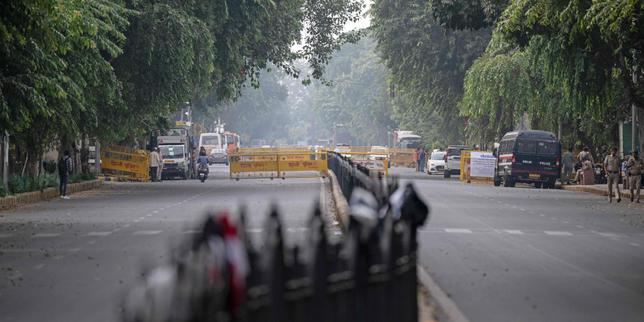
The iron gates on Third Street do not open on Sunday mornings anymore. Inside the locked perimeter of Most Holy Redeemer Catholic Church on the Lower East Side, paint peels from plaster vaults that have absorbed prayers since the mid-nineteenth century, while outside, a handful of devoted parishioners still gather on the sidewalk to recite the rosary against empty air.
Most coverage of this architectural quietus frames it as a simple tragedy of demographic loss. Pious elders weep on worn steps. Neighborhoods change. Attendance dwindles. The Archdiocese of New York shrugs, cites a shortage of priests and structural decay, and points congregants toward the nearest consolidated parish a few blocks away.
This narrative is convenient. It is also incomplete.
To understand why historic sanctuaries across Manhattan are vanishing into the maw of real estate speculation, you have to look past the sentimental candles and examine the balance sheets. The closure of these sacred spaces follows a cold, calculated institutional blueprint. When dioceses face crippling structural liabilities, most notably historic settlements stemming from decades of clergy abuse claims, their vast portfolio of urban real estate transforms from a pastoral mission into a liquid asset class.
Take a close look at how these wind-downs happen. First, deferred maintenance is allowed to accumulate until the Department of Buildings slaps the property with safety violations. Next, structural integrity concerns are broadcasted to justify the sudden suspension of weekly services. Finally, congregations are quietly dispersed, leaving behind empty shells ripe for deconsecrated sale, demolition, and conversion into luxury condominiums.
The archdiocese operates under fiscal realities that brook no sentimentality. Real estate analysts note that owning sprawling, under-occupied parcels of land on the rapidly gentrifying Lower East Side carries immense opportunity costs. When parishes like Most Holy Redeemer or earlier casualties like Nativity on Second Avenue wind down operations, they are resolving liquidity deficits on a massive corporate ledger. The loss of a spiritual home is not an accidental byproduct of a changing city; it is a managed asset reallocation.
Preservationists and grassroots neighborhood groups fight back with landmarking petitions and prayer vigils, but they are playing a defensive game against an opponent holding all the structural cards. Canonical appeals to Rome crawl at glacial speeds, while bulldozers move at the velocity of Manhattan private equity. By the time the faithful realize their parish has not merely been closed for repairs but engineered for extinction, the deed has already changed hands.
The locked doors on the Lower East Side are a monument to a specific brand of urban erasure. The pews are empty not just because modern city dwellers have stopped praying, but because the corporate church decided the land beneath the altar was worth far more than the souls kneeling upon it.