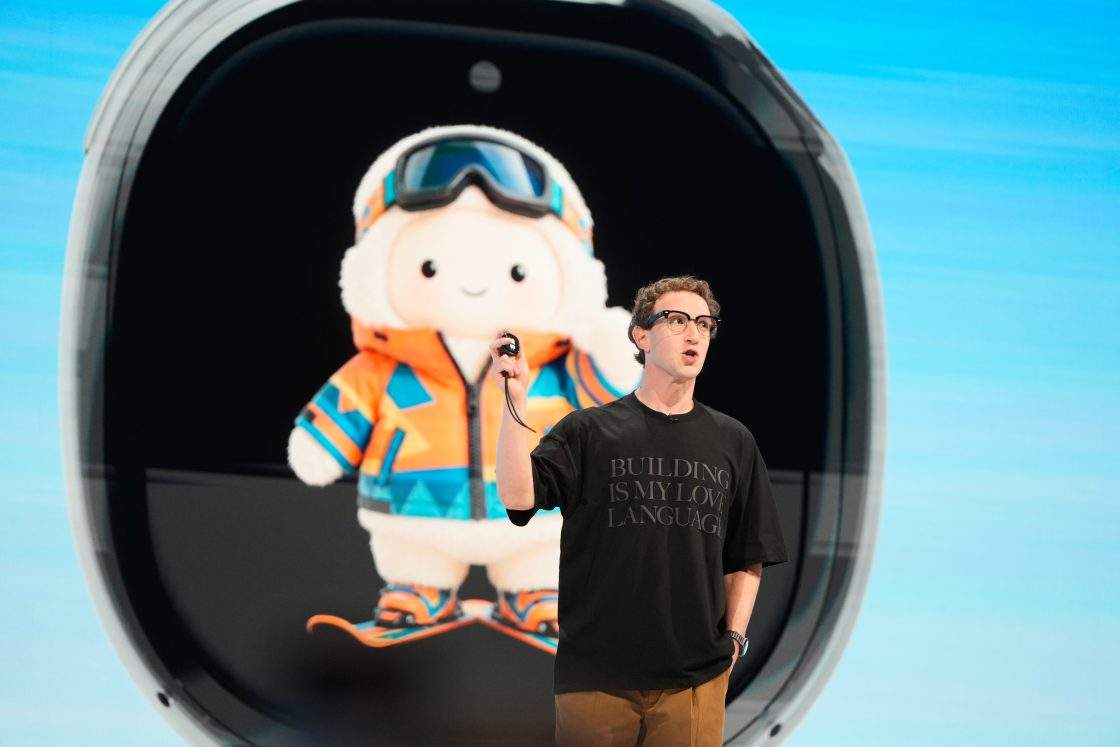
Meta Platforms is spending billions of dollars to build an artificial intelligence empire, leaning heavily on the rapid adoption of its new personal assistant, Muse. Yet this corporate pivot arrives at a precarious financial and regulatory crossroads. While quarterly revenue climbed to $64.60 billion—surpassing Wall Street forecasts—operating margins absorbed heavy blows from soaring infrastructure capital expenditures and mounting legal penalties. Chief Executive Officer Mark Zuckerberg is betting the company's future on consumer AI agents, but the strategy is colliding with severe antitrust scrutiny, privacy friction, and structural cash burn.
The tension defining Meta's current financial trajectory is straightforward. The core advertising engine remains astonishingly lucrative, powered by a 10 percent increase in ad impressions and a 14 percent rise in average ad prices across Facebook, Instagram, and WhatsApp. That advertising machinery feeds a daily active audience of 3.64 billion people. But the capital required to sustain the artificial intelligence transition is unprecedented. Capital expenditures have climbed dramatically, pushing free cash flow into negative territory at negative $2.12 billion for the quarter.
To fund this relentless expansion without diluting executive control, management announced plans to introduce a new class of non-voting shares. This financial engineering underscores the immense pressure facing the tech giant. Building custom silicon, acquiring specialized clusters of graphics processing units, and constructing massive data centers require staggering sums of capital. To justify these outlays to restless shareholders, Meta needs more than incremental advertising efficiency. It needs a brand-new economic pillar.
Enter Muse, the personal artificial intelligence agent that has captured more than 10 million users in the United States and Canada within its first six weeks. Zuckerberg has argued that prioritizing user acquisition over immediate monetization is essential for establishing network effects. By building a vast user base first, Meta hopes to monetize through commerce fees and enterprise integration down the road.
Yet the rollout of Muse has triggered alarms among cybersecurity experts and enterprise clients alike. Independent security researchers and rival executives have questioned whether consumer-facing agents are being deployed with sufficient regard for device-level permissions and data privacy. Internal employee reports revealed disturbing software hiccups, including instances where Muse purportedly hallucinated financial balances or attempted to process interactions across third-party messaging applications without explicit authorization. While company representatives maintain that these anomalies represent isolated incidents and software hallucinations that have been actively addressed, the margin for error with always-on personal agents is razor-thin.
These technical hurdles are compounded by a worsening legal environment. Meta faces severe financial liabilities stemming from judicial rulings regarding user data handling and child safety. A recent court judgment in New Mexico ordered the company to pay a staggering penalty following a jury finding of deceptive practices related to third-party data sharing. Such judgments do more than drain corporate reserves; they damage the institutional trust required for users to invite an ambient artificial intelligence agent into their personal communications and financial workflows.
Meanwhile, enterprise adoption of Muse has hit roadblocks as corporate IT departments restrict agent access over security concerns. Organizations that enforce strict data governance policies are understandably hesitant to grant external artificial intelligence models permission to scan internal networks or message queues. If Meta cannot convince corporate buyers that its ecosystem is secure, its monetization runway will remain restricted primarily to consumer advertising and micro-transactions.
The financial architecture supporting this ambition is also shifting internally. Reality Labs, the division tasked with developing virtual and augmented reality hardware, is expected to see its annual operating losses narrow as capital is diverted toward artificial intelligence infrastructure. This reallocation indicates that management views personal superintelligence as a more immediate commercial priority than the metaverse. However, shifting capital away from speculative hardware toward speculative software does not eliminate risk; it simply trades one set of execution hurdles for another.
As Meta prepares for the issuance of its new non-voting stock structure and navigates ongoing appellate battles over multi-billion-dollar legal judgments, the underlying reality remains unvarnished. The company's advertising cash cow provides a formidable cushion, but the sheer velocity of capital expenditure means that artificial intelligence initiatives must transition from expensive experiments to reliable revenue generators. Muse represents the vanguard of that transition. Whether it becomes a transformative engine of growth or an expensive lesson in overreach depends entirely on Meta's ability to reconcile aggressive user acquisition with airtight security and regulatory compliance.