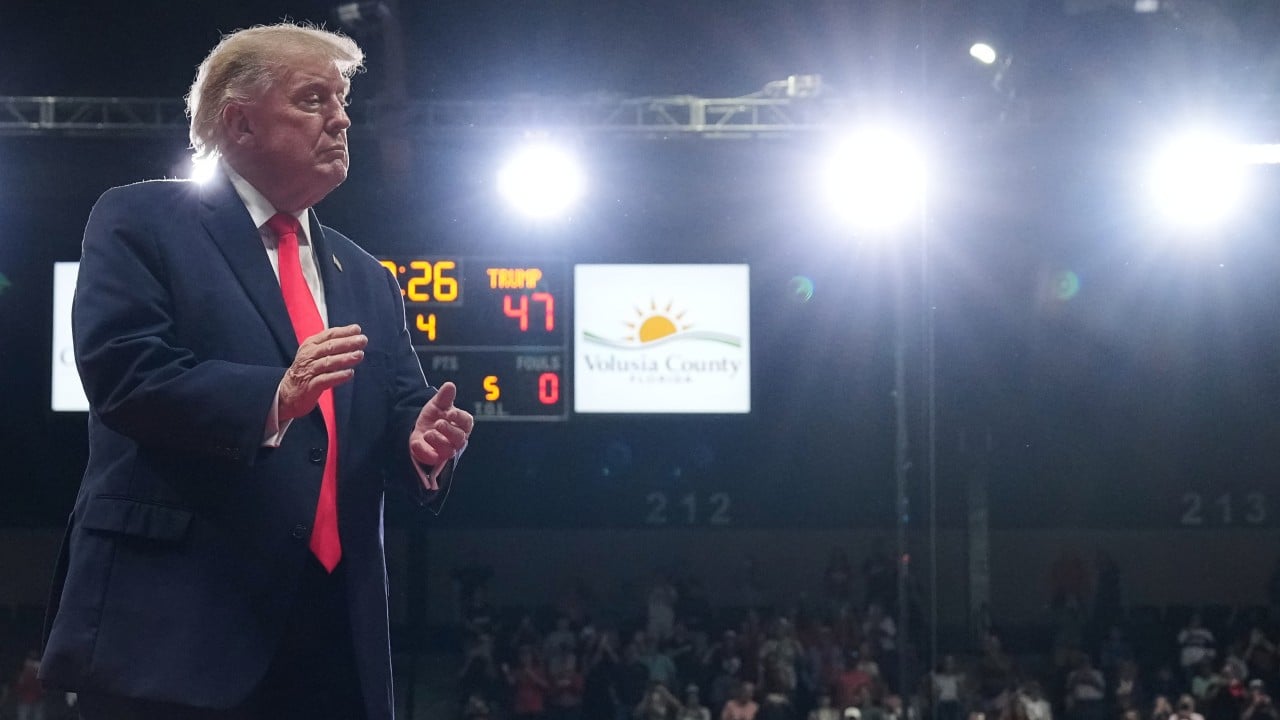
Donald Trump is returning to the campaign trail with a clear message for nervous party operatives, insisting that Republicans still "have a shot" in the midterm elections even as questions about his stamina and physical health shadow his public appearances. According to coverage of his renewed rally schedule, the former president is betting that his signature brand of high-energy, stadium-style campaigning can overcome both historical midterm headwinds and persistent scrutiny over his age and fitness. It is a high-stakes wager that exposes a fundamental tension inside the modern Republican Party: the very leader required to turn out the conservative base is also the figure whose physical durability and political volatility dominate every news cycle.
The Structural Math Against the Party in Power
To understand why Trump is framing the GOP’s electoral prospects as merely having "a shot" rather than projecting his usual inevitability, you have to look at the cold mechanics of American midterm elections. History is ruthless to the party holding the White House. Since the Civil War, the president’s party has lost seats in the House of Representatives in almost every single midterm cycle, with rare exceptions like 1998 and 2002 driven by extraordinary national circumstances.
Voters treat midterms as a referendum on the status quo. When inflation lingers, grocery bills stay stubbornly high, or global instability dominates the evening news, the electorate rarely rewards the incumbent party with expanded majorities. Instead, frustrated independent voters stay home or swing toward the opposition, while the out-of-power party enjoys an organic enthusiasm advantage.
Trump’s phrasing acknowledges this reality without surrendering to it. By telling supporters that Republicans have a viable path if they show up, he is attempting to manufacture the kind of existential urgency that normally belongs only to the opposition. Political strategists across Washington note that turning out low-propensity voters—the exact demographic that propelled Trump in presidential years—is exponentially harder when his name is not physically printed at the top of the ballot. Rallies are his primary mechanism for bridging that enthusiasm gap, attempting to transfer his personal political capital onto down-ballot Senate and House candidates who lack his gravitational pull.
The Optics of Endurance on the Campaign Trail
The decision to resume a rigorous rally schedule arrives at a moment when public focus on presidential health has never been sharper. After years of Republican strategists weaponizing age and stamina against Democrats, the spotlight has swung squarely back onto Trump. Observers and media outlets have closely tracked every slurred word, every meandering tangent, and every moment of visible fatigue during marathon speeches that routinely stretch past ninety minutes.
Campaign insiders argue that stepping back onto the stage is the most direct way to counter narratives of physical decline. In political communications, visibility is proof of life. A leader standing under bright arena lights for hours sends a deliberate visual signal to donors, voters, and potential rivals that he remains firmly in command of his faculties and his movement.
Yet this strategy carries an inherent contradiction. The longer Trump speaks without a teleprompter, the more raw material he provides to critics scrutinizing his cognitive sharpness and physical stamina. For every supporter who leaves an arena energized by his off-the-cuff humor and combative rhetoric, a clip of a verbal stumble or a moment of confusion circulates endlessly across social media feeds and cable news panels.
Medical experts who comment on public figures from afar consistently caution against diagnosing anyone without a direct clinical examination. Still, the political reality does not require a medical chart to take hold. Perception operates on its own timeline. When voters begin asking whether a leader has the physical bandwidth for the grueling demands of governance and campaigning, every subsequent appearance becomes a pass-fail test rather than a standard political event.
Why Down-Ballot Republicans Cannot Quit the Rally Circuit
Behind closed doors in Washington and state capitals, Republican campaign managers often express anxiety about the unpredictability of Trump’s rally rhetoric. A speech meant to hammer the opposition on border security or energy costs can easily veer into personal grievances, settled scores from past elections, or attacks on fellow Republicans. In swing districts where suburban moderates decide the outcome, that kind of messaging can complicate carefully calibrated local campaigns.
Despite those risks, almost no viable Republican candidate can afford to alienate the movement’s central figure. The modern GOP primary electorate rewards absolute loyalty, and a public snub of a Trump rally is widely viewed as political suicide. Candidates in competitive states walk a tightrope: they need the surge of rural and working-class turnout that only Trump can generate, even as they try to insulate themselves from the broader controversies his appearances inevitably spark.
This dynamic creates an asymmetrical campaign environment. Democratic operatives eagerly amplify Trump’s rally remarks in battleground districts, using his own words to nationalize local races that Republicans would prefer to keep focused on local economic issues. Meanwhile, Republican field directors rely on the massive data-harvesting operations tied to those exact events. Every ticket request for a rally yields phone numbers, email addresses, and zip codes that party committees feed directly into their get-out-the-vote machines.
The Hidden Logistics of the Modern Political Spectacle
From the outside, a political rally looks like pure improvisation, a spontaneous collision of a speaker and a crowd. In reality, resuming a national rally tour requires an immense, costly logistical apparatus that tests a campaign’s financial and operational discipline.
Securing venues, coordinating with local law enforcement, managing Secret Service perimeters, and deploying advance teams across multiple time zones burns through campaign cash at a staggering pace. During a midterm cycle, every dollar spent flying an entourage to an arena in a safe red state is a dollar not spent on television ad buys in competitive media markets like Phoenix, Philadelphia, or Atlanta.
Veteran advance operatives know that the physical toll of this travel schedule is brutal even for candidates decades younger than Trump. Stepping off a plane, shaking hands on a tarmac, conducting local television interviews, delivering a two-hour speech, and flying back overnight disrupts sleep cycles and strains vocal cords. When health concerns are already part of the public conversation, campaign schedulers face intense pressure to balance the demand for high-impact appearances against the physical limits of their principal.
Historical Precedents and the Limits of Star Power
History offers sobering lessons for presidents and party leaders who believe their personal charisma can override midterm fundamentals. Barack Obama drew massive, adoring crowds in 2008, yet his personal popularity could not prevent Democrats from suffering a historic shellacking in the 2010 midterms, where the party lost sixty-three House seats. Bill Clinton faced a similar reckoning in 1994, watching Republicans sweep control of both chambers of Congress for the first time in forty years despite his formidable retail campaigning skills.
In both cases, the central figure discovered that political magic is rarely transferable. Voters who show up to cheer a charismatic leader do not automatically feel the same urgency to cast a ballot for a local congressional representative they barely know.
Trump’s political operation believes it can break this historical pattern by turning the midterms into a direct proxy battle over his legacy and authority. By framing every congressional race as a personal favor to him, he attempts to bypass the traditional indifference of midterm voters. Whether that emotional appeal can outweigh economic anxieties, demographic shifts in the suburbs, and growing questions about his own physical endurance remains the central unanswered question of the cycle.
The Strategic Dilemma Facing GOP Leadership
Party leaders on Capitol Hill are acutely aware of what hangs in the balance. Losing control of the House or Senate does not merely stall legislative priorities; it immediately triggers subpoena power, endless oversight hearings, and political paralysis for the remainder of the term. For a party already navigating internal ideological divides, sliding into the minority would spark an immediate, bruising fight over leadership and future direction.
Because the stakes are so high, Republican strategists have largely deferred to Trump’s instincts, even when those instincts clash with conventional campaign wisdom. If he wants to hold massive rallies to prove his vitality and rally the faithful, the party apparatus falls into line, booking the halls and amplifying the clips.
Yet the reliance on a single individual’s physical stamina and rhetorical discipline leaves the entire party exposed to a single point of failure. Modern political campaigns are typically built around distributed networks—surrogates, governors, local mayors, and issue-focused coalitions working in concert. When one leader insists on remaining the sole sun around which the entire party orbits, any sign of fatigue, any off-message tangent, or any health scare reverberates across every single race on the map.
As the campaign calendar accelerates toward November, the rallies will continue to draw thousands of vocal supporters and hours of cable news coverage. The crowds will cheer, the music will blare, and the rhetoric will remain as combative as ever, leaving voters to decide whether the spectacle represents genuine political strength or a high-risk gamble against time and history.