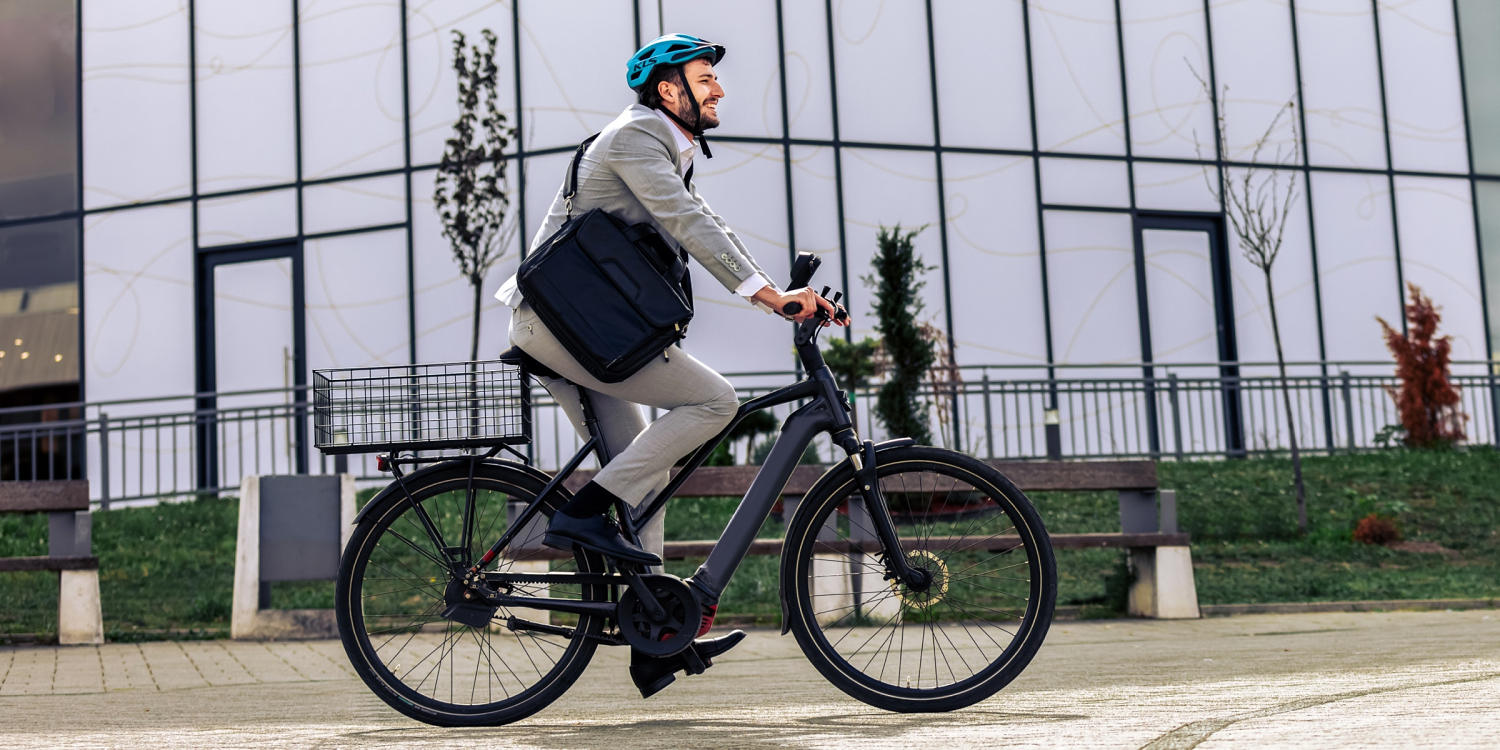
New York City has officially outlawed the vast majority of consumer e-bikes currently locked to street poles, parked in residential hallways, and weaving through Manhattan traffic. If your throttle-controlled commuter vehicle can exceed twenty miles per hour without human pedal input, or if it lacks a specific Underwriters Laboratories certification stamp, you are operating an illegal machine under current municipal enforcement priorities.
For the past ten years, municipal authorities encouraged the mass migration from gas-powered delivery scooters and cramped subway cars to lightweight electric transport. Millions of residents listened. They invested heavily in battery-powered mobility to solve the notorious transit deserts of outer-borough commuting. Now, those same municipal authorities are wielding new legislative tools and stepped-up NYPD confiscation sweeps against the very population they urged to go green.
The policy shift did not happen in a vacuum. It arrived amid mounting public fury over catastrophic lithium-ion battery fires, reckless sidewalk riding, and the near-total collapse of street-level enforcement against commercial delivery operators. Yet, by painting all electric two-wheelers with a single regulatory brush, city hall has ensnared thousands of recreational commuters, suburban railway riders, and environmentally conscious workers who bought commercially manufactured machines from reputable brands years before these local ordinances materialized.
Understanding the regulatory maze requires looking past the political press conferences and examining the collision between federal consumer safety standards, state vehicle and traffic laws, and heavy-handed municipal administrative rules.
The Anatomy of a Municipal Ban
To grasp why your daily ride might suddenly land you a court summons, you must first separate federal commerce rules from local street law. The federal Consumer Product Safety Commission regulates how bikes are manufactured and imported. Under federal definitions, a low-speed electric bicycle falls into specific classes based on maximum motor speed and whether the motor requires pedaling to engage.
New York State law adopted a modified version of this three-tier classification system back in 2020, formally legalizing class one and class two e-bikes on certain streets and designated bike lanes. Class one provides assistance only when the rider pedals, cutting off at twenty miles per hour. Class two features a throttle that can propel the bike without pedaling, also capping out at twenty. Class three permits speeds up to twenty-five miles per hour but requires pedal-assistance only.
This is where the regulatory friction begins. New York City, possessing unique home-rule powers granted under state law, layered its own specific mandates on top of the statutory framework. The Department of Transportation and the City Council did not simply enforce the speed tiers. They introduced fire-safety certification hurdles that rendered thousands of older, perfectly functioning personal e-bikes retroactively non-compliant.
Under local laws enacted to curb deadly residential fires, retail sale and distribution of electric mobility devices within the five boroughs now require certification to recognized standards such as UL 2849 or UL 2271. While these rules were explicitly designed to stop fly-by-night importers from selling uncertified, cheaply made lithium-ion replacement packs with unstable chemistry, the city’s enforcement mechanisms have created a grey market of confusion for regular owners.
If you bought your e-bike online three years ago from a well-known direct-to-consumer brand, but that specific model lacks the physical UL certification sticker demanded by local inspectors, your bike is legally persona non grata on municipal asphalt. Even if the internal battery management system is entirely stable and manufactured by a tier-one electronics firm, the absence of the bureaucratic paper trail or physical label exposes you to police seizure.
The Fire Crisis Versus the Commuter Reality
The primary justification offered for the tightening net of restrictions is public safety. City fire marshals have spent the last three years responding to an exponential spike in catastrophic residential blazes traced directly to compromised lithium-ion cells. These are rarely high-end personal e-bikes used by careful owners. Instead, investigators repeatedly trace the fatal infernos to second-hand delivery bikes, poorly rebuilt battery packs, uncertified chargers bought off discount marketplaces, and packs subjected to daily abuse and water damage in commercial operations.
A hypothetical scenario illustrates the administrative disconnect. A freelance graphic designer in Astoria purchases a mainstream, brand-name e-bike to commute to an office in Midtown. The vehicle has robust internal management systems, hydraulic disc brakes, and a speed governor set strictly at twenty miles per hour. The rider stores the battery inside a climate-controlled apartment, uses the original manufacturer charger, and inspects the cables weekly.
Under the city's current enforcement posture, if an inspector or officer demands proof of compliance and the bike lacks the specific fire-safety certification placard mandated by local ordinance, that designer faces the exact same legal jeopardy as an underground operator charging ten unmonitored, water-damaged lithium packs in a wooden stairwell.
The city is deploying a blunt instrument to solve a nuanced engineering problem. By focusing enforcement on street-level stops rather than targeting the wholesale distribution of uncertified aftermarket batteries at ports and online marketplaces, authorities have shifted the burden of compliance onto individual riders who often have no technical way to retrofit older equipment to meet the new municipal standards.
Navigating the Maze of Street Enforcement
For riders determined to stay within the boundaries of the law, navigating the landscape requires a meticulous audit of your hardware. Do not rely on what the retail salesperson told you when you bought the machine.
First, examine your motor mechanism. If your throttle operates independently of your pedals and pushes the machine past twenty miles per hour on flat ground without pedaling, you are riding a vehicle that sits outside the legal definition of a Class 2 e-bike in New York State. If the throttle can be disabled or electronically re-programmed via an app, do so immediately. Many riders have inadvertently converted legal commuter bikes into illegal mopeds by unlocking hidden speed limiters designed for private-property use.
Second, hunt for the compliance label. New York City enforcement agents look for visible certification markers from accredited testing laboratories. If your frame lacks these badges, you are operating at the discretion of the individual officer who pulls you over.
Third, pay close attention to where you ride. Even if your e-bike clears every federal and state hurdle, municipal geography dictates your legality. Electric bikes remain strictly banned on all boardwalks, in most pedestrian parks unless specifically signed, and on sidewalks citywide. Sidewalk riding is the fastest way to attract the attention of traffic enforcement agents, regardless of your vehicle's technical compliance status.
The NYPD has historically focused its largest confiscation sweeps on commercial delivery corridors in dense commercial districts, but neighborhood precincts have increasingly initiated random stops of recreational riders during morning and evening rush hours. The financial penalty is rarely just a minor traffic ticket; impound fees, storage costs, and administrative retrieval hoops often make recovering a seized machine more expensive than the residual value of the bike itself.
The Broader Failure of Urban Mobility Infrastructure
The underlying tension in New York City is not really about batteries or speedometers. It is about a municipal administration attempting to retrofit twentieth-century infrastructure to handle a twenty-first-century transit revolution without committing the necessary capital or political will to build proper protected pathways.
Bike lanes across the five boroughs remain narrow, frequently blocked by delivery vans, and poorly segregated from multi-ton commercial traffic. When delivery workers rushing to meet algorithmic deadlines are forced onto narrow corridors alongside recreational commuters on heavy electric machines, friction is inevitable. Rather than redesigning the streetscape to accommodate the massive volume shift toward electric micro-mobility, the city has retreated into a posture of reactive policing and administrative prohibition.
Public officials continue to promise more protected bike infrastructure, yet the pace of implementation crawls while the number of electric two-wheelers on the road accelerates daily. The result is a perpetual game of catch-up where regulations serve primarily as a revenue-generating tool and an excuse for selective enforcement rather than a coherent framework for sustainable urban transit.
Until the city aligns its local ordinances with federal realities, establishes clear, affordable pathways for legacy bike owners to certify their equipment, and refocuses fire safety enforcement on manufacturing and retail imports rather than roadside harassment of commuters, anyone turning a key on an electric bike in the five boroughs is taking an uncalculated legal risk. The machine beneath you might be engineered for modern efficiency, but the legal reality you are navigating belongs to another era entirely.