A silent killer is drifting through the warm air of Manhattan's wealthiest neighborhood, and the city's infrastructure is completely unprepared to stop it.
On Friday, New York City health officials confirmed the first death linked to a massive Legionnaires' disease outbreak on the Upper East Side. At least 67 people have been infected across three heavily residential ZIP codes—10028, 10128, and 10075. Decades of bureaucratic inertia, combined with a rapidly warming climate, have transformed the city's luxury high-rises and historic institutions into public health hazards. Also making headlines recently: The Anatomy of Lip Photoaging A Quantitative Analysis of Vermilion Border Degradation and Chemical Barrier Selection.
The crisis is expanding. What began as a handful of isolated respiratory cases in early July has exploded into a full-scale municipal emergency. As hospitalized patients fight for their lives against severe pneumonia, a deeper investigation reveals a broken enforcement system that shields building owners while leaving ordinary citizens exposed to lethal, aerosolized bacteria.
The Vapor Trail Over Park Avenue
Legionnaires' disease does not spread from person to person. It travels through the air, carried by microscopic water droplets that people inhale without ever knowing they are in danger. When the New York City Department of Health and Mental Hygiene began sampling water from cooling towers in Carnegie Hill and Yorkville, they discovered a widespread contamination crisis. Additional information regarding the matter are explored by CDC.
Out of 183 cooling towers tested in the immediate area, 76 returned positive results for the presence of Legionella bacteria.
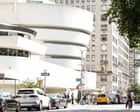
The list of contaminated structures reads like a directory of New York's elite institutions. The Metropolitan Museum of Art, the Solomon R. Guggenheim Museum, exclusive private academies, and multi-million-dollar cooperatives along Fifth and Park Avenues all housed towers containing the bacteria.
Cooling towers are essential components of large-scale air conditioning and refrigeration systems. They discard heat by spraying water down a tower, creating a natural cooling effect through evaporation. If the water inside these systems is not constantly treated with biocides, it becomes a perfect breeding ground for Legionella. The resulting exhaust is not just warm air. It is a plume of contaminated mist thrown directly into the urban atmosphere.
For weeks, residents walking their dogs, sitting in outdoor cafes, or visiting world-class museums were breathing in this invisible fog.
A History of Predictable Failures
The current emergency is not an isolated incident. It is part of a recurring pattern of systemic neglect.
Just last year, a devastating Legionnaires' outbreak tore through Harlem. That cluster sickened more than 100 people and claimed seven lives. The primary sources of that outbreak included cooling towers atop Harlem Hospital and a construction site for the city's own public health laboratory. The irony was bitter, yet it failed to spark structural reform.
Litigation from the Harlem disaster is still winding its way through the court system. Personal injury attorneys have filed major lawsuits against the city, arguing that municipal authorities failed to maintain their own properties. The legal filings argue that the city's monitoring program is fundamentally reactive, stepping in only after people begin dying in local emergency rooms.
The standard defense from property owners is that Legionella is ubiquitous in natural water systems. This is true but misleading. While the bacteria exist in rivers and lakes at low, harmless levels, human engineering concentrates them to lethal thresholds. A building owner who fails to maintain proper chemical treatment in a cooling tower is effectively operating an unmonitored biological hazard.
The Subtropical Reality of Modern New York
Local officials have begun pointing to broader environmental forces to explain the surge in cases. Health Commissioner Dr. Alister Martin openly noted that the local climate has shifted significantly, taking on subtropical characteristics that accelerate bacterial growth.
Higher average summer temperatures mean that cooling towers must work harder and run longer. This creates sustained warm environments within the water basins where Legionella thrives. When heavy summer downpours are followed by intense heat waves, the humidity traps water vapor closer to the street level instead of letting it disperse safely into the upper atmosphere.
Urban infrastructure is struggling to adapt to this shifting climate. Many older buildings utilize antiquated cooling equipment that features dead legs—sections of piping where water stagnates for weeks at a time. Stagnant water quickly loses its chlorine residual, allowing a thick biofilm to coat the inside of the pipes. Once this biological film is established, it acts as a protective shield for bacteria, rendering standard chemical flushes useless.
Testing Loopholes and Bureaucracy
The political response to the Upper East Side cluster has exposed deep rifts within city leadership. City Council Speaker Julie Menin, who represents the affected neighborhood, has publicly criticized the health department's handling of the crisis. She contends that officials moved far too slowly to protect residents.
The core of the dispute involves the testing methodologies utilized by the city. When an outbreak is suspected, environmental inspectors perform a quick polymerase chain reaction screening. This test can detect bacterial DNA within hours, but it cannot differentiate between live, dangerous bacteria and dead organisms left behind after a recent cleaning.
To confirm an active threat, the city must wait for a traditional culture test, a process that requires incubating water samples in a laboratory for up to two weeks.
Menin argues that the health department should have ordered a blanket, immediate disinfection of every single cooling tower in the zone the moment the first cluster of human cases emerged. Instead, bureaucratic protocol dictated a staggered approach, waiting for individual screenings before issuing mandatory cleanup orders. This delay gave the bacteria additional time to multiply and spread through the neighborhood air.
The True Cost of Class Disparity
For years, a narrative persisted in municipal politics that Legionnaires' disease was a problem confined to low-income neighborhoods with decaying infrastructure. Outbreaks frequently occurred in the South Bronx or Upper Manhattan, where public housing complexes and underfunded commercial properties struggled with maintenance budgets.
The Upper East Side outbreak shattered this assumption.
Bacteria do not recognize real estate values or ZIP codes. The property managers of luxury co-ops on Fifth Avenue possess the financial resources to hire premium water-treatment consultants, yet their towers tested positive just like those in less affluent areas. This demonstrates that the issue is not a lack of capital, but a widespread failure of operational oversight.
Building staff are often trained to handle mechanical repairs, electrical systems, and aesthetic upkeep. Very few possess a background in environmental microbiology. They treat cooling towers as plumbing fixtures rather than complex biochemical ecosystems that require daily calibration.
Urgent Regulatory Reform is Needed
The current inspection framework is fundamentally broken because it relies entirely on self-reporting and sporadic municipal audits. Under existing city laws passed after a major 2015 outbreak, building owners are required to register their cooling towers and perform routine testing. However, the system lacks the manpower required for real-time enforcement.
Inspectors generally show up after a hospital notices a spike in pneumonia admissions. This is a lagging indicator that costs lives.
A truly proactive system would require automated, continuous monitoring of biocide levels in every commercial cooling tower across the five boroughs. The technology exists to send digital alerts to the city the moment a tower's chlorine or bromine levels drop below a safe threshold. Implementing such a system would require significant investment and political will, but it is the only way to transform the city's defense mechanism from an autopsy-driven investigation into a preventative shield.
Until the city forces landlords to view water maintenance as a matter of life and death, every summer heatwave will carry the risk of another outbreak. The vapor rising from Manhattan's rooftops remains an unquantified threat, and the single fatality recorded this week on the Upper East Side may simply be the prelude to a much larger systemic reckoning.

.png?width=1200&auto=webp&trim=0%2C0%2C0%2C0)
