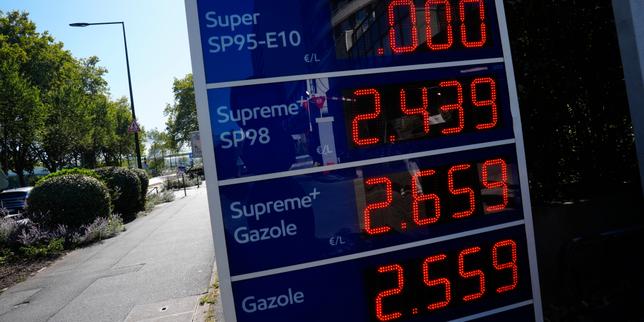
Diesel prices in Northern Ireland have surged to unprecedented heights, hitting an average of 193.3p per litre according to recent Consumer Council data, marking a punishing milestone since the geopolitical shockwaves of the Iran conflict first rattled global energy markets. For drivers commuting across counties or relying on commercial transport, the numbers on the forecourt are no longer just an inconvenience; they are an economic constraint biting deep into household budgets and operational margins.
Yet, viewing this surge solely through the lens of Middle Eastern supply disruption misses the deeper structural fractures unique to the region's fuel retail sector. While wholesale costs dictate the baseline, the velocity and unevenness with which those costs translate to pump prices reveal a market where consumer protection often lags far behind corporate pricing agility.
The Anatomy of the Regional Spike
When global crude benchmarks fluctuate, the ripple effect across the United Kingdom is rarely uniform. Northern Ireland has historically occupied a peculiar space in fuel economics. On one hand, drivers frequently point to localized anomalies where neighboring towns display stark discrepancies in pump costs. On the other hand, broader analyses conducted since the onset of the Iran conflict demonstrate that regional supply chains absorb and amplify shocks differently than urban centers in Great Britain.
Consider a hypothetical scenario to illustrate the mechanism: two independent haulage firms operating identical fleets—one based in rural Tyrone and another in Southeast England—face identical wholesale distillate costs. Yet the Tyrone operator deals with lower population density, longer transit distances for fuel replenishment from major import terminals, and a heavily fragmented retail market dominated by independent dealers rather than hyper-competitive supermarket clusters. When global refining margins tighten due to Middle Eastern shipping bottlenecks, regional distributors pass on the cost penalty almost immediately to protect fragile operating cash flows, while larger corporate entities elsewhere can buffer margins across multi-tier retail ecosystems.
The Retailer Margin Puzzle and Watchdog Scrutiny
Regulatory bodies have long scrutinized the speed at which forecourt operators adjust prices upward compared to the sluggishness of downward corrections. The Competition and Markets Authority has repeatedly flagged that drops in wholesale fuel costs are rarely passed on to motorists with the same urgency as price hikes.
In Northern Ireland, this phenomenon is exacerbated by retail fragmentation. Independent dealers argue that their buying power is severely restricted compared to national supermarket giants, leaving them exposed to every tremor in wholesale markets. Critics, however, contend that transparency remains opaque. When motorists observe double-digit pence variances between stations separated by only a few miles—as frequently reported by disgruntled drivers navigating between Antrim and Ballymena—market efficiency breaks down entirely. The consumer is left navigating a patchwork of pricing strategies where shopping around becomes an exhausting weekly chore rather than a baseline consumer right.
Beyond the Forecourt The Wider Economic Toll
The cost of diesel does not stop at the passenger car tank. Because commercial freight, public transit, and agricultural machinery run predominantly on diesel, elevated pump prices act as an invisible tax on nearly every physical good entering the supply chain.
Logistics operators running freight across the Irish Sea and throughout local distribution routes cannot absorb prolonged spikes above 190p per litre without triggering cascading adjustments. Freight companies add fuel surcharges that eventually materialize on supermarket shelves and hardware merchants. Farmers facing astronomical fuel bills for tractors and harvesting equipment pass those overheads down the agricultural pipeline. Public transport networks face difficult choices regarding service cuts or increased ticket prices, threatening mobility for rural communities with limited alternative infrastructure.
The persistent elevation of diesel prices since the geopolitical crises of early 2026 demonstrates that energy vulnerability is a structural reality. Until supply chains achieve greater resilience and retail pricing mechanisms face rigorous, enforceable transparency, the burden will continue to rest squarely on the shoulders of regional drivers and local businesses who have no alternative fuel source left to turn to.