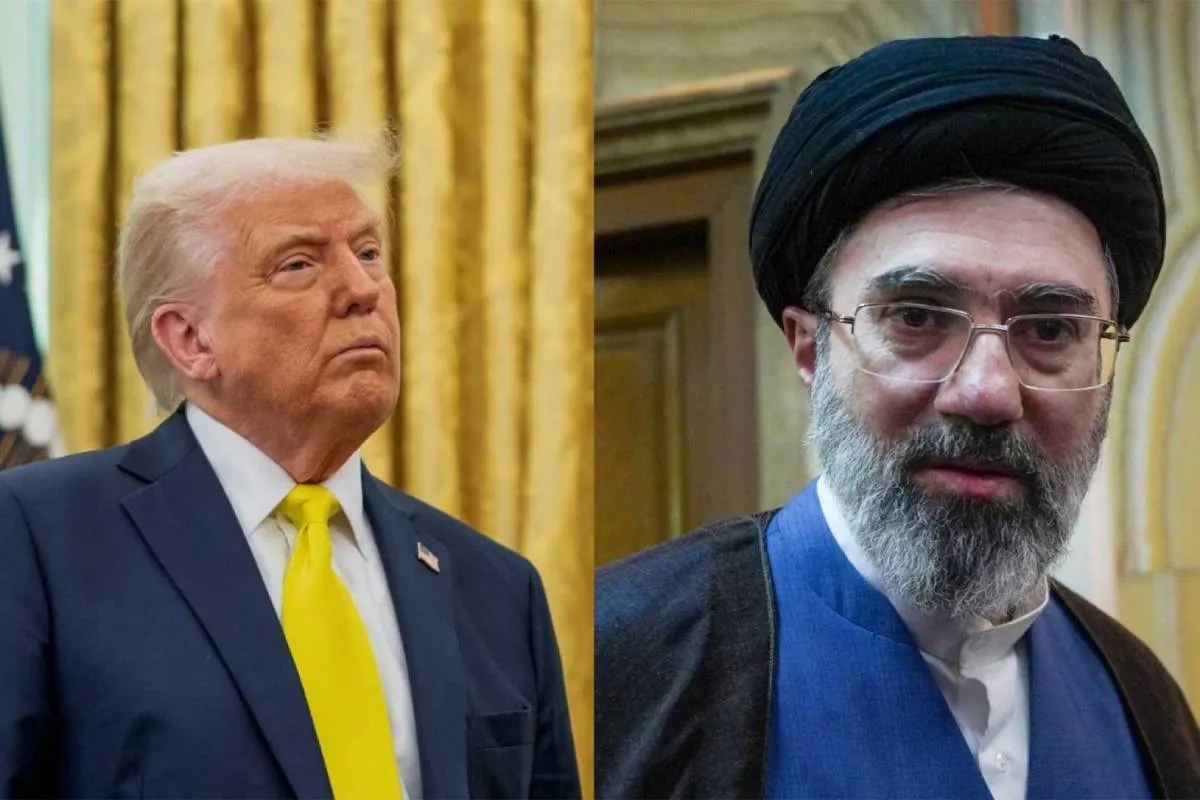
When the European Union formally aligned with Washington’s newly minted Operation Economic Outcast, diplomatic circles in Brussels and Washington framed it as a routine consolidation of Western resolve. Beneath the polite phrasing of European Commission communiqués, however, lies an aggressive financial containment strategy. The European Union has joined the United States in choking off Tehran's remaining access to international liquidity, targeting digital assets, gold reserves, and shadow maritime logistics. For decades, sanctions against Iran operated like a leaky sieve, full of jurisdictional loopholes and backdoor intermediaries willing to trade compliance for high-margin risk. This alignment alters the calculus of modern economic warfare.
To understand the actual weight of this trans-Atlantic convergence, one must look past the press releases and examine the mechanics of financial isolation. U.S. Treasury Secretary Scott Bessent made the administration's stance explicit: any foreign bank or institution facilitating transactions for sanctioned Iranian networks faces total exclusion from the U.S. dollar clearing system. For European financial houses, which handle massive volumes of global trade, the choice is binary. They can maintain legacy exposure to fringe intermediaries or protect their access to New York. They have chosen New York. This eliminates the traditional gray zones that Tehran exploited to weather previous embargoes.
The Iranian government has dismissed these measures as empty posturing, characterizing the campaign as economic terrorism orchestrated by external powers. Yet the domestic reality on the ground tells a vastly different story. Years of compounding currency devaluation, rampant inflation running near catastrophic levels, and depleted foreign reserves have left the state apparatus extraordinarily brittle. When a nation’s foreign exchange earnings depend almost entirely on clandestine petroleum shipments routed through opaque corporate shells, any disruption to maritime insurance or digital asset tracking hits the jugular.
Consider how the architecture of illicit trade functions. Tehran has long relied on a complex web of ghost tankers, falsified transponders, and ship-to-ship transfers in international waters to move crude oil to buyers willing to look the other way. Operation Economic Outcast directly attacks the software of this system. By expanding secondary penalties to cover emerging financial technologies, decentralized ledgers, and obscure commodities trading firms, the coalition aims to make the cost of carrying Iranian oil prohibitive. Insurance providers in London and Piraeus refuse to underwrite voyages that carry even a whiff of secondary sanction exposure. When marine insurance evaporates, ships stay in port.
The friction is not purely economic. It is mirrored by kinetic escalation in vital maritime choke points, particularly around the Strait of Hormuz. Naval blockades and commercial vessel diversions orchestrated by U.S. Central Command have turned a theoretical trade embargo into an active physical barrier. Shipping lines moving goods through the Persian Gulf now face mandatory compliance checks and boarding procedures. Every container inspected and every tanker turned away increases freight costs and insurance premiums globally.
Critics of maximum pressure strategies often point to the phenomenon of adaptation. Sanctioned states invariably learn to route capital through alternative financial hubs, substituting traditional wire transfers with barter arrangements or regional currencies. This adaptation has limits. While smaller regional players might attempt to carve out exceptions, the total inclusion of European regulatory bodies means that major multinational corporations can no longer treat sanctions as a minor cost of doing business. Compliance departments in Frankfurt, Paris, and London have integrated these new rules directly into their automated transaction filters.
Tehran’s leadership faces an increasingly narrow corridor of choices. The domestic populace, having endured repeated waves of severe economic distress and subsequent civil unrest, offers a volatile foundation for a regime attempting to finance regional proxy networks and nuclear development simultaneously. When the state can no longer guarantee basic subsidies or stabilize its currency, the social contract frays rapidly.
The convergence of European regulatory alignment and American financial muscle signals the end of the era where rogue states could play Western allies against one another. By closing the institutional gaps that allowed illicit capital to circulate through European financial corridors, the West has constructed a much tighter cage around Iran’s economy. Whether this unprecedented level of financial strangulation forces a fundamental shift in Tehran's strategic calculus or merely deepens the isolation of a cornered regime remains the defining geopolitical question of the current fiscal year.