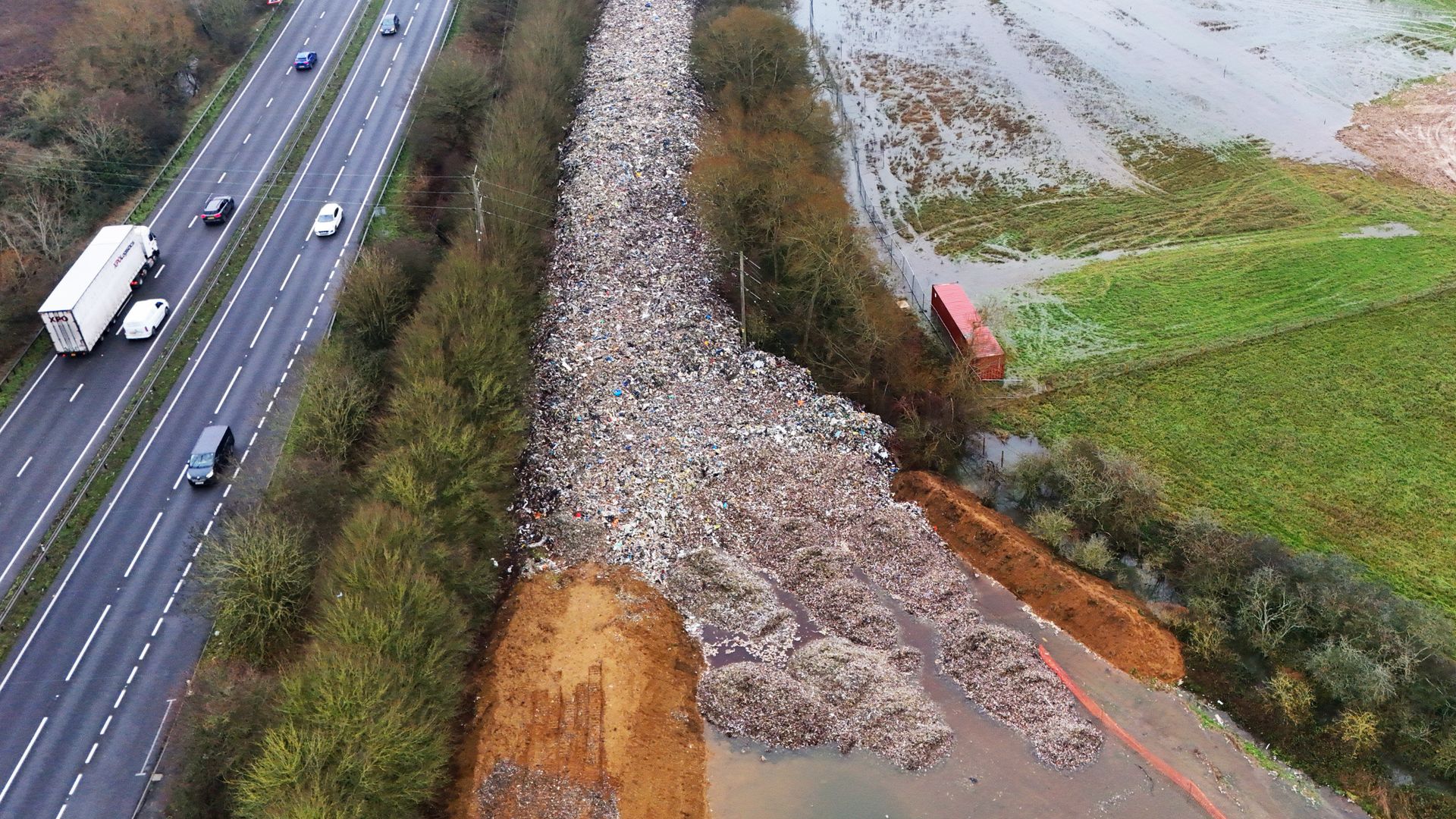
Two more arrests in Surrey have brought the total number of suspects detained over the massive Kidlington waste dump in Oxfordshire to six, but the multi-million-pound cleanup bill exposes a deeper institutional failure in how Britain polices environmental crime. When an estimated 22,704 tonnes of commercial and household rubbish—stacked ten metres high in a field alongside the A34 and the River Cherwell—took five months and £6 million of public money to clear, it signaled more than just an isolated fly-tipping incident. It exposed a lucrative criminal enterprise operating in plain sight, backed by systemic regulatory blind spots.
For months, the sprawling mound of shredded plastic, tyres, and general debris sat like a monument to impunity. Regulators knew it was there. Local residents smelled it, feared the toxic runoff into the nearby waterway, and worried about a catastrophic fire that could paralyze a major regional artery. Yet, the machinery of the state ground forward at bureaucratic speed while criminal syndicates pocketed millions in illicit disposal fees before abandoning the mess to the taxpayer. If you enjoyed this piece, you might want to check out: this related article.
The Economics of Waste Cartels
To understand how a field near Kidlington became a vertical mountain of refuse, you have to follow the money. Commercial waste disposal is expensive. Legitimate operators must pay steep landfill taxes, environmental permits, and compliance costs designed to keep hazardous materials out of the biosphere.
Organized crime groups bypass these overheads entirely. They lease agricultural land through intermediaries, often using front companies with opaque ownership structures. They undercut legitimate waste management firms by offering businesses a cheap, no-questions-asked disposal rate. Cash changes hands. Trucks roll in under the cover of darkness or behind fraudulent permits. By the time authorities secure the legal thresholds required to shut a site down, the perpetrators have milked the operation dry, dissolved the front company, and moved their excavators to a new patch of greenbelt. For another look on this story, see the latest coverage from TIME.
The Environment Agency typically maintains a policy of refusing to clear up illegal waste dumps on private land, shifting that financial burden onto landowners. But the Kidlington site was different. Its proximity to the River Cherwell and the A34 turned an environmental nuisance into an immediate public safety hazard. The agency had to break its own rule, funding the unprecedented multi-million-pound clearance through internal operational efficiencies rather than emergency treasury injection. That money came out of budgets meant to police other environmental threats across the country.
The Blind Spot of Corporate Duty of Care
The arrests of men from Surrey, Hampshire, and Berkshire show that law enforcement agencies, including the South East Regional Organised Crime Unit, are slowly penetrating the upper tiers of these networks. But focusing solely on the haulers and site operators ignores half the equation.
Every tonne of rubbish in that Oxfordshire field came from somewhere. Commercial enterprises, builders, retailers, and offices hired third-party contractors to clear their waste. Under United Kingdom law, businesses possess a strict duty of care to ensure their waste goes to a licensed facility. Too many companies treat this legal obligation as a box-ticking exercise. If a disposal quote is half the market rate, basic commercial logic dictates that corners are being cut.
When businesses look the other way, they effectively subsidize the criminal syndicates running these mega-dumps. Prosecuting the haulers is essential, but until the corporate clients who feed these illegal operations face aggressive, widespread auditing and heavy penalties, the supply chain of trash will remain intact.
The Illusion of Frontline Deterrence
Government ministers have been quick to champion recent arrests, pointing to tougher crackdowns and increased frontline officer presence. Rhetoric about putting environmental criminals on notice plays well in Westminster press briefings. On the ground in Oxfordshire and across similar rural hotspots in England, local authorities tell a different story.
Enforcement teams remain chronically under-resourced. Surveillance technology like drones helps catch perpetrators in the act, but monitoring thousands of square miles of agricultural land requires continuous, expensive intelligence-led policing. Criminals know the geographical limits of local enforcement. They exploit jurisdictional boundaries between county councils, police forces, and environmental regulators, operating in the gaps where coordination falters.
The Kidlington cleanup is finished, concrete blocks now guard the gate, and six men find themselves on conditional bail. Yet, across the countryside, new piles are quietly accumulating behind hedgerows, waiting for the next emergency declaration
Watch a report on the arrests over the Oxfordshire waste dump
This video report details the ongoing law enforcement operations and the scale of the criminal investigations surrounding the massive illegal waste site in Kidlington.
http://googleusercontent.com/youtube_content/1