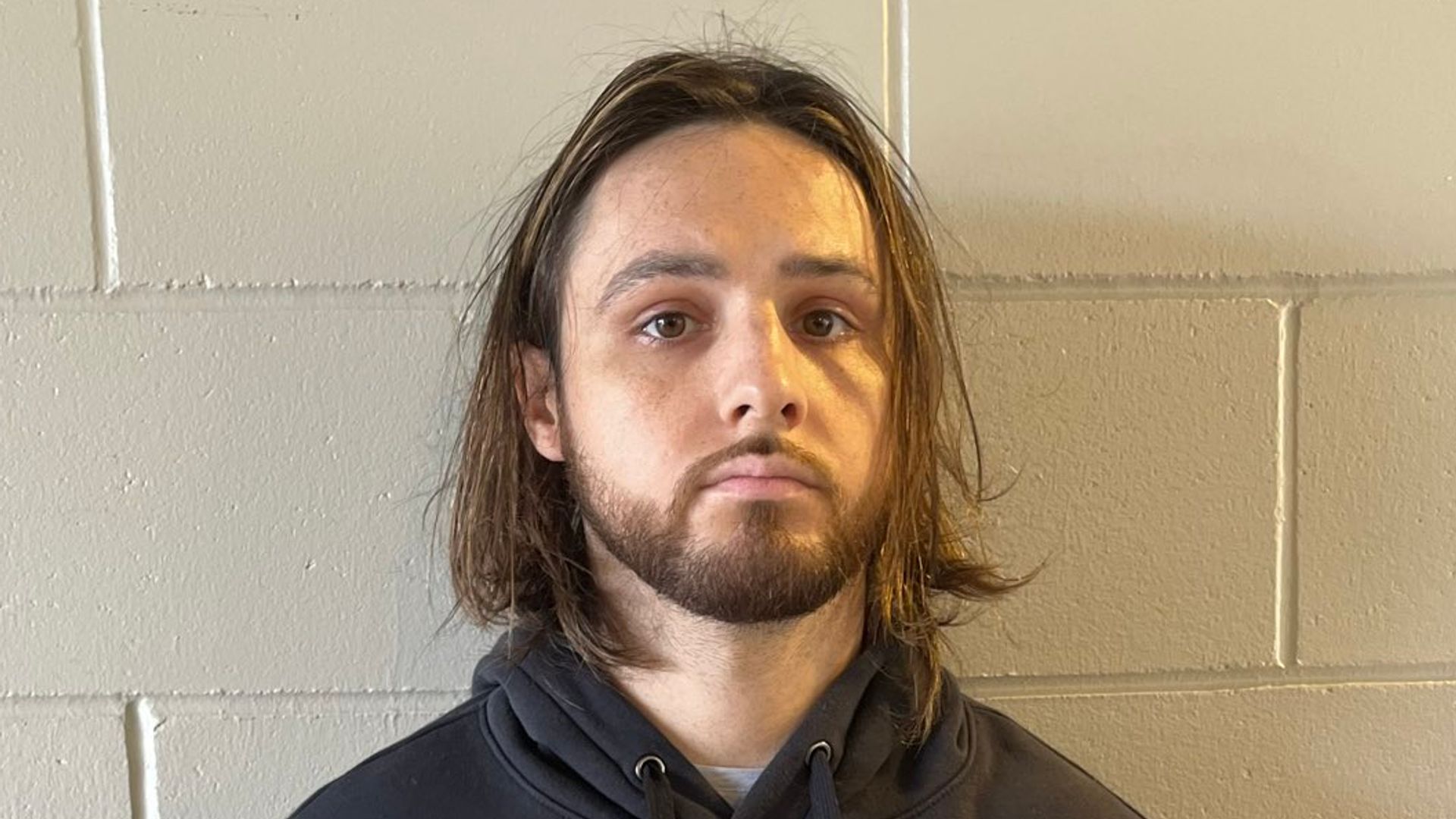
A jury has found a man guilty of igniting the deadly 2025 Palisades fire in Los Angeles, closing a high-stakes criminal prosecution into one of the most destructive urban-interface blazes in Southern California history. While the verdict assigns legal culpability to a single individual for setting the initial spark, veteran fire investigators and urban planners warn that focusing solely on the arsonist obscures the systemic failures—from chronic brush mismanagement to grid vulnerability and extreme Santa Ana wind dynamics—that turned a localized ignition into a lethal catastrophe.
The Verdict and the Limits of Criminal Prosecution
The courtroom outcome brings a measure of legal closure for families who lost relatives, homes, and livelihoods when flames swept through Pacific Palisades in January 2025. Prosecutors built their case around forensic origin-and-cause evidence, digital location tracking, and witness timelines that placed the defendant at the ignition point just before the first plumes of smoke rose above the coastal canyons. For a different look, check out: this related article.
Yet in the world of wildland-urban fire investigation, establishing who lit the match is only the first page of a much thicker dossier. A conviction proves mens rea—criminal intent or reckless disregard—and establishes individual guilt beyond a reasonable doubt. What a criminal trial cannot do is audit the municipal infrastructure, insurance market distortions, and decades of land-use decisions that allowed a fire to overwhelm suppression resources within hours.
When the public sees handcuffs and a guilty verdict, the natural human impulse is to treat the disaster as solved. That impulse is dangerous. Fire does not care whether its origin was a downed power line, a discarded cigarette, an escaped campfire, or a deliberate act of arson. Once thermal energy transfers to cured chaparral under severe wind conditions, the physics of combustion take over completely. Similar coverage regarding this has been published by Al Jazeera.
How a Single Spark Becomes an Urban Firestorm
To understand why the 2025 Palisades fire escalated so rapidly, you have to look at the mechanics of Southern California’s coastal topography. Pacific Palisades sits at the intersection of steep, canyon-carved terrain in the Santa Monica Mountains and dense, high-value residential neighborhoods.
The Topography Trap
Canyons act like chimneys. When fire ignites at the base of a steep slope, convective heat preheats the vegetation upslope, drying out leaves and stems before the flame front even arrives. The rate of spread roughly doubles for every ten degrees of slope steepness. In the narrow corridors above the Pacific Coast Highway, flames did not merely crawl across the ground; they raced upward at speeds that outpaced evacuation alerts.
The Role of Fuel Moisture and Wind
During the winter months, Southern California routinely experiences Santa Ana wind events—dry, downslope gusts pushed from the Great Basin toward the coast. As air descends from higher elevations, it compresses and warms, dropping relative humidity into the single digits.
Under these conditions, live fuel moisture in native chaparral drops to critical thresholds. When winds gust past 60 or 70 miles per hour, the fire stops behaving like a predictable wall of flame and transitions into an ember-driven assault. Burning brands are lofted miles ahead of the main front, landing in rain gutters, attic vents, and dry landscaping. By the time fire engines arrive at one burning roof, three more blocks are already igniting downwind.
The Overlooked Factors Behind the 2025 Disaster
While headlines rightly focus on the defendant’s conviction, an honest post-mortem of the Palisades fire requires examining the vulnerabilities that existed long before the suspect ever entered the canyon.
Aging Infrastructure and Evacuation Bottlenecks
Pacific Palisades was never designed for the simultaneous, rapid evacuation of tens of thousands of residents. The neighborhood relies on a limited number of arterial choke points—most notably Sunset Boulevard and the Pacific Coast Highway. During the height of the 2025 blaze, gridlock trapped motorists in smoke-filled corridors, forcing some residents to abandon their vehicles on foot and complicating access for incoming strike teams.
Water supply systems also faced unprecedented strain. Municipal hydrants are engineered to fight structure fires one or two buildings at a time, not hundreds of homes burning simultaneously across multiple elevation zones. When power fails or pumping stations lose pressure under massive demand, firefighters are left watching hydrants run dry at the exact moment water is needed most.
The Illusion of Defensible Space
For decades, California fire officials have preached the gospel of defensible space—clearing brush within 100 feet of a structure to slow an approaching fire. In practice, enforcement across wealthy coastal enclaves has been uneven at best.
Consider a hypothetical example of two neighboring properties on a canyon rim. Homeowner A spends thirty thousand dollars installing ember-resistant vents, Class A fire-rated roofing, and non-combustible gravel landscaping. Homeowner B leaves mature, oil-rich eucalyptus trees overhanging the roof and keeps wooden patio furniture stacked against single-pane windows. When wind-driven embers arrive, Homeowner B’s house ignites like a torch, generating radiant heat intense enough to shatter Homeowner A’s windows and burn both structures to the foundation. In high-density urban-interface zones, fire resilience is only as strong as the least-prepared property on the block.
Prosecuting Arson in the Modern Era
Securing a guilty verdict in a major wildfire case is notoriously difficult. Unlike an indoor structure fire, where burn patterns remain preserved inside walls and ceilings, a wildland fire destroys its own crime scene.
Investigators rely on indicator analysis—reading the subtle physical clues left behind on unburned or partially burned vegetation. They look at:
- Charring depth on the windward versus leeward sides of branches
- Ash color and angle, which reveal the direction of heat travel
- Foliage freeze, where leaves are bent and baked in the exact direction the wind was blowing at the moment of ignition
- Spalling on rocks, showing where intense, localized heat caused stone surfaces to flake away
Working backward from the outer perimeter toward the point of origin, investigators narrow the search area down to a square meter—the specific origin area—where physical remnants of an ignition device, accelerant containers, or human footprints may survive. Even with modern forensic tools, connecting a suspect to that exact patch of dirt requires painstaking corroboration from cell tower dumps, license plate readers, and municipal surveillance cameras.
The prosecution in the Palisades case succeeded because those disparate threads aligned. Yet for every high-profile arson conviction, dozens of other major wildfires remain unresolved or are traced back to accidental human causes—a dragging trailer chain throwing sparks onto dry grass, an improperly extinguished campfire, or aging electrical equipment failing in high winds.
The Financial and Insurance Aftermath
The criminal trial played out against the backdrop of a collapsing California property insurance market. Long before the 2025 fire, major insurers had begun non-renewing policies across the Santa Monica Mountains, pushing homeowners onto the state-backed California FAIR Plan—an insurer of last resort offering stripped-down coverage at steep premiums.
When the Palisades fire destroyed billions of dollars in residential real estate, the financial shockwaves rippled across the entire state. Under state rules, if the FAIR Plan exhausts its reserves paying out catastrophic claims, private insurers operating in California can be assessed to cover the shortfall—costs that are inevitably passed down to policyholders in low-risk neighborhoods miles from any canyon.
A criminal restitution order against a single convicted arsonist is purely symbolic in the face of multi-billion-dollar losses. No individual defendant possesses the assets to rebuild a devastated coastal community or stabilize a state insurance pool. The financial burden falls squarely on taxpayers, ratepayers, and uninsured or underinsured families navigating years of permitting delays and construction inflation.
Accountability Beyond the Courtroom
There is a comforting clarity to a criminal trial. There is a villain, a victim, a prosecutor, and a verdict. Real-world disaster mitigation offers no such neat narrative.
If Los Angeles treats the Palisades fire conviction as the final chapter of this tragedy, the city will remain acutely vulnerable to the next wind-driven blaze. True accountability demands structural changes that are far harder to execute than a criminal prosecution:
- Hardening the urban edge through mandatory, strictly enforced home-hardening codes rather than voluntary guidelines
- Undergrounding high-risk distribution lines in canyon corridors where overhead wires remain vulnerable to falling limbs
- Upgrading municipal water storage with dedicated backup power generators at high-elevation pumping stations
- Reforming evacuation planning using real-time traffic modeling and phased, neighborhood-by-neighborhood alerts before gridlock sets in
The man who lit the match in Pacific Palisades will serve his sentence behind bars. Meanwhile, the dry brush continues to grow back across the coastal slopes, waiting for the next autumn wind.