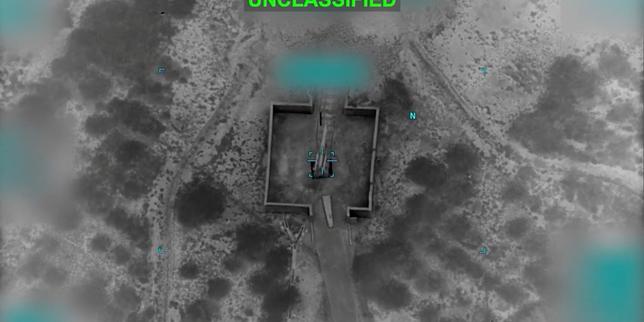
The Middle East just experienced its most volatile military escalation in decades. Overnight, American stealth bombers and naval platforms launched an unprecedented barrage of nearly 140 strikes against Iranian military infrastructure, triggering immediate retaliatory missile attacks from Tehran against maritime and energy targets across the Gulf States. This is no longer a proxy conflict managed through regional intermediaries. The thin line between covert deterrence and open, multi-state warfare has vanished, fundamentally shifting the geopolitical calculus for global energy markets and international security.
For years, policymakers in Washington operated under the assumption that targeted economic sanctions and calibrated cyber operations could contain Iran's regional ambitions. That calculus failed. The overnight bombardment marks a definitive break from defensive positioning, signaling that the United States decided to absorb the immediate blowback of a direct confrontation rather than permit further erosion of its deterrence posture in the region.
The Calculus Behind 140 Strikes
Military operations of this scale do not materialize overnight. They require months of intelligence gathering, target prioritization, and logistical positioning. The sheer volume of the strikes indicates a coordinated effort to dismantle specific operational capabilities rather than merely send a diplomatic warning.
According to preliminary defense assessments, the American operation focused on three primary clusters of targets. First, command and control centers deeply embedded within the Iranian mainland were neutralized to disrupt communication lines. Second, known mobile missile launch sites and drone manufacturing facilities were targeted to mitigate immediate retaliatory capacity. Finally, coastal radar installations and air defense batteries were taken offline to secure freedom of movement for coalition forces operating in the area.
The strategic objective was not regime change. It was functional paralysis. By neutralizing early-warning systems and offensive launch platforms in a single, massive wave, planners aimed to create a tactical window that would limit Tehran's ability to sustain a prolonged conventional campaign. However, the subsequent response from Iran demonstrated that total neutralization is an impossible standard in modern asymmetric warfare.
Tehran Strikes Back at the Chokepoints
Iran did not wait for the smoke to clear before executing its counter-strategy. Instead of engaging American naval assets directly in a conventional matchup they could not win, Iranian forces targeted the economic soft underbelly of the international community: the infrastructure of the Gulf States.
The Maritime Chokepoint
Missiles and loitering munitions rained down on port facilities and energy transport hubs across the southern coast of the Persian Gulf. The intent was clear. By hitting processing plants and shipping lanes, Tehran sought to instantly raise the economic cost of the American intervention for the entire world. Insurance premiums for commercial shipping in the Strait of Hormuz skyrocketed within hours, effectively halting a significant percentage of global maritime trade.
The Regional Message
This retaliatory wave serves as a stark reminder to regional capitals that hosting American military assets carries severe consequences. For years, nations like Saudi Arabia, the United Arab Emirates, and Qatar have balanced their security reliance on Washington with fragile diplomatic detentes with Tehran. That balancing act is over. The strikes demonstrate that in the event of total war, regional neutrality is a luxury Iran will not recognize.
The Failure of Incremental Deterrence
To understand how the situation degenerated to this point, one must analyze the systemic breakdown of incremental deterrence over the past decade. Washington repeatedly drew red lines, only to allow them to blur when challenged by proxy forces in Yemen, Iraq, and Syria. This created a dangerous miscalculation in Tehran.
Every unpunished drone attack on a commercial tanker or rocket strike on an isolated outpost reinforced the belief that the United States lacked the domestic political will for a major kinetic engagement. This cycle of low-level escalation followed by American restraint inadvertently incentivized bolder actions. When the threshold was finally crossed, it did not result in a minor increase in pressure, but rather a massive, overwhelming military response that shocked the regional subsystem.
This is the inherent danger of a deterrence strategy built on economic sanctions alone. Sanctions take years to alter state behavior, if they ever do. Meanwhile, tactical realities on the ground evolve at the speed of modern munitions. When diplomacy fails to establish hard boundaries, the eventual correction is almost always violent and disproportionate.
The Economic Aftershocks
The immediate casualty of this military confrontation is the global energy supply chain. The Persian Gulf remains the central artery of the industrialized world, and any disruption to its stability sends shockwaves through international markets.
- Crude Oil Surges: Brent crude futures surged by double-digit percentages as news of the strikes broke, reflecting immediate fears of prolonged production shutdowns.
- Supply Chain Paralysis: Major maritime freight carriers ordered their vessels to anchor outside the Gulf of Oman, refusing to risk multimillion-dollar hulls in an active combat zone.
- Regional Reinsurance Collapse: Marine underwriters revoked standard war-risk cover for the entire region, forcing state-backed entities to consider self-insurance schemes to keep essential commodities moving.
These economic realities will quickly dictate the political patience of Western capitals. While the initial military objectives may have been achieved, the political cost of sustained high inflation driven by energy scarcity is something no democratic government can endure for long without severe domestic blowback.
The Redefined Security Map
We are witnessing the emergence of a highly polarized regional alignment. The gray zones where diplomacy and back-channel negotiations used to occur are disappearing.
Nations are being forced to choose sides openly. The Gulf States must decide whether to grant deeper operational access to Western forces or distance themselves from Washington to appease a hostile neighbor capable of striking their vital infrastructure at will. Concurrently, external powers like Beijing and Moscow are watching closely. Any prolonged American entanglement in the Middle East provides these competitors with strategic breathing room in other critical theaters, such as the Indo-Pacific and Eastern Europe.
The conflict has also exposed the limitations of existing regional air defense architectures. Despite billions of dollars invested in advanced missile defense systems, the sheer volume of saturation attacks utilizing low-altitude drones and ballistic missiles simultaneously can overwhelm even the most sophisticated networks. Defensive warfare is inherently reactive, and when the adversary is willing to absorb immense losses to land a few critical blows, defense alone is insufficient to guarantee security.
The coming days will reveal whether this confrontation stabilizes into a tense, heavily armed standoff or degenerates into a war of attrition that drags the global economy down with it. The tactical planners in Washington achieved their immediate operational targets, but the broader strategic problem of an emboldened, nuclear-capable adversary with nothing left to lose remains entirely unsolved. The true cost of overnight operations is rarely paid on the battlefield; it is extracted in the long, unstable aftermath that follows the final strike.