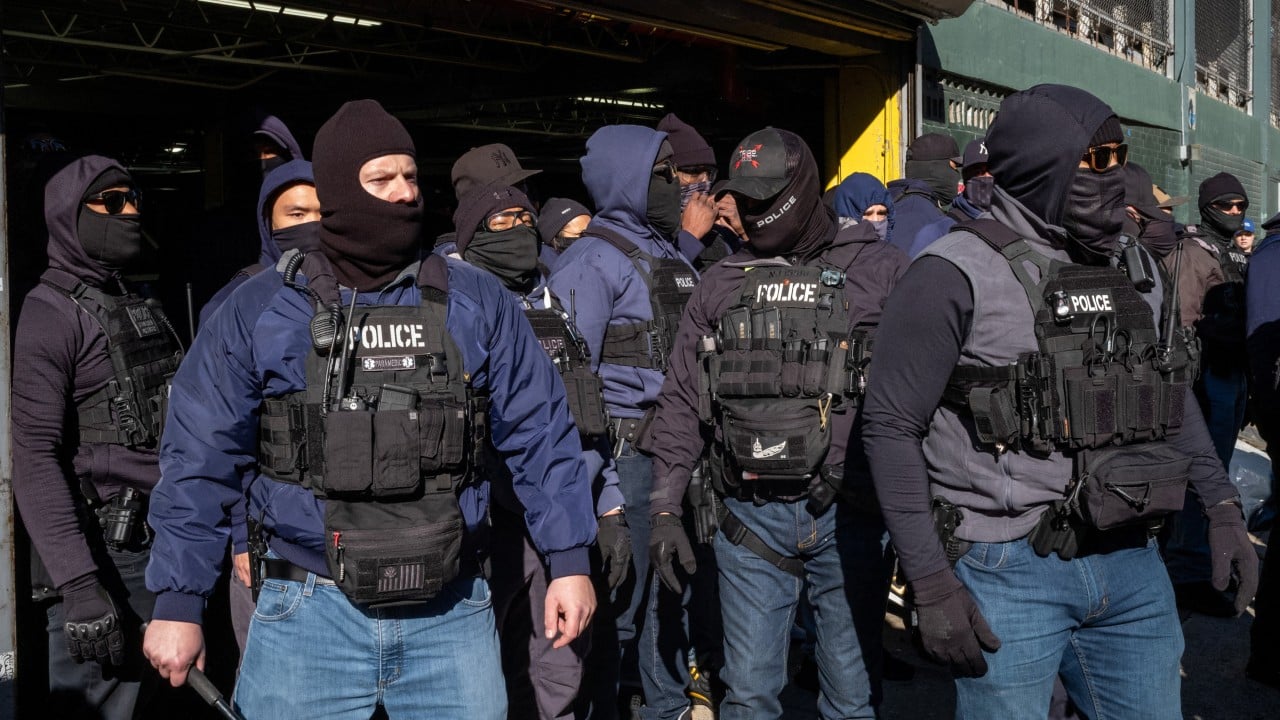
Law enforcement authorities in Cebu, Philippines, have formally expanded a child abuse and exploitation inquiry to examine the conduct and digital footprint of Thomas Markle Jr., the estranged half-brother of Meghan, Duchess of Sussex. While the initial focus of local investigators centered on broader anti-trafficking sweeps and online exploitation networks operating within the Visayas region, recent developments indicate that cybercrime units and local social welfare officers are reviewing allegations tied to Markle Jr.’s residency and online activities in Cebu City. No formal criminal charges have been filed against him at this stage, and the proceedings remain in an active fact-finding phase.
The headline alone guarantees a feeding frenzy across British tabloids and American entertainment blogs. Yet stripping away the royal adjacency reveals a far grimmer, more complex reality. This is not merely another chapter in the endless, lucrative soap opera of the Markle family’s public feuds. It sits squarely at the intersection of foreign expatriate life in Southeast Asia, the aggressive enforcement of Philippine child protection statutes, and the monetization of internet notoriety. Meanwhile, you can find other developments here: Life Imprisonment For Familial Murder Is Moral Theater That Ignores The Real Killer.
The Anatomy of a Cross-Border Investigation
To understand how an American expatriate living in a high-rise condominium in Cebu ends up on the radar of the Philippine National Police (PNP), one has to understand how modern law enforcement operates in the archipelago. For decades, the Philippines struggled with a reputation as a haven for Westerners seeking cheap living and lax oversight. That era is largely dead.
Over the past ten years, driven by intense international pressure and domestic legislative reform, the PNP—specifically its Women and Children Protection Center (WCPC)—has radically overhauled its investigative protocols. They no longer wait for a formal domestic complainant to walk into a local precinct. Instead, modern inquiries rely heavily on digital forensics, cross-border intelligence sharing with agencies like Homeland Security Investigations (HSI) and the Australian Federal Police, and tips routed through international non-governmental organizations. To see the full picture, check out the detailed article by BBC News.
When an inquiry "widens," as local reports indicate has happened in the Markle case, it typically follows a distinct procedural path. Investigators begin with a primary node—often a local facilitator, a financial transaction flagged by the Anti-Money Laundering Council, or a complaint filed by a local barangay official. From there, detectives map the network outward. Electronic devices are subpoenaed, local witnesses are interviewed by officers from the Department of Social Welfare and Development (DSWD), and residency permits are audited by the Bureau of Immigration.
In Cebu, a major commercial hub with a massive expatriate population and a bustling digital economy, these sweeps are routine. What makes this specific file anomalous is the surname attached to it. For local detectives, however, a famous half-sister in Montecito offers zero insulation. If anything, high-profile foreign nationals attract heightened scrutiny from senior officials eager to demonstrate that Philippine sovereignty and child protection laws apply equally to everyone.
Why Cebu Became the Backdrop
Thomas Markle Jr. did not land in the Philippines by accident. Like thousands of older Western men before him, his relocation to Cebu followed a familiar trajectory: financial strain in the United States, a desire for a lower cost of living, and the pursuit of an environment where a modest income stretches considerably further.
Before his move, Markle Jr. spent years cycling through various residences in Oregon and New Mexico, punctuated by well-documented personal and legal struggles, including a 2017 arrest for allegedly holding a gun to his fiancée's head during an alcohol-fueled argument—charges that were later dropped. When his half-sister married into the British royal family in 2018, Markle Jr. pivoted into a bizarre niche industry. He became a professional commentator on his own estrangement, appearing on reality television programs like Big Brother VIP in Australia and launching a YouTube channel dedicated largely to criticizing the Duchess of Sussex.
Relocating to Cebu City allowed him to broadcast this content while enjoying an expatriate lifestyle that would have been financially impossible in California or Oregon. Cebu offers fast fiber-optic internet, modern condominium developments in districts like IT Park and Lahug, and an English-speaking local population.
Yet this exact ecosystem carries inherent vulnerabilities for foreign content creators. Living in a developing nation while broadcasting one's daily life to an international audience creates a permanent, searchable archive. Every livestream, every background detail, and every interaction with locals is recorded, clipped, and scrutinized by both supportive subscribers and hostile internet sleuths. When controversies erupt—whether stemming from off-camera disputes with neighbors, domestic disagreements, or problematic online behavior—those digital breadcrumbs are handed directly to local authorities.
Understanding Philippine Child Protection Statutes
Western observers frequently misinterpret headlines coming out of the Philippine legal system because they assume the statutory definitions mirror those in the United States or the United Kingdom. They do not.
Under Republic Act No. 7610, formally known as the Special Protection of Children Against Abuse, Exploitation and Discrimination Act, the legal threshold for what constitutes child abuse in the Philippines is extraordinarily broad. Unlike Western jurisdictions that often require proof of severe physical injury or explicit sexual exploitation to trigger felony-level child abuse charges, RA 7610 encompasses psychological abuse, neglect, cruelty, and any act that "debases, degrades or demeans the intrinsic worth and dignity of a child as a human being."
Furthermore, the Philippines enforces Republic Act No. 11930, the Anti-Online Sexual Abuse or Exploitation of Children (OSAEC) and Anti-Child Sexual Abuse or Exploitation Materials (CSAEM) Act. Passed in 2022, this legislation grants law enforcement sweeping powers to compel internet service providers and financial institutions to turn over user data without the protracted warrant battles common in American courts.
To illustrate how easily a foreign national can fall afoul of these laws, consider a purely hypothetical example. Imagine an expatriate vlogger filming street content in a low-income neighborhood in Manila or Cebu. If that creator hands out small amounts of cash to minors in exchange for performing humiliating stunts on camera for YouTube views, a Western viewer might dismiss it as tasteless "poverty porn." Under RA 7610, however, Philippine prosecutors can—and routinely do—classify that exact behavior as criminal child exploitation and psychological abuse.
Because the statutory net is cast so wide, an "investigation" into child abuse in the Philippines can cover a vast spectrum of alleged misconduct. It could involve allegations of severe physical or sexual harm, or it could stem from non-contact offenses, online interactions, or domestic disputes witnessed by minors. Until prosecutors file an official "Information" (the Philippine equivalent of an indictment) with a Regional Trial Court, the precise nature of the allegations remains closely guarded by the DSWD to protect the identities of any potential minor witnesses or victims.
The Tabloid Echo Chamber Versus Legal Reality
The moment news of the Cebu inquiry surfaced, the global media apparatus slipped into its well-worn grooves. British outlets framed the story around the potential embarrassment to Buckingham Palace and the Sussexes, despite the well-established fact that Meghan has had no contact with her half-brother for years. Conversely, anti-Sussex internet communities immediately dismissed the reports as a coordinated smear campaign designed to silence one of the Duchess's most vocal critics.
Both narratives miss the point entirely.
Philippine police detectives working out of Camp Sergio Osmeña in Cebu City do not care about British royal palace intrigue. They are civil servants operating within a localized bureaucratic and legal framework. When a complaint is lodged with the WCPC, or when intelligence is routed down from national headquarters in Camp Crame, investigators are legally obligated to open a docket, conduct interviews, and submit a resolution to the City Prosecutor's Office.
The danger of viewing this through a celebrity gossip lens is that it obscures the actual mechanics of justice. In the Philippine system, a preliminary investigation is an administrative screening process, not a trial. During this phase, the respondent—in this case, Markle Jr.—is typically issued a subpoena to submit a counter-affidavit addressing the allegations. If the investigating prosecutor finds "probable cause," the case is elevated to a trial court, and an arrest warrant is issued. For offenses falling under certain sections of RA 7610 and RA 11930, bail is either prohibitively high or entirely unavailable during the pendency of the trial.
The Expatriate Trap in Southeast Asia
This case also exposes a broader, uncomfortable truth about the dark underbelly of Western expatriate culture in Southeast Asia. For years, a specific subset of foreign nationals has treated countries like the Philippines and Thailand as personal playgrounds where Western currency buys impunity.
That illusion has shattered. Local authorities have grown increasingly intolerant of foreign nationals who bring legal baggage, erratic behavior, or exploitative practices into their communities. The Philippine Bureau of Immigration maintains a strict "undesirable alien" blacklist. Crucially, the Bureau does not need to wait for a criminal conviction in a Philippine court to act. Under the Philippine Immigration Act of 1940, the Commissioner of Immigration has the administrative authority to revoke visas and order the summary deportation of any foreign national deemed to pose a risk to public safety or morals.
Even if the current police inquiry into Markle Jr. yields insufficient evidence to sustain a formal criminal prosecution under RA 7610, the mere existence of an active police investigation places his immigration status in immediate jeopardy. Once a foreign national's name is flagged in the Bureau of Immigration's derogatory database, routine visa extensions are frozen, and an Hold Departure Order (HDO) can be issued to prevent the individual from fleeing the country while prosecutors deliberate.
The Monetization of Dysfunction
There is a grim symmetry to how Thomas Markle Jr. arrived at this juncture. For the better part of a decade, his public identity has been entirely tethered to grievance. By turning family estrangement into a livestreamed spectacle, he built a micro-economy reliant on constant escalation. Every broadcast required a sharper insult, a more sensational claim, or a more chaotic behind-the-scenes drama to keep algorithms engaged and donations flowing.
Chaos is a terrible business model. When you live your life in front of a webcam, the boundary between performance and reality erodes. The same internet audience that rewards erratic behavior with clicks and superchats is equally quick to weaponize that behavior when the narrative turns. In the hyper-connected landscape of modern digital media, a dispute in a Cebu apartment building does not stay local; it is instantly amplified, translated, and delivered to law enforcement desks half a world away.
As the Cebu City Police Office and social welfare investigators continue their review of witness statements and digital records, the outcome hinges entirely on hard evidence rather than royal drama. Philippine prosecutors will examine timestamps, financial trails, device histories, and sworn testimonies against the unforgiving standards of Republic Act 7610. For Thomas Markle Jr., the cameras are no longer rolling for YouTube subscribers, and the audience that matters now wears badges.