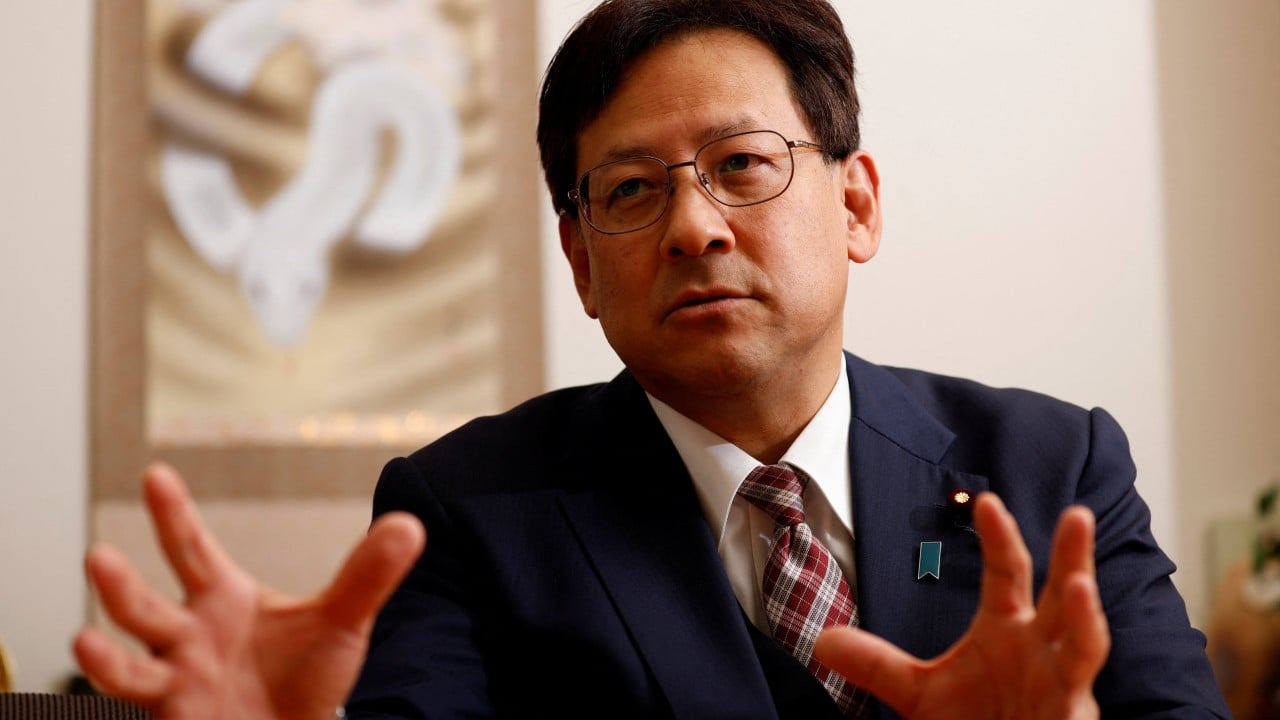
Calls for Japan’s education minister to resign have intensified following overlapping allegations of political funding irregularities, questionable ties to controversial organizations, and administrative missteps within the Ministry of Education, Culture, Sports, Science and Technology (MEXT). Opposition lawmakers in the National Diet argue that the accumulation of ethical controversies has eroded public confidence in the ministry responsible for overseeing schools, universities, and national research institutions.
The immediate pressure centers on a familiar vulnerability in Japanese politics. Campaign finance disclosures and parliamentary questioning have raised scrutiny over how political funds were recorded, whether certain donations or event ticket revenues complied with the Political Funds Control Act, and how closely ministry leadership interacted with outside interest groups. While supporters of the minister maintain that clerical errors were corrected and no criminal intent existed, critics contend that repeated explanations fail to address the broader issue of accountability at the top of a cabinet agency tasked with setting moral and civic standards for the nation's youth.
How Ministerial Scandals Unfold in Nagatacho
To understand why an education minister faces sustained resignation demands, one has to look at the mechanics of Japanese parliamentary politics rather than a single isolated headline. In Tokyo's political district of Nagatacho, cabinet survival rarely depends on a lone procedural mistake. It depends on whether a minister becomes a liability to the prime minister’s broader legislative agenda.
When opposition parties uncover discrepancies in political fund management reports—such as unrecorded fundraising party tickets or ambiguous expenditure categories—they use committee sessions in the House of Representatives and the House of Councillors to slow down budget deliberations and key bills. Every hour spent grilling a embattled minister over receipts and organizational ties is an hour taken away from passing economic packages or defense reforms.
Historically, Japanese prime ministers defend embattled cabinet members during the initial wave of criticism to avoid appearing weak or reactive. They emphasize that the minister has apologized, amended the relevant financial filings, and pledged stricter oversight. Yet that defensive posture carries an expiration date. Once public opinion polls begin showing a measurable drop in cabinet approval ratings directly linked to the controversy, or when coalition partners quietly express concern ahead of local or national elections, the calculus shifts overnight.
The Education Ministry occupies a uniquely sensitive position in this ecosystem. Unlike ministries focused purely on infrastructure or trade, MEXT oversees textbook screening, moral education curricula, university governance, and cultural affairs. When the head of that ministry faces questions about legal compliance or ethical judgment, opposition lawmakers immediately draw a sharp contrast between the standards demanded of teachers and students and the conduct of the official leading them.
The Structural Roots of Recurring Ethics Controversies
Media coverage often treats each ministerial scandal as a personal failing of an individual politician. That framing misses the deeper institutional pressures that repeatedly produce these crises across successive administrations.
Running a constituency office in Japan requires substantial, continuous financial resources. Lawmakers maintain local support groups known as koenkai, employ multiple secretaries across Tokyo and their home districts, and attend hundreds of community events annually. Because strict rules govern direct corporate donations to individual politicians, many lawmakers rely heavily on political fundraising parties and affiliated fund management organizations to finance their operations.
This decentralized accounting structure creates chronic administrative risk. A single Diet member may oversee several overlapping political bodies—a local party branch, a fund management organization, and one or more support associations. Staff turnover, manual bookkeeping habits, and opaque reporting thresholds mean that errors in recording ticket purchases or expense reimbursements occur with predictable regularity.
When a politician is appointed to the cabinet, their financial history undergoes immediate forensic scrutiny by investigative reporters and opposition researchers. Transactions that went unnoticed for years while the lawmaker sat on the backbenches suddenly become national news. What looks to the public like a sudden burst of corruption is often the delayed exposure of long-standing structural vulnerabilities in how Japanese political offices handle money and external relationships.
Organizational Ties and the Question of Influence
Beyond accounting disputes, scrutiny frequently focuses on a minister's past or present connections to external religious, ideological, or industry groups. In recent years, Japanese voters have grown far more sensitive to whether politicians received campaign assistance, speech appearances, or organizational backing from controversial entities.
Even when a lawmaker insists that interactions were limited to routine greetings at community gatherings or standard congratulatory telegrams, critics argue that such appearances lend official legitimacy to groups facing public criticism. For an education minister, whose portfolio includes religious corporation oversight and youth welfare policy, any ambiguity regarding external influence triggers immediate demands for full transparency.
Supporters of the current leadership push back against what they describe as guilt by association. They argue that elected representatives routinely engage with thousands of civic, religious, and business organizations across their districts without endorsing every group's internal practices. Without clear statutory boundaries defining improper affiliation, parliamentary debates often devolve into semantic disputes over how closely a politician knew an organization's leadership.
Why MEXT Cannot Afford Prolonged Leadership Paralysis
While politicians debate accountability in the Diet, the operational consequences inside the ministry itself are tangible. MEXT manages one of the largest administrative portfolios in the Japanese government, spanning compulsory education reform, declining university enrollment, scientific research funding, and sports administration.
Japan's higher education and research sectors face urgent structural challenges. Demographic decline is shrinking the pool of eighteen-year-olds, forcing private universities across regional prefectures to confront mergers or closures. At the same time, Japanese research institutions have struggled to maintain global competitiveness in citation rankings and international collaboration, prompting the government to launch multi-trillion-yen university endowment initiatives.
In primary and secondary schools, educators are grappling with severe teacher shortages, rising rates of chronic school absenteeism, and the integration of digital learning tools into traditional classrooms. Addressing these issues requires sustained political capital, coordination with the Ministry of Finance over budget allocations, and clear policy direction from the minister's office.
When the minister is consumed by crisis management—spending days preparing defensive talking points for Ethics Committee hearings rather than negotiating policy—senior bureaucrats naturally adopt a cautious stance. Major regulatory decisions get delayed. Controversial reforms are shelved to avoid opening new fronts of parliamentary conflict.
A hypothetical scenario illustrates how this dynamic plays out in practice. Suppose MEXT is preparing to finalize new guidelines on teacher overtime compensation or university governance standards. If the minister's political standing is precarious, ministry officials know that any contentious proposal could be weaponized by opposition parties during questioning, linking policy friction to the minister's personal scandals. The safest bureaucratic choice is to wait until the political storm passes or a cabinet reshuffle brings in a new leader.
The Counter-Argument Against Reflexive Resignations
Not everyone in Tokyo's policy circles agrees that immediate resignation is the right answer every time a controversy erupts. A vocal contingent of political analysts and veteran bureaucrats points out that Japan's revolving door of cabinet ministers has created its own set of governance failures.
Over the past two decades, the average tenure of a Japanese education minister has frequently hovered around a single year. Frequent cabinet reshuffles, combined with mid-term resignations over political scandals, mean that ministers rarely stay in office long enough to master the complex policy files under their jurisdiction or see multi-year reforms through implementation.
Critics of the resignation-first reflex argue that forcing a minister out over administrative reporting errors—particularly before any formal legal violation has been established by prosecutors—incentivizes political theater over substantive accountability. Under this view, if a minister can be toppled solely through sustained media pressure and opposition boycotts, future leaders will focus entirely on avoiding controversy rather than tackling difficult structural reforms in education and science.
There is also the question of proportional accountability. Defenders of the government note that when accounting discrepancies involve staff errors that have already been publicly corrected through amended filings, forcing a cabinet exit equates minor compliance lapses with severe criminal misconduct. They contend that voters should ultimately render their verdict at the ballot box rather than through continuous mid-term cabinet destabilization.
What Determines Whether the Minister Survives
Whether the current calls for resignation result in an exit or fade into another survived parliamentary session comes down to three concrete variables that political insiders watch closely.
First is the emergence of new documentary evidence. In Japanese political scandals, initial revelations rarely bring down a cabinet member on their own. What proves fatal is the drip-drip release of contradictory documents—such as invoices, receipts, or internal emails—that directly undermine the minister's previous explanations on the Diet floor. Making an inaccurate statement during formal parliamentary questioning carries far heavier political consequences in Japan than the underlying administrative mistake itself.
Second is the posture of the ruling coalition's junior partner and internal party factions. Even when formal factions have been dissolved or restructured, informal networks within the ruling party monitor public sentiment ahead of upcoming elections. If rank-and-file lawmakers facing competitive districts conclude that keeping the minister in place will cost them votes, quiet pressure will build on the prime minister's office to arrange a voluntary resignation framed around taking responsibility for disrupting parliamentary business.
Third is the legislative calendar. As key deadlines approach for passing the annual budget or flagship bills, the prime minister must weigh the political cost of losing a cabinet ally against the cost of stalled legislation. Historically, ministers have often remained in their posts just long enough to pass a critical budget bill before stepping down once the immediate legislative hurdle is cleared.
Systemic Fixes That Remain Unfinished
Regardless of whether the current education minister remains in office or steps aside, replacing one individual will not resolve the conditions that repeatedly generate these crises.
Political finance experts have long pointed to straightforward structural reforms that could reduce ambiguity in campaign accounting. Mandatory digital filing of political fund reports, standardized electronic payment tracking for fundraising events, and stricter third-party auditing requirements would eliminate many of the clerical gray areas that politicians routinely cite when discrepancies surface.
Similarly, clearer disclosure rules governing relationships between cabinet appointees and external organizations—modeled on comprehensive conflict-of-interest vetting used in other parliamentary democracies—would force potential controversies into the open before an appointment is finalized rather than months later on the floor of the Diet.
Until those institutional guardrails are built, Japan's education ministry will remain vulnerable to the same cycle of revelation, apology, parliamentary deadlock, and eventual leadership turnover. Every month spent litigating past receipts and organizational ties is a month lost in confronting the demographic and educational pressures reshaping the country's future.