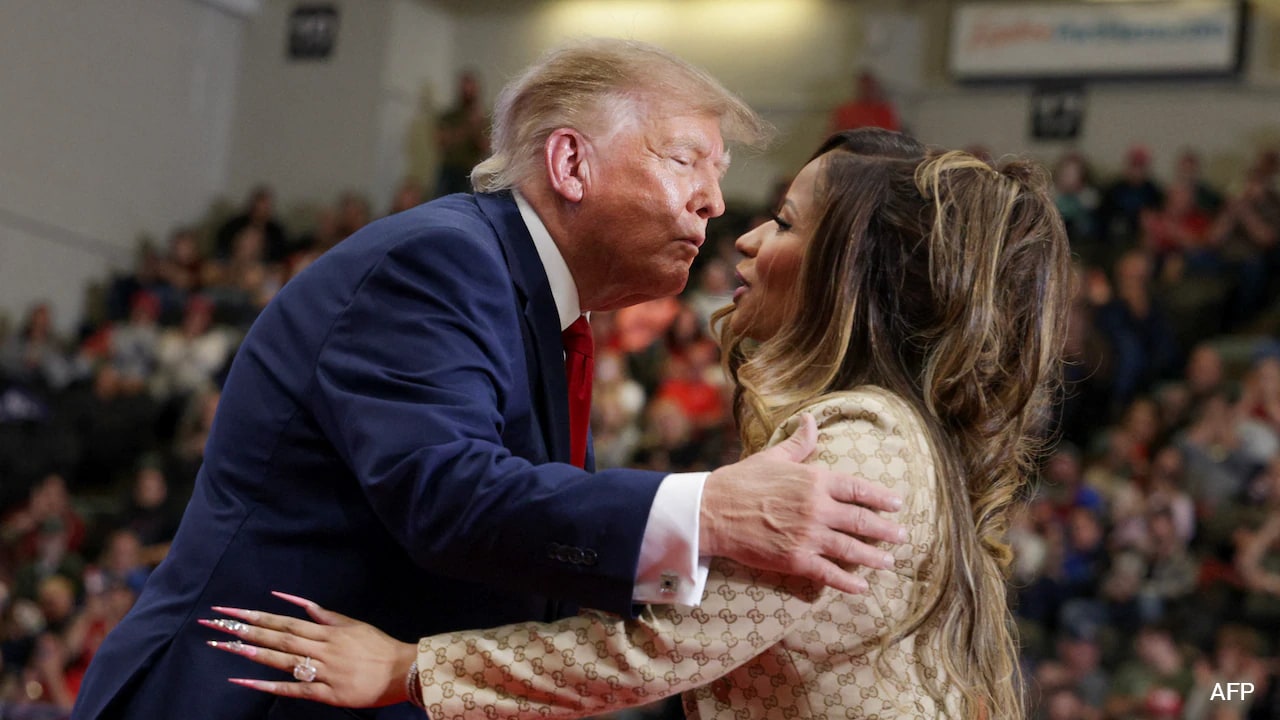
When a political rally collides with pop culture celebrity, the resulting viral clip rarely stays within the bounds of policy. Instead, off-the-cuff remarks about famous figures become instant currency in the attention economy, forcing rapid damage control and exposing the fragile transactional nature of modern political alliances. What looks on the surface like a simple verbal misstep followed by a walk-back is actually a calculated tug-of-war over cultural relevance, media oxygen, and voter demographics.
The Anatomy of the Unscripted Rally Moment
Political rallies are not designed for policy white papers. They are live television broadcasts masquerading as grassroots gatherings. When a speaker steps behind a podium in front of thousands of supporters and dozens of rolling cameras, the incentive structure shifts entirely toward entertainment.
In this environment, improvisational rhetoric acts as an accelerant. A prepared speech hits predictable applause lines, which cable news networks rarely air in full. An unscripted, boundary-pushing comment about a globally recognized musician like Nicki Minaj guarantees wall-to-wall coverage across entertainment blogs, political talk shows, and social media feeds within minutes.
The mechanics of this phenomenon rely on three overlapping forces:
- The Shock Value Multiplier: Political commentary has become so polarized that standard attacks no longer register with casual observers. Crossing into crude or personal territory regarding a celebrity breaks through the noise, forcing even apolitical audiences to pay attention.
- Algorithmic Amplification: Social media platforms do not distinguish between outrage and endorsement. A clip that triggers millions of angry quote-tweets achieves the exact same distribution velocity as a clip celebrated by core supporters.
- The Plausible Deniability Loop: By framing a crude remark as a joke or offhand observation, the speaker retains the ability to walk it back later while ensuring the original soundbite has already reached its target audience.
Why Pop Culture Figures Enter the Political Arena
To understand why these moments happen, one has to look at the changing calculus of celebrity political engagement. For decades, mainstream musicians and actors operated under a strict set of public relations rules. Aligning too closely with a polarizing political figure risked alienating half of a global fanbase and jeopardizing corporate brand partnerships.
That playbook is obsolete. In a fractured media market, neutrality often translates to invisibility.
When high-profile artists step into the political sphere—or even allow their names to be used as cultural shorthand by politicians—they are engaging in a high-stakes brand calculation. For an artist with a massive, fiercely loyal fanbase like Nicki Minaj, any mention on a national political stage immediately centers them in the cultural conversation. Even if the remark itself is crude or dismissive, the resulting media storm reinforces the artist's status as an unavoidable cultural force.
Yet this dynamic carries significant risk for both sides. Politicians frequently misunderstand the fierce protective instincts of modern fandoms. A remark intended to sound folksy, humorous, or complimentary in a rally setting can easily land as disrespectful when stripped of context and replayed on a smartphone screen.
The Mechanics of the Political Walk-Back
The apology that follows a viral rally misstep is rarely an act of pure contrition. In modern political communications, a walk-back is a tactical maneuver designed to close a news cycle before it damages key demographic outreach.
Consider how a typical crisis communications team evaluates the fallout of a crude celebrity remark. First, they measure the reaction among persuadable voters, particularly younger demographics and minority voting blocs who may view the comment not as harmless locker-room banter, but as a lack of basic respect. If the backlash stays confined to partisan critics who were never going to vote for the candidate anyway, the campaign ignores it.
An apology only materializes when the internal metrics show friction within a target coalition. When a campaign seeks to make inroads with specific cultural demographics, alienating a prominent figure within that culture becomes an unacceptable liability. The apology serves to neutralize the offense without necessarily disavowing the broader populist style that supporters love.
This creates a distinct two-step rhythm in modern political messaging:
- The Provocation: The candidate delivers an unfiltered line that dominates the evening news and excites the base's desire for authenticity.
- The Calibration: Within 24 to 48 hours, a measured clarification or apology is issued to reassure moderate observers and protect strategic alliances.
Historical Precedents in Celebrity-Political Friction
The collision between crude political humor and celebrity culture is hardly new, though the speed of the news cycle has compressed the timeline from weeks to hours.
In 1992, Vice President Dan Quayle famously criticized the fictional television character Murphy Brown for bearing a child out of wedlock. What was intended as a serious speech on family values instantly morphed into a pop culture circus. The television network responded directly within the show's storyline, turning a policy debate into a prime-time ratings bonanza and making the politician look out of touch with modern entertainment.
Two decades later, during the 2008 and 2012 presidential cycles, the relationship between hip-hop artists and Washington shifted from adversarial to overtly transactional. Candidates realized that proximity to chart-topping musicians conferred instant cultural legitimacy, while artists gained unprecedented access to the halls of power. However, that proximity also meant that any friction between the two worlds played out in public.
What separates the current era from those earlier moments is the collapse of traditional gatekeepers. Previously, a candidate's advisors or a celebrity's publicist could quietly negotiate a truce behind closed doors before a story hit the morning papers. Today, the unedited video is uploaded to the internet before the candidate even leaves the stage, leaving communications teams scrambling to contain a fire that has already burned across the globe.
The Double-Edged Sword of Authenticity
At the heart of this issue is how voters define authenticity. Focus groups consistently reveal that modern audiences are exhausted by focus-tested, sanitized political speak. When a politician speaks off the cuff, even crudely, a significant portion of the electorate interprets that lack of filter as honesty. They view the speaker as someone who says what they think rather than reading from a teleprompter written by consultants.
However, authenticity without discipline is a volatile asset. The same lack of filter that endears a candidate to core supporters can trigger severe backlash when aimed at a figure with massive cultural capital.
For a hypothetical candidate trying to expand their voter base beyond their traditional strongholds, every rally becomes a tightrope walk. If they tone down their rhetoric too much, they risk boring their base and losing the earned media coverage that fuels their campaign. If they lean too heavily into crude humor, they hand their opponents ready-made attack ads and risk offending the very communities they are trying to court.
Media Complicity in the Outrage Cycle
The media ecosystem bears equal responsibility for turning offhand rally remarks into major political storylines. Digital publishers and cable networks operate on business models tied directly to engagement metrics. A nuanced analysis of tax policy or infrastructure spending generates a fraction of the clicks produced by a headline combining a major political figure, a global pop star, and a crude remark.
This creates a perverse incentive structure:
- Outlets prioritize the clip: Newsrooms isolate the most provocative ten seconds of a ninety-minute speech, stripping away the surrounding context to maximize emotional reaction.
- Pundits fill the airtime: Panels spend hours dissecting the intent behind the remark and the sincerity of the subsequent apology, elevating a fleeting moment into a supposed turning point in the campaign.
- Substantive issues get crowded out: While the public debates the etiquette of a rally joke, major legislative battles and economic shifts receive minimal scrutiny.
Industry analysts who track media consumption patterns note that audiences claim to want more substantive political coverage, yet their clicking and viewing habits overwhelmingly reward interpersonal drama and celebrity gossip. Politicians understand this dynamic intimately. They know that dominating the headlines—even through a messy cycle of provocation and apology—keeps them at the center of the national conversation.
Evaluating the Long-Term Impact on Political Strategy
Does a crude remark about a celebrity followed by an apology actually change election outcomes? The empirical evidence suggests that individual viral moments rarely alter the trajectory of a race on their own. Voters tend to have deeply entrenched views on major candidates long before the final stretch of a campaign.
Instead, these incidents function as cumulative indicators. For critics, a crude comment reinforces an existing narrative about a candidate's temperament and fitness for office. For supporters, the media's fixation on the remark reinforces their belief that the press focuses on trivialities rather than issues affecting working families.
The real consequence lies in how these moments reshape future campaign strategy. Campaigns increasingly hire digital strategists not just to craft policy messages, but to manage real-time cultural sentiment. When a figure like Nicki Minaj becomes an unexpected focal point of a political rally, the response must be calibrated with the precision of a corporate brand crisis.
Ultimately, the intersection of political rallies and celebrity culture reflects a broader shift in how power is projected and contested. Politics has fully merged with the entertainment industry, adopting its pacing, its reliance on spectacle, and its constant cycle of controversy and redemption. As long as attention remains the scarcest resource in public life, candidates will continue to test the boundaries of acceptable rhetoric, and apologies will remain just another tool for managing the spotlight.