When a premier wide receiver like Puka Nacua exits a practice session with a calf injury, the immediate instinct across sports media is to treat it as a routine training-room footnote. It rarely stays that simple. Calf strains sit in a treacherous gray zone of pro football medicine, carrying an outsized risk of lingering softness, delayed explosiveness, and subsequent lower-leg complications if rushed back onto turf or grass. For the Los Angeles Rams, losing Nacua from live reps—even temporarily—changes how the offense breathes, threatens spacing in the intermediate zones, and forces uncomfortable conversations about workload management, offensive design, and depth behind their top perimeter playmaker.
Why Calf Strains Are Never Just Minor Bumps
Walk around any NFL training facility long enough and you start hearing the same quiet skepticism whenever a receiver heads inside with a tightness in the lower leg. A hamstring gets respect. A high ankle sprain gets a timeline. A calf issue often gets downplayed until three weeks later, when a player is still limping through warmups or pulls something higher up the kinetic chain.
The anatomy explains why caution matters so much here. The calf complex—primarily the gastrocnemius and soleus muscles—absorbs massive eccentric forces every time a wideout plants, brakes, and re-accelerates out of a release. High-velocity route running asks a receiver to transition from full sprint to sharp deceleration in a fraction of a second, transferring load straight through the Achilles tendon and lower leg.
Push too hard too soon and the tissue rebels. Worse, athletes subconsciously alter their stride to protect a tender calf. That subtle shift in mechanics can quietly overload the opposite leg, a knee, or a hamstring once game speed returns.
In hypothetical terms, imagine a wide receiver who feels mild tightness on a Tuesday afternoon, sits out Wednesday, looks crisp during Friday walkthroughs, and plays seventy snaps on Sunday. He might survive the game without tearing anything outright. Yet the lingering stiffness can rob him of a half-step out of his breaks, turning clean separation into tight-window coverage and forcing the quarterback into late throws.
Teams know this pattern well. Coaching staffs love projecting optimism because nobody wants to spook fans or hand defensive coordinators free information. Medical staffs, by contrast, spend their days watching how tissue actually responds to deceleration, cutting, and repeated sprint bouts rather than how a player looks jogging in shorts.
What Losing Nacua Does to the Rams Offense
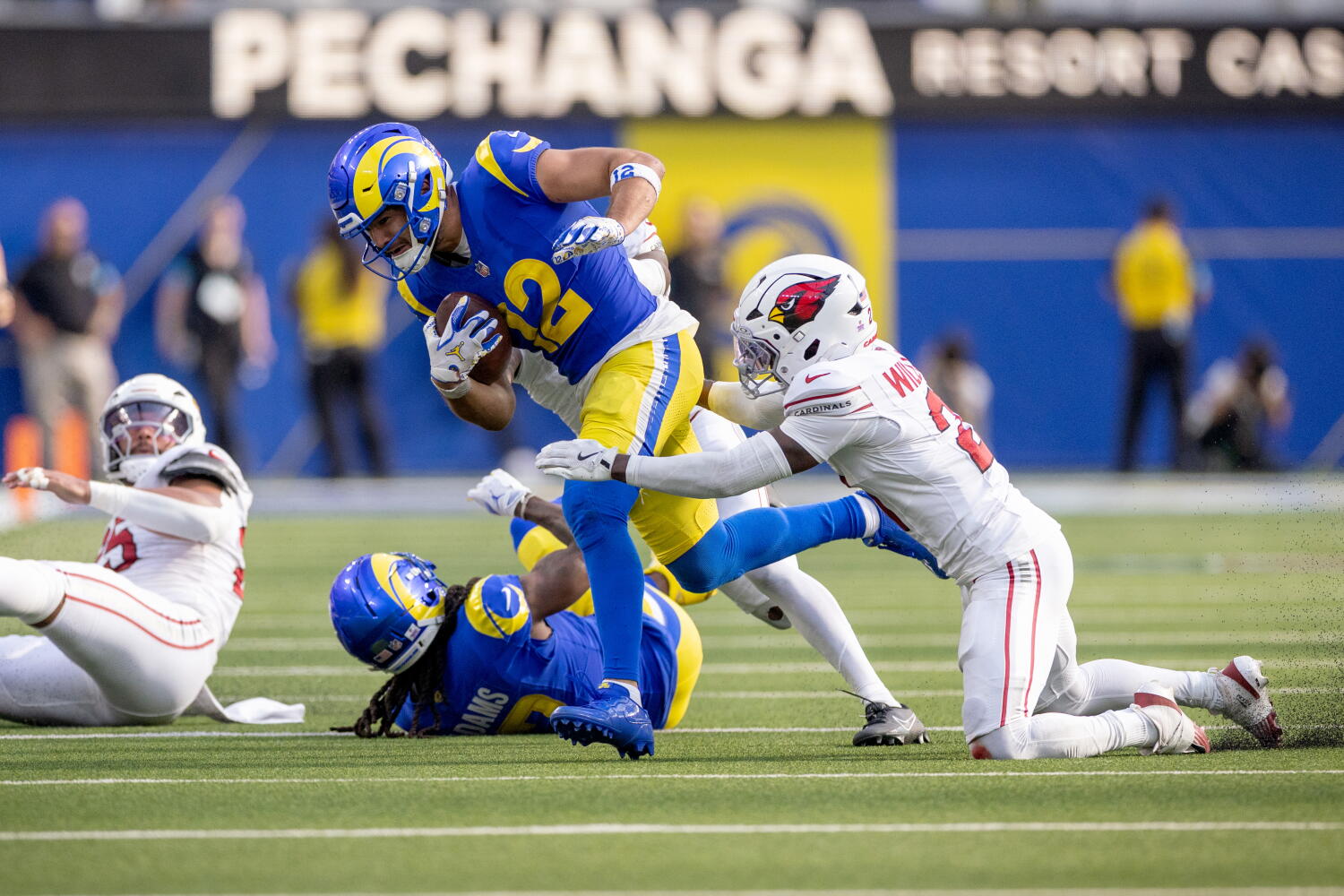
Offensive football is a chain reaction, and removing a high-volume target like Puka Nacua alters the geometry of every play call. Nacua is not a one-dimensional decoy who simply clears out coverage for someone else. He wins across the formation, absorbs physical contact over the middle, turns short timing routes into chunk yardage, and keeps drives alive on third down when coverage tightens.
Take away that reliability and everything gets slightly heavier. Quarterback reads can stretch by a beat. Linebackers and slot defenders do not have to respect the same quick-hitting answers against pressure. Even when a receiver is only sidelined for a practice or a short stretch, the offense loses continuity in timing and leverage.
Route Spacing and Timing
Timing routes live on micro-adjustments. A three-step slant or an out-breaking route against zone coverage depends on the receiver hitting a specific landmark at a precise moment so the ball arrives before a breaking defender can close the window.
When Nacua misses practice time, those reps do not magically transfer by osmosis to a backup. The timing between quarterback, timing routes, and sight adjustments has to be rebuilt on the fly. Even small timing drifts can lead to contested catches, stalled drives, or stagnant early-down efficiency.
Red Zone and Third Down Leverage
High-leverage downs expose how much an offense leans on trust. On third-and-medium or inside the red zone, spacing shrinks and every yard is contested. Nacua’s ability to find soft spots, win through contact, and secure tough catches makes him a release valve when coverage holds up.
Without him at full strength, defenses can tilt coverages more aggressively toward other threats. That forces secondary receivers to win individual matchups that look very different on a whiteboard than they do against a disguised blitz or a bracketed look.
Workload Management and the Practice Field Dilemma
Every NFL coaching staff faces a constant tug-of-war between preparation and preservation. You cannot simulate real football speed without real football reps. Yet every extra rep carries wear and tear, especially when players are already carrying cumulative fatigue from a grueling schedule.
Modern teams track GPS data, deceleration counts, and high-speed yardage with obsessive precision. Sports science departments measure workloads down to the stride. Still, numbers on a tablet do not override human biology. A body can hit its workload targets on paper and still develop localized muscle fatigue that flares up mid-drill.
Practice intensity is another quiet factor few box scores capture. A practice with heavy tempo, competitive one-on-ones, and full-speed red-zone periods taxes lower-leg musculature far more than a methodical walkthrough. When a star player exits mid-session, observers naturally ask whether the injury happened from one violent plant or from dozens of crisp cuts stacking up over consecutive days.
There is no foolproof formula here. Rest too much and chemistry slips. Push too hard and soft-tissue injuries follow. Veteran coaches and trainers understand that managing a star player’s availability is less about perfection and more about reading subtle warning signs before a minor strain turns into a multi-week absence.
| Factor | What It Signals | Practical Impact |
|---|---|---|
| Mild calf tightness | Early muscle fatigue or minor strain | Requires cautious ramp-up and close monitoring |
| Missed practice reps | Reduced on-field timing and conditioning | Potential rust in route timing and endurance |
| Altered stride mechanics | Subconscious guarding or stiffness | Higher risk of secondary lower-leg strain |
| Depth receiver usage | Expanded snaps for secondary targets | Shift in target distribution and play sequencing |
Reading the Signals Around Injury Reports
Anyone who covers pro football long enough learns to treat official injury designations with healthy skepticism. A label like limited, questionable, or day-to-day tells you what a team is willing to disclose under league rules, not everything happening behind closed doors.
A player might participate in individual drills and look smooth moving in a straight line. Full-speed cutting at angles, absorbing contact, and accelerating out of breaks are entirely different tests. You rarely know a calf is truly game-ready until a player pushes through those exact movements without hesitation.
What to Watch in the Coming Days
Instead of fixating solely on headlines, smart observers look for behavioral clues. Does the player return to team periods or stay strictly on the side field with trainers? How much explosiveness shows up when pushing off the affected leg? Does the coaching staff quietly adjust game-plan emphasis toward quick passes, screens, run heavy formations, or expanded roles for depth wideouts?
Return-to-play progression matters far more than bravado. Athletes want to compete. Competitors routinely downplay soreness because sitting out feels like letting teammates down. That makes disciplined evaluation essential—both from the player’s own body awareness and from the people responsible for protecting his long-term availability.
The Bigger Picture for Los Angeles
Single-practice injuries rarely define a season on their own. They do, however, test how resilient a roster and coaching staff truly are when plans shift mid-week. For the Rams, keeping Puka Nacua healthy and explosive over the long haul is worth far more than squeezing out a few extra practice snaps when his calf sends a warning signal.
Football is unforgiving of shortcuts in the lower leg. Treat a calf injury with genuine respect early, and you protect both the player and the offense; rush the timeline, and a minor setback can linger when every snap counts most.