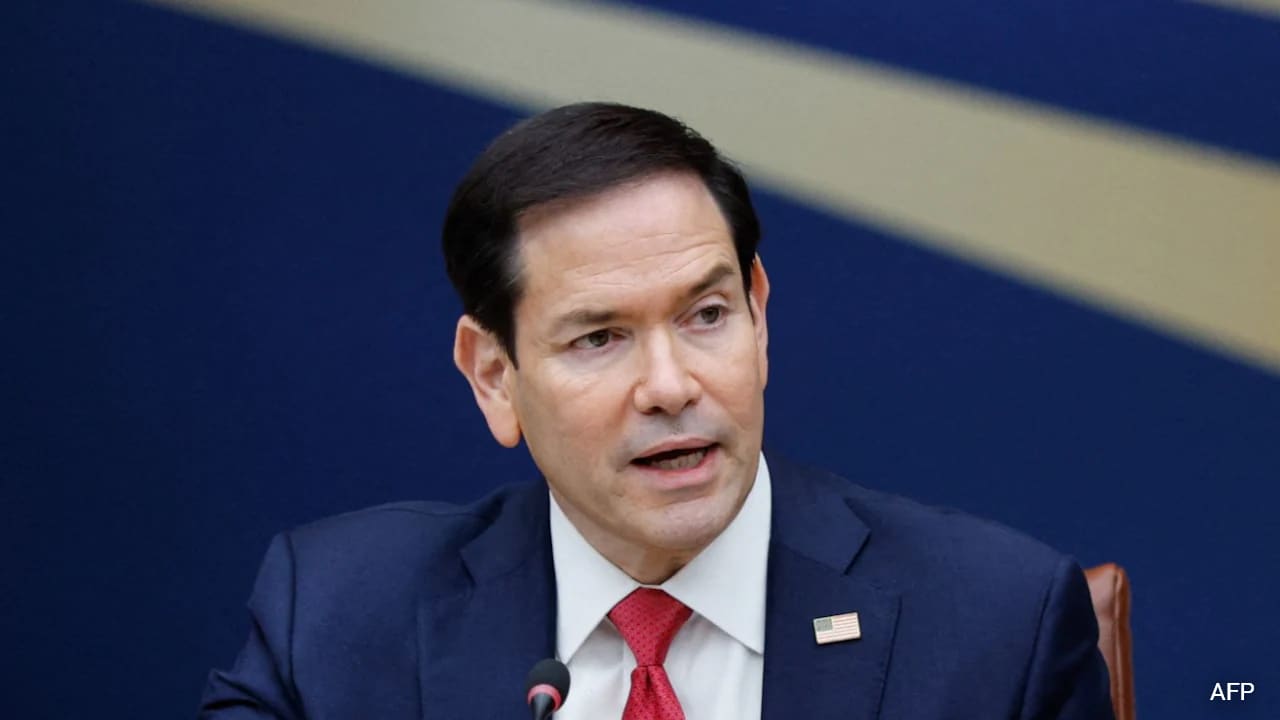
When President Donald Trump floated the prospect of a "big, beautiful agreement" on Ukraine that "might involve ALL of Europe" following a White House visit by an envoy linked to Vladimir Putin, the reaction across diplomatic corridors was immediate and uneasy. The statement signals a potential shift away from bilateral crisis management toward a sweeping continental security bargain—one that could trade territorial concessions or neutrality guarantees for frozen hostilities, sanctions relief, and a restructured European defense burden. For Kyiv and European Union capitals, the central risk is straightforward. A settlement negotiated over their heads could force them to underwrite and police terms they had no hand in shaping.
Diplomatic rhetoric in Washington rarely arrives by accident, especially when phrased in the trademark cadence of transactional statecraft. Calling a prospective settlement both "big" and "beautiful" while broadening its scope to "ALL of Europe" accomplishes three distinct political objectives at once. First, it reframes an intractable regional war of attrition as a grand geopolitical deal worthy of historic credit. Second, it puts European allies on notice that Washington expects them to carry the financial, military, and institutional weight of whatever follows a ceasefire. Third, it signals to Moscow that the White House is willing to discuss the broader continental security architecture—long a core Kremlin demand—rather than limiting talks strictly to Ukrainian border lines.
Why a Continental Bargain Appeals to Washington and Moscow
To understand why a pan-European framework is suddenly back on the table, look at the structural deadlocks constraining both Washington and Moscow. Neither capital wants an endless, open-ended war of attrition that drains stockpiles and locks domestic budgets into permanent emergency mode. Yet neither side can easily climb down without a larger diplomatic wrapper that makes compromise look like strategic victory.
For the White House, narrowing the negotiation solely to Donbas or Crimea creates an immediate political trap. Any territorial freeze looks like a concession to Russian aggression unless it is paired with a broader restructuring of transatlantic burden-sharing. By widening the frame to include the entire European continent, American negotiators can argue that they are not merely ending a local conflict, but forcing wealthy European nations to finally take primary responsibility for their own neighborhood. In domestic political terms, that turns an unpopular foreign entanglement into a demonstration of fiscal discipline and allied accountability.
Moscow's incentives run along a parallel track, though toward a very different destination. Since late 2021, when the Kremlin issued sweeping draft treaties demanding the rollback of NATO infrastructure in Eastern Europe, Vladimir Putin has insisted that Ukraine is merely one piece of a larger European security dispute. A bilateral truce with Kyiv offers Moscow little if Western sanctions remain intact and NATO continues expanding its forward presence along Russia's western flank. A continent-wide negotiation, however, opens the door to discussions over missile deployments, military exercises, sanctions relief, and spheres of influence—topics the Kremlin has sought to put back on the agenda for over two decades.
The convergence is unmistakable. Both Washington and Moscow see strategic utility in expanding the negotiating table beyond Ukraine's borders. The catch is that the people actually living on that continent were not asked whether they wanted their security architecture put into play.
The Structural Flaw of Negotiating Without Europe in the Room
There is an old maxim in diplomatic history that applies here with brutal clarity. You cannot negotiate a durable continental order without the continent sitting at the table.
When a Russian envoy meets at the White House and the resulting public readout suggests an agreement involving "ALL of Europe," alarm bells ring from Warsaw to Paris. European leaders have spent years absorbing energy shocks, inflating defense budgets, and integrating millions of Ukrainian refugees into their economies. The idea that the foundational rules of European security—NATO's open-door policy, EU sanctions regimes, and the binding principle that borders cannot be changed by force—could be bargained away in bilateral meetings between Washington and Moscow strikes at the heart of European sovereignty.
Consider the practical mechanics of enforcement. Any plausible settlement in Ukraine requires massive resources to hold together over time. Someone has to fund the reconstruction of shattered Ukrainian cities, a bill already estimated in the hundreds of billions of dollars. Someone has to monitor a ceasefire line stretching more than a thousand kilometers across difficult terrain. Someone has to provide credible deterrence so that a pause in fighting does not simply become a reloading period for another offensive two or three years down the road.
The United States has made it abundantly clear that it has no appetite to deploy American ground troops as peacekeepers or to bankroll the lion's share of Ukrainian reconstruction. That leaves European nations holding the bag. Yet European parliaments and voters will not sign blank checks to police a settlement they view as imposed, unjust, or dangerously unstable.
The Division Inside the European Union
Complicating matters further is the reality that "all of Europe" is not a single diplomatic actor. Beneath the unified statements issued after Brussels summits lie deep strategic fractures that any grand bargain would immediately expose.
- The Frontline Hawks: Poland, the Baltic states, and the Nordic nations view Russian expansionism as an existential threat. For leaders in Tallinn, Riga, Vilnius, and Warsaw, any agreement that rewards Moscow with de facto control over seized Ukrainian territory or restricts NATO deployments in Eastern Europe is not a peace deal—it is an invitation to future aggression closer to their own borders.
- The Cautious Middle: Germany and several Western European states face intense fiscal pressure, industrial stagnation, and domestic political polarization. While committed to supporting Ukraine, influential voices in Berlin and neighboring capitals worry about endless escalation and quietly favor a diplomatic off-ramp, provided it does not collapse European deterrence.
- The Dissenters: Governments in Hungary and Slovakia have repeatedly questioned sanctions policies and military aid packages, arguing for rapid normalization of economic ties with Moscow. A White House push for a comprehensive deal gives these dissenters immediate political cover to block further EU assistance to Kyiv.
If Washington and Moscow attempt to unveil a pre-packaged continental framework, they will not find a compliant European bloc ready to rubber-stamp it. Instead, they will trigger a ferocious internal crisis inside both NATO and the European Union, pitting frontline states against Western European capitals and paralyzing decision-making at the exact moment unity is required.
What a Pan-European Agreement Would Actually Entail
Strip away the sweeping rhetoric, and a comprehensive agreement involving Europe and Russia boils down to four concrete bargaining chips. Every single one carries severe political and security trade-offs.
1. The Territorial Freeze and Security Guarantees
The core physical reality on the ground is a contested front line where neither army has achieved a decisive operational breakthrough. A settlement would almost certainly require freezing that line in place, leaving Russia in control of substantial portions of eastern and southern Ukraine without formal legal recognition from Kyiv or Western capitals.
To make that bitter pill swallowable, Ukraine would demand ironclad security guarantees to prevent a renewed Russian invasion. If NATO membership is taken off the table as part of a deal with Moscow, the alternative falls to a coalition of European powers—led by nations like the United Kingdom, France, Germany, and Poland—committing to long-term arms supplies, air defense integration, and potentially an on-the-ground tripwire force. Whether European militaries possess the logistics, airlift capacity, and political will to sustain such a commitment without full American backing remains an open and deeply troubling question.
2. The Sanctions Architecture
Western sanctions against Russia are not controlled solely by the White House. While Washington holds massive leverage through secondary financial sanctions and dollar clearing, the bulk of trade restrictions, energy embargoes, and frozen Russian central bank assets sit under European jurisdiction. Roughly two-thirds of the roughly $300 billion in immobilized Russian sovereign reserves are held in European clearinghouses, primarily in Belgium.
Moscow will not sign any major agreement without clear pathways to sanctions relief and the unfreezing of its assets. Washington cannot deliver those concessions unilaterally. Extracting them from Brussels requires unanimous agreement among all 27 EU member states—a high bar if European leaders feel sidelined during the negotiations.
3. Continental Arms Control and Force Postures
When Kremlin officials speak of a broader European security settlement, they are referring to the collapse of the post-Cold War arms control framework. Treaties governing conventional forces in Europe and intermediate-range nuclear missiles have disintegrated over the past decade.
A wider bargain could attempt to revive limits on troop concentrations, military exercises, and missile deployments near borders. In theory, mutual transparency and buffer zones reduce the risk of accidental escalation. In practice, trading away NATO's ability to reinforce its eastern flank in exchange for Russian promises—given Moscow's track record of violating previous agreements like the 1994 Budapest Memorandum—is a non-starter for Eastern European defense ministries.
4. European Defense Spending and Burden-Sharing
From the American perspective, the "ALL of Europe" phrasing points directly to defense budgets and industrial production. A durable settlement would likely be paired with strict expectations that European allies assume primary responsibility for conventional deterrence on the continent, freeing American military assets and strategic bandwidth for the Indo-Pacific.
Europe has already begun this shift, with defense spending rising sharply across the bloc since 2022. However, turning money into actual combat capability—artillery shells, air defense interceptors, satellite intelligence, and heavy armor—takes years of industrial scaling. Expecting Europe to instantly replace American military weight as part of a diplomatic handover risks creating a dangerous capability gap during the transition.
Historical Precedents and the Danger of Grand Bargains
History offers sobering lessons about great powers attempting to redraw continental security arrangements through top-down diplomacy.
The most frequently cited parallel—and the one feared most in Kyiv and Warsaw—is the 1938 Munich Agreement, where major European powers negotiated the dismemberment of Czechoslovakia without Czech representatives present, convinced they were securing lasting peace. While historical analogies are never exact, the underlying mechanism is timeless. When larger powers sacrifice the sovereignty or security of a smaller state to appease an aggressor, the appetite for expansion rarely stops at the new border.
A different, more constructive precedent is the Helsinki Final Act of 1975. That process involved 35 nations across North America and Europe negotiating over years to establish rules on territorial integrity, human rights, and economic cooperation during the Cold War. Crucially, Helsinki did not erase ideological divides or validate Soviet domination as permanent; instead, it locked in explicit principles regarding the inviolability of frontiers while creating mechanisms to manage friction. Even then, it required broad multilateral participation, exhaustive technical groundwork, and years of patient diplomacy—the exact opposite of a sudden, top-down deal announced after a handful of bilateral meetings.
What Kyiv Faces When Major Powers Talk
For Ukrainian leadership, public hints of a grand bargain between Washington and Moscow create an acute strategic dilemma. Ukraine remains heavily dependent on American intelligence, air defense systems, and financial support, alongside European aid. Openly rejecting a White House peace initiative risks alienating its most powerful backer and giving critics in Washington an excuse to cut off assistance entirely.
Yet accepting a settlement that cedes territory without credible, enforceable security guarantees threatens Ukraine's survival as an independent state. Without ironclad deterrence, a ceasefire merely freezes the conflict on terms favorable to Moscow, allowing the Russian military to rebuild its battered formations, adapt its tactics, and strike again at a moment of its choosing—potentially while Western attention is fractured by other global crises.
Kyiv's counter-strategy has focused on binding its fate as tightly as possible to Europe's own security survival. Ukrainian officials consistently remind European capitals that the Ukrainian armed forces currently represent the single largest, most battle-hardened land army standing between Russia and the eastern borders of NATO. If Ukraine is forced into a bad deal that weakens its military capacity, the burden of deterring Russian aggression shifts immediately onto Polish, Baltic, German, and French soldiers.
The Reality Check on Backchannel Diplomacy
High-level visits by Kremlin envoys to Washington inevitably generate headlines about imminent breakthroughs. Veteran diplomatic observers know better than to confuse preliminary backchannel probing with a finished treaty.
Backchannels serve a specific, limited purpose in international crises. They allow adversaries to test red lines, gauge political appetite for compromise, and float trial balloons without the rigid constraints of formal multilateral summits. Phrases like "big, beautiful agreement" are designed for public consumption—to project momentum, apply pressure on reluctant allies, and shape media narratives.
Turning a rhetorical trial balloon into a functioning pan-European security settlement requires solving dozens of grinding technical problems that cannot be hand-waved away in a single Oval Office meeting. It requires verification regimes that both militaries trust, legal mechanisms in Brussels to unwind complex sanctions, parliamentary ratifications across multiple democracies, and ironclad security commitments that survive changes in political leadership in Washington, Paris, Berlin, and London.
Until European capitals and Kyiv are brought directly into the room as equal architects rather than passive recipients of a bilateral script, any sweeping continental deal remains a political talking point rather than an operational reality.