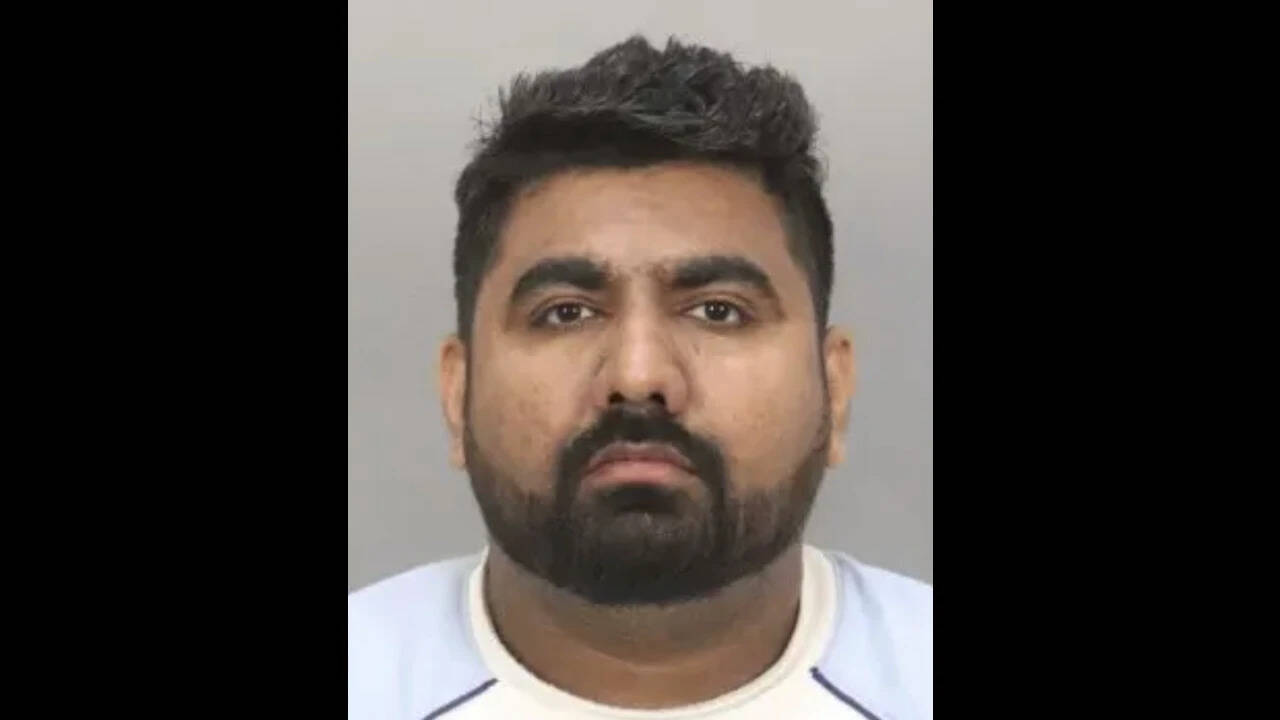
Federal immigration authorities and local California law enforcement are locked in a familiar, high-stakes standoff following the arrest and subsequent release of Anuj Kumar, an Indian national accused of sexually assaulting a 14-year-old passenger while driving for Uber. According to the Department of Homeland Security, Kumar entered the United States illegally and remained in the country without legal authorization, yet county jail officials released him from custody despite an active Immigration and Customs Enforcement detainer. The case exposes a structural blind spot where gig-economy background checks, state sanctuary laws, and federal immigration enforcement fail to intersect.
When a passenger taps a button to summon a ride, they operate on an unspoken assumption of institutional safety. They assume the company has verified the driver’s identity, legal work authorization, and criminal history. They also assume that if a driver is arrested for a severe crime against a minor, the justice system will keep that individual off the streets until trial or deportation. In California, both assumptions routinely collide with legal and operational realities that leave massive gaps in public protection.
How an Undocumented Driver Gets Behind the Wheel
To understand how an individual without legal status ends up operating an active Uber account in California, you have to look at the mechanics of gig-economy onboarding. Rideshare platforms do not conduct in-person interviews. The entire verification pipeline is digital, automated, and relies heavily on third-party background check vendors like Checkr.
Uber requires prospective drivers to submit a valid driver’s license, proof of vehicle registration, insurance, and a Social Security number to run a background check. On paper, that sounds straightforward. In practice, the system has long been vulnerable to specific workarounds, particularly in states that issue driver’s licenses regardless of immigration status.
California’s Assembly Bill 60, enacted in 2015, allows undocumented residents to obtain a standard California driver’s license, commonly known as an AB 60 license. These cards look nearly identical to standard licenses, bearing a small "Federal Limits Apply" notation on the front. While an AB 60 license legally permits a person to drive a personal vehicle on California roads, it does not grant federal work authorization.
Rideshare companies officially require proof of legal right to work in the United States. Yet industry analysts and fraud investigators have documented an underground market that bypasses this requirement entirely. Account renting, identity spoofing, and the use of stolen or synthetic Social Security numbers allow unauthorized drivers to pass initial digital screenings.
Once an account is active, biometric verification checks—such as periodic selfie prompts—are supposed to ensure the person driving matches the person registered on the app. However, when a driver registers using their own AB 60 license paired with a fraudulent work authorization document or a rented account setup, the facial recognition matches the driver every single time. The algorithm sees no anomaly.
The Mechanics of the California Sanctuary Firewall
The second half of this failure occurs after an arrest is made. When local police take a suspect like Anuj Kumar into custody on allegations of molesting a 14-year-old boy, fingerprints are automatically submitted to federal databases shared by the FBI and the Department of Homeland Security. If those prints trigger a match showing the suspect is in the country illegally, Immigration and Customs Enforcement issues a Form I-247A, known as an immigration detainer.
An ICE detainer is a formal request asking the local jail to hold the individual for up to 48 hours beyond their scheduled release time so federal agents can take custody. It is not a criminal warrant signed by a federal judge; it is an administrative request issued by a federal agency.
In California, Senate Bill 54—the California Values Act—strictly prohibits local law enforcement agencies from using state or local resources to assist with federal immigration enforcement. Under SB 54, county sheriffs cannot hold an inmate past their release date based solely on an ICE detainer, nor can they notify ICE of an inmate’s impending release unless the individual has already been convicted of specific, enumerated violent or serious felonies.
Notice the critical distinction in that statute. The law hinges on convictions, not arrests or pending charges.
When an individual is arrested on a severe charge—even one involving the sexual abuse of a minor—they have not yet been convicted. If they post bail, or if local prosecutors decline to seek pretrial detention without bail, the county jail is legally bound by state law to open the doors and let them walk out. Even with federal agents waiting or requesting a transfer, state law forbids the jail from holding the suspect for those extra 48 hours.
The Bail and Pretrial Release Factor
California’s ongoing shift away from cash bail further complicates this timeline. Following the California Supreme Court’s In re Humphrey decision, judges must consider a defendant's ability to pay when setting bail and are required to favor non-financial conditions of release unless there is clear and convincing evidence that no conditions can protect public safety.
For a first-time offender with no prior criminal conviction record in the United States—which is common among individuals who recently crossed the border unlawfully—pretrial risk assessment algorithms often score them as low-risk. Without a prior rap sheet in domestic databases, the system treats them as a blank slate. The result is rapid release back into the community, often within hours or days of booking, long before federal authorities can intercept them at the jailhouse door.
Unaccompanied Minors and Rideshare Policy Gaps
The vulnerability of a 14-year-old passenger adds another troubling dimension to the case. For years, Uber’s official terms of service strictly prohibited anyone under the age of 18 from riding alone without an adult accompaniment. Drivers were instructed to check IDs and cancel rides if a passenger appeared underage.
In 2023, Uber reversed that long-standing prohibition by rolling out Uber Teen accounts across the United States and Canada. The program allows teenagers aged 13 to 17 to request rides independently, linked to a parent’s family profile.
To market the feature to anxious parents, Uber promised heightened safety guardrails:
- Only "highly rated, experienced drivers" who pass local background checks are eligible to receive teen trip requests.
- Mandatory PIN verification ensures the teen gets into the right car.
- Live trip tracking and audio recording features allow parents to monitor the ride in real time.
- RideCheck technology flags unexpected stops or route deviations.
Despite these technological layers, the foundational premise remains flawed. Every safety feature on the app relies entirely on the integrity of the initial background check and the assumption that the person behind the wheel is legally vetted and accountable. When an undocumented individual bypasses identity verification, all the app’s digital safety badges become window dressing. A 4.9-star rating does not verify legal status, nor does a PIN code prevent a predator from exploiting an isolated minor inside a locked vehicle.
Furthermore, many teens do not even use official Uber Teen accounts. They use standard adult accounts created with a fake birth date, or they ride using a parent’s personal login. In those scenarios, the driver receives no notification that the passenger is a minor, and none of the specialized teen monitoring protocols are triggered.
The Accountability Vacuum Between Tech and Government
When an incident like the Anuj Kumar arrest hits the headlines, a predictable blame cycle begins immediately. Each institution points to the statutory or operational limits of the other, leaving victims and the public without a clear path to reform.
Uber’s Independent Contractor Shield
Rideshare companies classify drivers as independent contractors rather than employees. This legal classification is the bedrock of their business model, insulating them from payroll taxes, benefits, and direct vicarious liability in many civil disputes.
When a driver is accused of sexual assault, Uber typically issues a standard statement calling the behavior "abhorrent," confirming the driver’s access to the app has been permanently revoked, and pledging cooperation with law enforcement. What the company rarely discloses is how the driver passed onboarding in the first place, whether the account was flagged for suspicious activity prior to the arrest, or whether the driver was operating under a fraudulent identity. Because background checks are outsourced to third-party vendors, accountability is diffused across corporate contractors.
The Federal-State Jurisdictional Deadlock
Meanwhile, DHS and California officials trade public barbs over custody protocols. Federal officials argue that sanctuary policies actively endanger communities by forcing ICE agents to conduct risky at-large arrests in neighborhoods rather than safe, controlled transfers inside county jails. When ICE has to track down a suspect after release, agents must surveil homes, workplaces, or public streets—increasing the risk of confrontation and giving the suspect time to flee or reoffend.
California lawmakers and immigrant advocacy groups counter that local police should not act as an arm of federal immigration enforcement. They argue that if local jails honor administrative ICE detainers without judicial warrants, counties expose themselves to costly Fourth Amendment lawsuits for unlawful detention. They also maintain that separating local policing from federal deportation encourages undocumented victims and witnesses to report crimes without fear of being deported themselves.
Both arguments carry internal logic, yet the practical outcome on the ground is undeniable. Between a state law that blocks detention without a conviction and a federal agency barred from routine jail access, suspects charged with severe crimes slip directly through the cracks.
Systemic Vulnerabilities That Remain Unresolved
Looking closely at the intersection of gig work and immigration enforcement reveals that this is not an isolated fluke. It is the predictable result of several overlapping policies operating without coordination.
First, continuous criminal monitoring used by gig platforms only detects events that appear in domestic court and arrest records. If an individual enters the country unlawfully without inspection, no background check vendor in the United States has access to criminal records from their country of origin. A clean domestic background check simply means the person has not been caught in the U.S. yet.
Second, the underground market for gig accounts operates largely unchecked. Social media groups and encrypted messaging apps openly advertise ready-to-drive Uber, Lyft, and DoorDash accounts for weekly rental fees. Until states mandate biometric re-verification tied to government-issued cryptographic IDs—or hold tech platforms strictly liable for unauthorized drivers operating on their networks—fraudulent onboarding will continue to thrive.
Third, SB 54’s conviction threshold creates an inherent delay in high-severity cases. Felony sexual assault prosecutions routinely take 12 to 24 months to reach a verdict or plea deal. During that entire pretrial window, a defendant who makes bail or secures pretrial release remains out of federal custody, free to relocate, disappear, or seek work in other cash or gig economies.
What Needs to Change to Close the Gap
Fixing a failure that spans corporate tech platforms, state legislatures, and federal agencies requires targeted adjustments rather than broad political slogans.
Rideshare platforms must move beyond passive digital document uploads. Requiring real-time, government-database-backed E-Verify checks for every active driver—paired with randomized, mid-shift biometric liveness checks that cross-reference the live face against the original government ID photo—would immediately dismantle the account-rental ecosystem. If a driver cannot verify legal work authorization directly through federal employment databases, the app should not allow them to go online.
At the legislative level, states like California face a stark choice regarding the scope of sanctuary protections. Amending state law to allow jail officials to notify ICE—or honor judicial detainers—upon a probable cause judicial determination for violent felonies and crimes against children would close the pretrial release loophole without turning local police into general immigration agents. Probable cause hearings already occur within 48 hours of an arrest to validate criminal charges; tying federal notification to that existing judicial checkpoint satisfies Fourth Amendment standards while preventing accused predators from vanishing into the community.
Until both corporate vetting and jurisdictional handoffs are forced to confront these blind spots, passengers will continue stepping into vehicles under an illusion of safety that neither the tech companies nor the state actually guarantees.