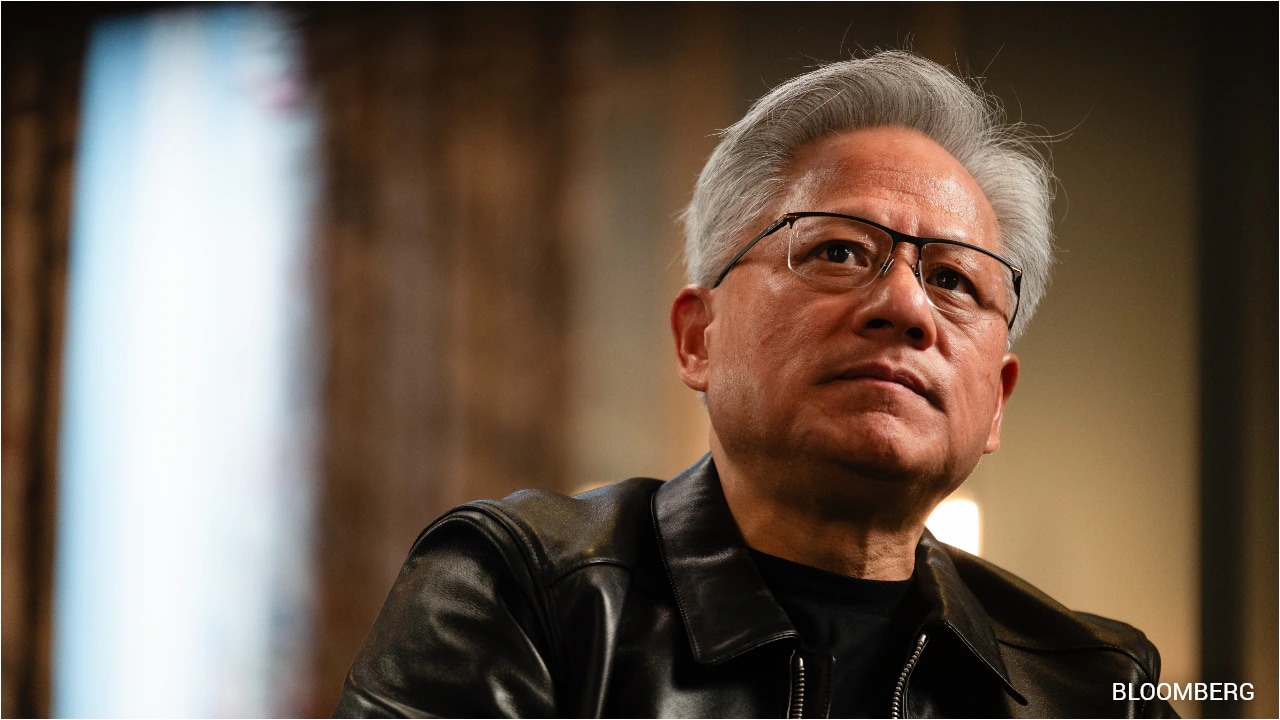
Rumors claiming that Nvidia CEO Jensen Huang had a Chinese lover who spied on the semiconductor giant lack verified evidence and rely heavily on unsubstantiated internet gossip rather than credible intelligence or corporate reporting. When a company sits at the absolute center of a multi-trillion-dollar geopolitical tug-of-war over artificial intelligence, character assassination and disinformation become standard weapons of market manipulation.
To understand why a tabloid-style espionage story targeting Jensen Huang gains traction so easily, you have to look at the sheer pressure cooker surrounding Nvidia. The company no longer just sells graphics cards to gamers. It manufactures the foundational hardware driving global artificial intelligence development, making its high-end chips the most coveted strategic assets on earth. Whenever an executive wields that level of influence across both Washington and Beijing, every personal interaction, historical tie, or unverified whisper gets magnified through the lens of national security paranoia.
The Anatomy of a Geopolitical Rumor
In Silicon Valley, corporate espionage is not a fictional thriller trope. It is a documented, everyday operational hazard. Over the past decade, federal prosecutors have brought numerous cases involving intellectual property theft across semiconductor, electric vehicle, and telecommunications firms. Because the threat is real, the public and financial markets are primed to believe almost any story that pairs a tech billionaire with a foreign intelligence operation.
The specific narrative alleging that Huang maintained a secret relationship with a Chinese national who compromised Nvidia’s trade secrets follows a classic disinformation blueprint. It takes a familiar Cold War archetype—the "honey trap"—and grafts it onto a real-world corporate leader who frequently travels to Asia and maintains deep cultural and business roots in the region. Born in Taiwan and raised in the United States, Huang occupies a complex position as a global business leader navigating intensifying US-China tech decoupling.
Yet, when veteran reporters and national security analysts look for the paper trail behind these specific allegations, the trail goes cold immediately. There are no Department of Justice indictments, no Securities and Exchange Commission disclosures, and no credible investigative reports from established outlets substantiating a breach linked to Huang's personal life. Instead, the claim circulates through anonymous message boards, speculative social media threads, and fringe aggregator sites that profit from sensational headlines.
Why Intelligence Agencies and Short Sellers Love a Scandal
A rumor does not need to be true to move markets or damage a reputation. It only needs to be plausible enough to make institutional investors hesitate for twenty-four hours.
Consider the mechanics of modern financial disinformation. When a company reaches a massive market valuation, short sellers and rival actors have immense financial incentives to amplify negative narratives. A headline suggesting that the chief executive of the world's most critical chipmaker compromised national security through a personal affair hits every algorithmic trigger for viral engagement. It combines salacious personal drama with high-stakes geopolitical anxiety.
At the same time, state-sponsored disinformation networks actively exploit these exact fault lines. Sowing distrust between American tech leaders and Washington policymakers weakens the cohesion required to enforce export controls and supply chain security. If lawmakers begin to doubt the personal judgment or loyalty of a CEO whose cooperation is essential to US technological competitiveness, political friction follows naturally. Even when an allegation is eventually debunked or ignored by serious journalists, the initial wave of suspicion leaves a lingering residue of doubt.
How Real Semiconductor Espionage Actually Works
The fascination with a glamorous spy story obscures how intellectual property theft actually happens inside major chipmakers. Foreign intelligence services and corporate rivals rarely rely on seducing a chief executive to steal semiconductor blueprints. A CEO does not carry proprietary lithography schematics or source code around in a briefcase, nor do they have routine access to the granular engineering repositories where trade secrets live.
Real corporate espionage in the semiconductor sector is tedious, methodical, and deeply technical.
- Supply Chain Infiltration: Threat actors target third-party vendors, packaging facilities, and testing subcontractors where cybersecurity protocols are often weaker than at the primary design headquarters.
- Insider Recruitment: Rather than targeting the C-suite, intelligence operatives approach mid-level engineers, database administrators, and researchers who hold direct administrative credentials to specific design architectures.
- Cyber Intrusion: State-backed hacking groups spend months or years moving laterally through corporate networks, exfiltrating incremental data packets to avoid triggering automated anomaly detection systems.
- Talent Poaching: Rival entities use shell companies and aggressive compensation packages to hire away entire engineering teams, legally or quasi-legally transferring institutional knowledge across borders.
To put this in perspective, consider a hypothetical example of how an actual breach unfolds at a major chip designer. An adversary would not waste resources trying to compromise the chief executive's personal life. Instead, they would identify a frustrated senior verification engineer working on next-generation interconnect architecture, offer them a lucrative consulting arrangement through an overseas intermediary, and instruct them to download specific repository files onto an encrypted drive before resigning. That is how multi-billion-dollar secrets actually walk out the door.
Nvidia's Security Posture Under Extreme Scrutiny
Because Nvidia sits directly in the crosshairs of US export restrictions, the company operates under a level of federal and internal security scrutiny that few private enterprises ever experience. Since the US government began restricting the sale of advanced AI accelerators like the A100 and H100 to Chinese entities, Nvidia’s compliance and counterintelligence protocols have been under a microscope.
Zero-Trust Architecture forms the backbone of modern semiconductor defense. Inside companies of Nvidia's scale, access to critical intellectual property is strictly compartmentalized. Even high-ranking executives cannot simply log into a terminal and pull down complete chip architectures without triggering multi-layered authentication and audit trails. The engineering designs for cutting-edge processors are segmented across different teams, jurisdictions, and secure servers so that no single point of failure—human or digital—can hand an adversary a complete blueprint.
Furthermore, Nvidia has direct experience dealing with actual cyber extortion and data leaks. In early 2022, the hacking group Lapsus$ breached Nvidia’s internal network, stealing employee credentials and proprietary data. That incident forced the company to harden its internal defenses even further, reinforcing identity verification and endpoint monitoring across its global workforce. A company that has already survived a high-profile intrusion and operates under constant Pentagon and Commerce Department oversight leaves very little room for an unvetted outsider to quietly siphon off crown-jewel technology.
The Trap of Confusing Cultural Ties with Compromised Loyalty
Another overlooked factor driving these rumors is the persistent undercurrent of suspicion directed at Asian American tech executives operating in sensitive industries. Jensen Huang’s background—born in Tainan, Taiwan, before immigrating to the United States as a child—is frequently weaponized by bad-faith commentators who deliberately blur the distinction between Taiwan, mainland China, and Chinese state intelligence.
In the semiconductor world, Taiwan is not an adversary; it is the indispensable manufacturing hub for the entire Western technology ecosystem. Taiwan Semiconductor Manufacturing Company (TSMC) fabricates Nvidia’s most advanced chips. Huang’s frequent visits to Taipei, his close working relationships with Taiwanese supply chain executives, and his public appearances at regional tech conferences are standard operational requirements for running a fabless chip company.
When online commentators take photos or routine business interactions from trips to Asia and spin them into fabricated tales of Chinese espionage, they are exploiting the public's lack of familiarity with how the global chip supply chain actually functions. A dinner with supply chain partners in Taipei or a routine corporate appearance becomes distorted through a game of digital telephone until it emerges on English-language forums as a sensational spy scandal.
Separating Signal from Noise in Tech Reporting
For investors, policymakers, and industry observers, filtering out fabricated scandals is becoming harder as generative tools and coordinated bot networks flood the information ecosystem with plausible-sounding nonsense. Evaluating claims of executive misconduct or corporate espionage requires strict adherence to verifiable standards rather than viral momentum.
When assessing any explosive claim involving a major tech leader, look for three concrete indicators before giving it credence:
- Primary Documentation: Credible espionage allegations leave institutional footprints, including court filings, regulatory warnings, corporate board investigations, or named intelligence sources speaking on the record to established national security reporters.
- Corporate Governance Response: Publicly traded companies face severe legal liability if they conceal material security breaches or executive conflicts of interest from shareholders; an absence of board action or SEC filings strongly indicates the absence of a substantiated threat.
- Technical Plausibility: Genuine security incidents involve specific mechanisms—compromised servers, stolen credentials, or indicted insiders—rather than vague, cinematic tropes lacking dates, locations, or verifiable actors.
Until hard evidence surfaces from a credible legal, regulatory, or journalistic institution, claims linking Jensen Huang to a Chinese espionage affair belong firmly in the category of geopolitical noise. In an era where control over artificial intelligence defines global power, the biggest threat to understanding the semiconductor industry is letting tabloid fiction distract from the real, documented battles over export controls, supply chain resilience, and silicon supremacy.