Eighteen months after a spectacular diplomatic divorce sparked by the smoldering conflict in eastern Democratic Republic of Congo (DRC), Rwanda and Belgium have quietly decided to remember why embassies exist.
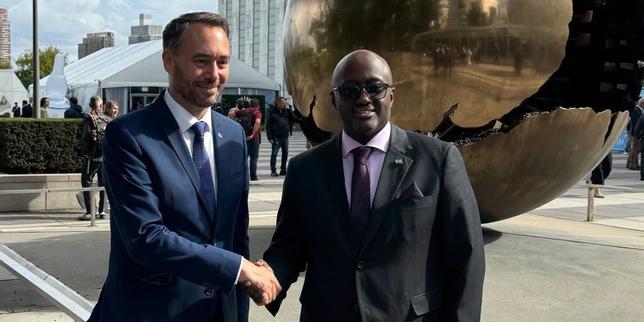
On the sidelines of the United Nations General Assembly, Belgian Foreign Minister Maxime Prevot and his Rwandan counterpart, Olivier Nduhungirehe, shook hands and announced the complete restoration of diplomatic ties. Embassies in Kigali and Brussels are reopening, staffed once again by chargés d'affaires while normal accreditation for ambassadors grinds back into gear. Yet, beneath the diplomatic choreography lies an awkward reality: not a single core disagreement over the DRC crisis has actually been resolved.
To understand why this normalization agreement is less of a triumphant peace accord and more of a pragmatic retreat from an expensive geopolitical dead end, one must examine the quiet cost of the eighteen-month freeze.
The Anatomy of an Eighteen-Month Standoff
The rift began in March 2025, when Kigali severed formal diplomatic channels with its former colonial power. The flashpoint was straightforward on paper, though explosive in practice. Belgium, aligning with broader European Union concerns and United Nations reports, ratcheted up pressure on Rwanda over its alleged backing of the M23 rebel group operating in North and South Kivu. The rebel advance, which saw key regional capitals in eastern Congo seized at an immense humanitarian cost, triggered intense international condemnation.
Rwanda's response was swift and absolute: cut the wires. Ambassadors were recalled, embassies locked up, and bilateral channels choked off.
For a brief political moment, the hardline stance played well domestically for both capitals. Kigali signaled that it would not accept lectures from European capitals on regional security. Brussels demonstrated solidarity with international law and the territorial integrity of the DRC.
Then came the operational friction of realpolitik.
When you shut down an embassy in Kigali, ordinary citizens and business operators bear the brunt. Visa processing ground to a halt, forcing applicants to book flights to Nairobi just to handle routine bureaucratic paperwork. Development cooperation programs stalled. Intelligence sharing grew fragmented. Both nations discovered that severing diplomatic relations does not make the other party vanish; it merely ensures you are flying blind while shouting across an empty room.
The Qatari Mediation Channel
The thaw did not happen by accident, nor did it happen directly. Behind closed doors, quiet third-party facilitation did the heavy lifting. Qatar stepped into the diplomatic vacuum, hosting secret informal talks between the two foreign ministers in Doha.
These sessions proved that while Rwanda and Belgium could not agree on the ground realities in eastern Congo, they could at least agree that total estrangement was a strategic failure. The joint statements issued in New York carried carefully chosen language designed to save face for both sides. Prevot made it explicitly clear that restoring ties did not mean Belgium was abandoning its defense of Congolese sovereignty. Rwanda similarly yielded nothing on its core security grievances.
The compromise is simple: they have agreed to disagree, but to do so while sitting in the same room.
What Has Actually Changed?
The danger of international reporting on events like this is the temptation to frame a resumption of ties as a breakthrough. It is not.
The underlying mechanics of the eastern DRC crisis remain deeply volatile. Competition over mineral wealth, deep-seated ethnic fault lines, and regional proxy dynamics continue unchanged. Belgium has not altered its official stance on civilian protection, and Rwanda has not shifted its security posture along the border.
What has changed is the toolset. By bringing the embassies back online, Brussels and Kigali have reinstated a baseline mechanism for crisis management. When an incident occurs on the ground, intelligence needs to be passed, or consular emergencies arise, diplomats will no longer have to rely on third-country intermediaries or megaphone diplomacy through the press.
The eighteen-month experiment in diplomatic silence proved a valuable, if costly, lesson. Cutting off communication satisfies ideological pride, but it starves governance of practical utility. The embassies are open again, the flags are flying, and the old arguments are right back where they started—waiting on the table.



