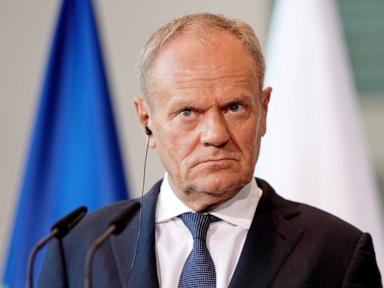
The threat arrived quietly in an electronic inbox, bypassing the noise of standard political vitriol. When Polish law enforcement agencies evaluated the raw intelligence pointing toward an assassination plot against Prime Minister Donald Tusk and Defense Minister Władysław Kosiniak-Kamysz, they did not dismiss it as empty online bravado. They recognized it as a symptom of a much deeper, structural fracture in European stability.
Poland sits at the geopolitical fault line of the continent. As a primary logistics hub for Western military aid entering Ukraine and a vocal antagonist to Moscow's regional ambitions, Warsaw has long been a target for hostile intelligence operations. Yet, the rising tide of internal radicalization and targeted political threats represents a domestic vulnerability that foreign actors are eager to exploit.
The Mechanics of Modern Political Violence
Security details do not panic easily. Veteran protection officers know that threats are an occupational hazard of high-office politics. However, the calculus shifts dramatically when digital radicalization meets concrete operational intent.
When intelligence coordinators and interior ministry officials convened an emergency session to address the specific plot against Tusk, they emphasized a chilling metric: the high probability that the threat could be executed. This assessment separates idle internet threats from actionable conspiracies.
[Threat Vector] ---> [Digital Radicalization] ---> [Operational Intent] ---> [State Security Response]
The swift detention of the suspect by Polish police neutralized an immediate danger, but it did nothing to resolve the wider environment of hostility. Political violence rarely emerges in a vacuum. It is cultivated by years of polarized rhetoric, foreign disinformation campaigns designed to fracture democratic institutions, and a societal normalization of aggression.
The Regional Spillover Effect
Warsaw's security apparatus is operating under unprecedented strain. The attempted assassination of Slovak Prime Minister Robert Fico served as a brutal wake-up call for Central European leaders. It shattered the illusion that post-communist European states were immune to high-level political targeted violence.
Tusk himself has repeatedly warned that Europe is entering a pre-war era, a reality underscored by frequent airspace violations, sabotage attempts, and coordinated hybrid warfare operations originating across the eastern border. When state-sponsored subversion meshes with domestic extremists, the threat profile changes entirely. Intelligence services are no longer just tracking lone wolves; they are tracking networks funded, directed, or inspired by hostile foreign capitals seeking to destabilize the European Union's eastern flank.
The Cost of Polarized Governance
Internal political friction remains a critical vulnerability. Poland's political landscape is fiercely divided, characterized by toxic partisan warfare that delegitimizes opponents rather than challenging their policies. While democratic debate is essential, the boundary between fierce political opposition and incitement to violence has grown dangerously thin.
When public figures are routinely demonized as existential threats to the nation, vulnerable individuals processing these narratives online can interpret extremist rhetoric as a call to action. The proliferation of digital echo chambers accelerates this radicalization process, turning disgruntled citizens into operational assets for terror.
Securing the State
The rapid response by Polish internal security forces demonstrated that institutional defenses remain functional. Counter-terrorism units, police cyber-divisions, and intelligence coordinators moved with a cohesion born of necessity.
Preventing future plots requires more than increased bodyguards and armored motorcades. It demands a systematic dismantling of the infrastructure that breeds political extremism. Intelligence agencies must aggressively map out domestic radical networks while countering foreign influence operations that pour fuel on local fires.
The plot against Donald Tusk is a warning sign that cannot be unread. The security architecture protecting European leaders faces relentless testing, and the margin for error grows narrower by the day.