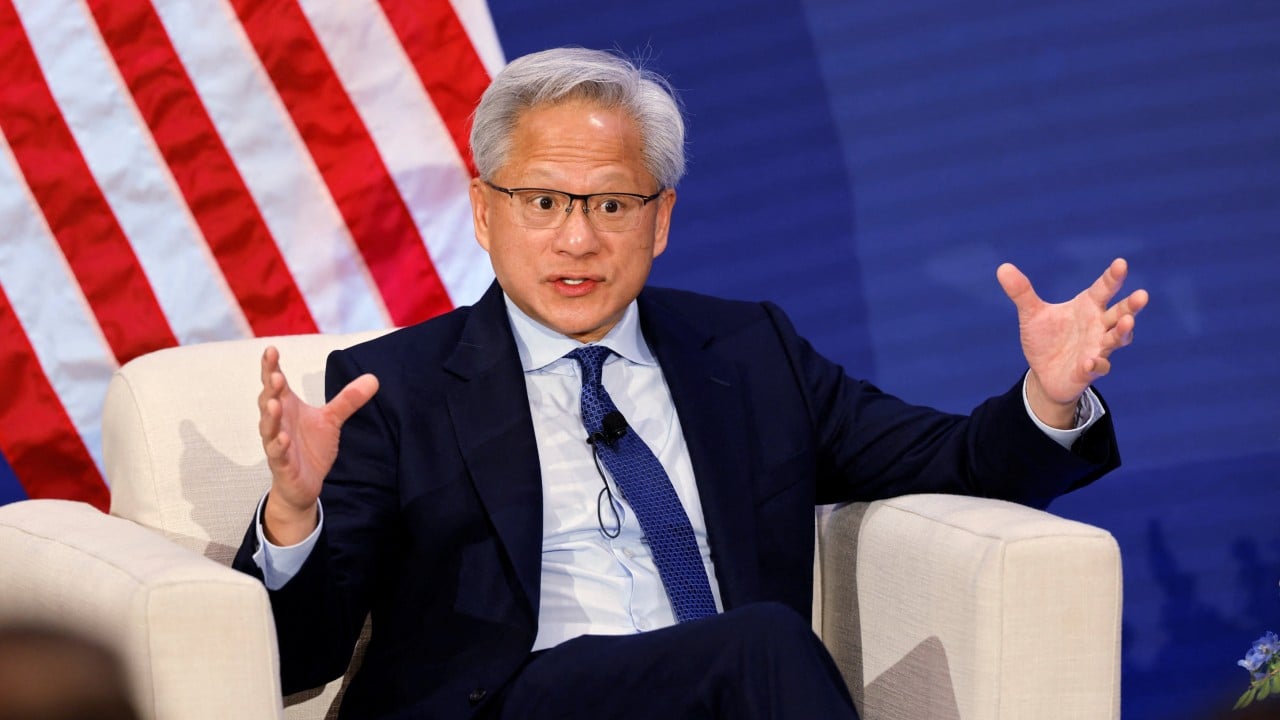
Silicon Valley heavyweights are waging a quiet war against global bureaucracy. Nvidia chief executive Jensen Huang and Tesla founder Elon Musk are aggressively lobbying international forums to strip away proposed artificial intelligence restrictions. Their argument rests on a singular premise. Heavy-handed governance will hand the geopolitical keys directly to Beijing while suffocating domestic economic output. This high-stakes clash surfaced at a recent G20 technology gathering in Chapel Hill, North Carolina, where industry leaders stood shoulder-to-shoulder with federal officials to push back against emerging compliance frameworks.
The urgency driving these executives is rooted in a shifting technological balance of power. American dominance in neural network development is facing intense pressure from overseas competitors, particularly as Chinese open-weight models achieve remarkable capabilities at a fraction of Western training costs. Huang told international delegates that state bodies must restrict their focus strictly to tangible, real-world harms rather than chasing phantom risks born of science fiction. To these titans, compliance mandates represent an artificial drag coefficient on a machine that must run at maximum velocity.
The Cost of Precaution
Regulatory bodies across Europe and various Western capitals have spent years attempting to draft comprehensive rulebooks. They want to prevent algorithmic bias, unauthorized data scraping, and potential national security vulnerabilities. Yet the corporate elite view these measures as an existential threat to commercial expansion.
Consider a hypothetical scenario involving a mid-sized enterprise trying to deploy automated logistics networks. Under strict compliance regimes, the firm might spend eighteen months waiting for legal clearance on probabilistic models that change month by month. Competitors operating in jurisdictions with fewer hurdles deploy those same systems in weeks.
Musk has targeted European regulatory architecture directly, arguing that endless administrative oversight paralyzes ingenuity. The fear among silicon manufacturers is simple. If the West ties its own hands with precautionary red tape, international markets will adopt alternative technological ecosystems that lack Western oversight entirely.
The Geopolitical Chessboard
This policy battle cannot be separated from the broader strategic contest between Washington and Beijing. The American administrative apparatus faces a narrow window to maintain its technological lead. White House officials are actively promoting light-touch governance guidelines, often referred to as the Carolina Principles, encouraging international partners to avoid establishing dedicated bureaucratic oversight boards for software development.
Behind closed doors, the calculation is brutal. National security hawks worry that over-regulating domestic firms will cede the foundational infrastructure of the next century to foreign actors. The supply chains for advanced processors, electrical grid expansion, and data center construction are deeply intertwined. When Nvidia commits vast sums to domestic infrastructure, the underlying expectation is that the state will clear the path rather than erect roadblocks.
Even safety-conscious labs have found themselves aligned with the growth camp on infrastructure limits. Representatives from organizations traditionally vocal about existential risks have pivoted to emphasize the physical bottlenecks holding back advancement. Electrical grid capacity and skilled labor shortages pose immediate threats to progress, making compliance debates feel like a distraction from the hardware race.
Building Without Blueprints
The core tension is that machine intelligence does not behave like traditional manufacturing. Traditional safety rules apply to physical objects with known failure points, such as bridges or commercial aircraft. Software that learns dynamically defies static inspection.
When executives demand freedom from theoretical rules, they are essentially arguing that accountability must shift entirely to post-market liability. If a model causes commercial or physical damage, the enterprise behind it should face legal consequences after the fact. Preemptive licensing and mandatory registration, from their perspective, only protect legacy incumbents while crushing agile startups.
The G20 discussions laid bare a profound philosophical split. One side views artificial intelligence as an unpredictable hazard requiring strict containment before deployment. The other side views it as a baseline utility, akin to electricity or water, which must be scaled aggressively to remain economically viable.
The political alignment between the executive branch and Silicon Valley leadership signals a turning point for global technology policy. Nations that choose a path of hyper-caution risk sliding into irrelevance while the global economy reorganizes itself around automated infrastructure. The pushback from Huang and Musk is not merely corporate whining about profit margins. It is a demand to run the industrial engine at full throttle, regardless of what shadows might loom in the fog ahead.
Jensen Huang Urges G20 To Avoid A.I Rules on 'Theoretical Harms'
This video provides additional context regarding Jensen Huang's address to international policymakers at the G20 tech summit.