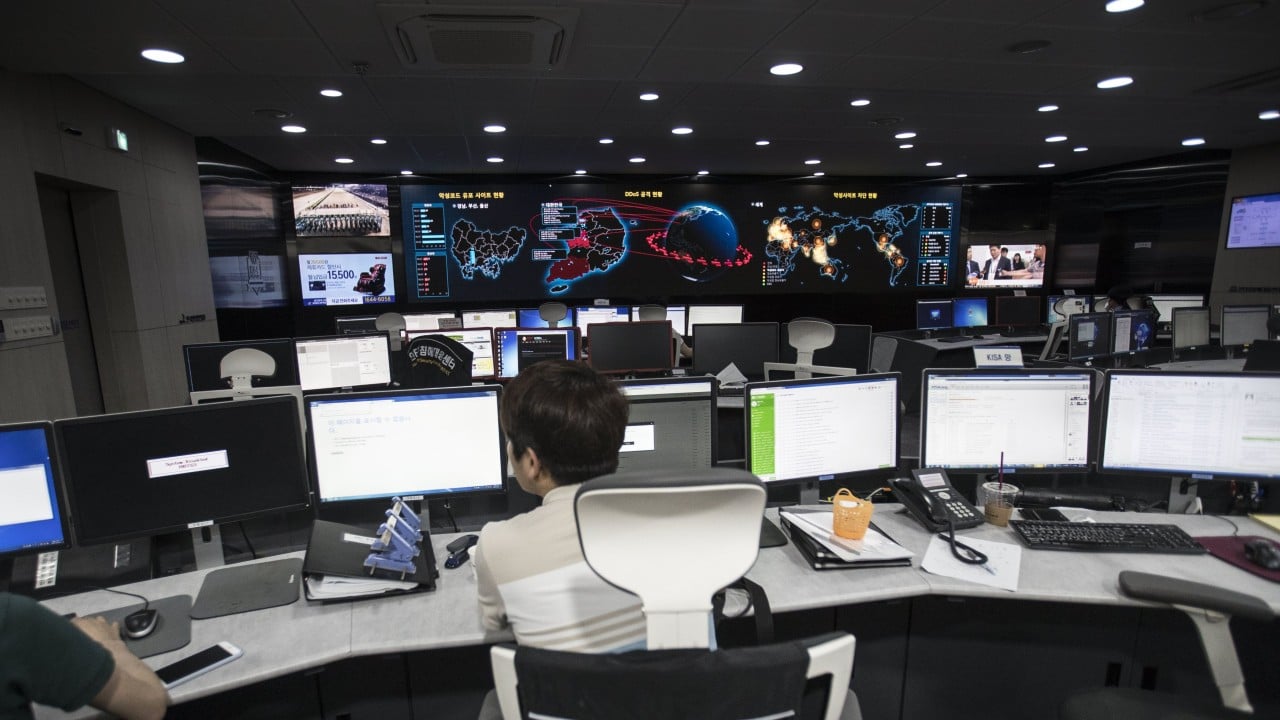
South Korea wants to appoint a centralized cyber tsar to unify its fragmented digital defenses against relentless state-backed attacks from Pyongyang and Beijing. Yet creating a new executive post will not fix a deeper structural rot: an entrenched culture of regulatory box-ticking, turf wars between intelligence and civilian agencies, and corporate complacency that treats cybersecurity as an overhead cost rather than a survival requirement.
For decades, Seoul has operated on a paradox. It boasts some of the fastest consumer broadband on earth, hyper-digitized public services, and global technology titans like Samsung and SK Hynix. At the same time, its critical infrastructure, financial networks, and defense contractors remain chronically exposed. Every major breach triggers the same political reflex. Lawmakers demand accountability, ministries draft new compliance checklists, and proposals emerge for a powerful national cyber director modeled loosely on the White House Office of the National Cyber Director. In related news, take a look at: The Capital Allocation Failure of Big Tech Midterm Lobbying.
That impulse makes intuitive sense on paper. When an attack hits a major telecom provider or a defense subcontractor, nobody is entirely sure who holds primary command until precious hours have already slipped away.
The Anatomy of Seoul's Fragmented Command
To understand why a cyber tsar sounds so appealing in Seoul, you have to look at how power is currently divided. Right now, South Korea’s cyber defense apparatus resembles a three-legged stool where each leg is built from different materials and bolted to a separate floor. Mashable has also covered this important subject in extensive detail.
First, there is the National Intelligence Service (NIS). Historically, the NIS has dominated government-level cyber threat intelligence and public-sector network defense. Because of its intelligence mandate, it operates in secrecy, often hoarding threat indicators rather than sharing them rapidly with private companies. Civil society groups and opposition lawmakers also harbor deep, historically rooted distrust of the NIS, stemming from past domestic surveillance scandals. Any attempt to hand the intelligence agency sweeping authority over private-sector networks immediately sparks fierce political pushback.
Second sits the Ministry of Science and ICT (MSIT), alongside its operational arm, the Korea Internet & Security Agency (KISA). They oversee the private sector, critical information infrastructure, and consumer data protection. KISA does the heavy lifting on incident response for businesses, yet it lacks the coercive investigative powers of law enforcement and the signals-intelligence reach of the NIS.
Third is the Ministry of National Defense (MND) and its Cyber Operations Command, which handles military networks and offensive cyber capabilities. Add in the National Police Agency’s cyber bureau for criminal prosecution and the Financial Supervisory Service for banking, and the result is a labyrinth of overlapping jurisdictions.
Consider a hypothetical scenario that mirrors real-world incidents in the region. Suppose a North Korean group like Lazarus compromises a mid-sized South Korean software vendor whose product is used by both commercial banks and municipal water utilities. Who leads? The police treat it as a crime scene and want servers preserved for forensic evidence. KISA wants to notify private-sector victims immediately so they can patch. The NIS wants to monitor the attacker’s infrastructure quietly to map out their broader espionage campaign. While three agencies debate jurisdiction and classification levels, the attackers move laterally across dozens of networks.
A cyber tsar, ideally positioned directly under the Presidential Office, is meant to break these deadlocks. By giving one senior official authority over budget allocation, cross-agency coordination, and national cyber strategy, Seoul hopes to replace bureaucratic friction with decisive command.
Why Compliance Culture Breeds False Confidence
Appointing a tsar solves an organizational chart problem. It does not solve the complacency problem.
South Korea relies heavily on prescriptive regulation. Under the Information Security Management System (ISMS) and its personal data variant, ISMS-P, thousands of Korean companies and public institutions undergo rigorous audits to prove they meet hundreds of specific technical and administrative controls. Passing the audit grants a certificate. Failing it invites fines and regulatory scrutiny.
In theory, mandatory baseline standards raise the floor for everyone. In practice, they have created a dangerous compliance mindset across Korean boardrooms.
Walk into the IT department of a typical mid-tier Korean enterprise and ask about their security posture. The answer rarely focuses on threat hunting, red-teaming, or mean-time-to-detect. Instead, executives point to their ISMS certification hanging on the wall. Once the audit is passed, security budgets freeze until the next review cycle.
This box-ticking mentality leaves organizations wide open to modern adversaries. State-sponsored hackers do not care whether a company filled out compliance form 4.2.1 correctly. They exploit zero-day vulnerabilities, abuse legitimate administrative tools, and target the weakest link in the supply chain—often a third-party IT maintenance contractor with standing remote access and minimal oversight.
The Legacy Software Trap
Complacency also manifests in South Korea’s notorious addiction to legacy security software. For years, Korean banking and government websites forced users to install clunky, locally developed ActiveX controls and proprietary executable plug-ins just to verify their identity or complete a transaction.
Although the government officially abolished mandatory ActiveX requirements years ago, the underlying ecosystem barely changed. Users are still routinely prompted to download multiple third-party security agents—keystroke loggers, firewall wrappers, and certificate managers—that run silently in the background with high-level system privileges.
Security researchers have repeatedly demonstrated that these mandated "security" programs are themselves goldmines for attackers. Because nearly every Korean citizen and corporate employee has the exact same suite of local security software installed, finding a single vulnerability in one of those tools gives an adversary a master key to millions of endpoints simultaneously. Yet regulators and financial institutions cling to them because removing them shifts liability. If a bank uses standard international web security protocols and suffers a breach, executives fear regulators will blame them for deviating from established domestic norms.
The Asymmetric Reality North Korea Exploits
While Seoul debates administrative titles and audit checklists, its primary adversary operates with ruthless agility.
North Korea’s Reconnaissance General Bureau views cyberspace not as an auxiliary domain, but as a primary instrument of statecraft and regime survival. Cut off from global banking by international sanctions, Pyongyang uses elite cyber units to steal hundreds of millions of dollars in cryptocurrency, plunder defense blueprints, and map out South Korean infrastructure for potential wartime disruption.
These units do not suffer from bureaucratic turf wars. They operate under clear strategic directives, adapt rapidly when defenders close one avenue, and relentlessly target human psychology through tailored spear-phishing.
South Korea’s private sector, meanwhile, remains overwhelmingly reactive. Many Korean conglomerates treat their Chief Information Security Officer (CISO) as a mid-level technical manager buried beneath the Chief Information Officer or Chief Financial Officer, rather than an independent risk executive with direct access to the board. When a breach occurs, the immediate instinct is concealment. Companies fear reputational damage, regulatory penalties, and shareholder backlash far more than they fear the attackers themselves.
A cyber tsar cannot force a corporate board to respect its CISO. Nor can a presidential advisor rewrite the risk-averse DNA of corporate hierarchies overnight.
The Structural Flaws in the Tsar Model
Even if South Korea successfully establishes a powerful cyber tsar, historical precedent shows that centralized coordinators frequently fail when they lack two critical levers: budget control and statutory authority.
Look at the United States. When Washington created the Office of the National Cyber Director, it was hailed as a major breakthrough. Yet the office quickly ran into friction with the Cybersecurity and Infrastructure Security Agency (CISA), the National Security Agency, and the FBI. Without direct control over the budgets of those operational agencies, the cyber director had to rely on persuasion and White House backing to enforce alignment. Whenever political attention shifted to other crises, bureaucratic inertia crept right back in.
In South Korea, this risk is magnified by the five-year single-term limit of the presidency.
Every new administration in Seoul arrives with a mandate to reorganize government structures, dismantle the pet projects of its predecessor, and install loyalists in key posts. A cyber tsar embedded in the Presidential Office might wield immense clout during years one and two of a presidency. By year four, as the administration enters lame-duck status, ministries routinely slow-walk directives from the top, waiting out the clock until the next election resets the board.
Furthermore, a cyber tsar sitting above both intelligence and civilian agencies faces an inherent legal collision. In any democracy, there must be a clear firewall between domestic law enforcement, civilian network protection, and foreign intelligence collection. If a single tsar directs both the NIS and KISA without strict statutory guardrails, civil liberties advocates will challenge the arrangement in court and in the National Assembly, paralyzing the very coordination the role was meant to create.
What Actually Moves the Needle
If Seoul wants to break out of its cycle of high-profile breaches and performative reforms, creating a figurehead is the wrong place to start. Real resilience requires painful, unglamorous shifts in how the government and private sector operate.
First, South Korea must move from compliance-based regulation to outcome-based accountability. Regulators need to dismantle the sprawling ISMS checklist culture and replace it with continuous, adversarial testing. Instead of rewarding companies for paperwork, agencies should mandate regular, unannounced red-team exercises for critical infrastructure operators and hold executives personally liable when basic, known vulnerabilities go unpatched for months.
Second, Seoul needs a genuine liability shield for threat intelligence sharing. Right now, companies that report an intrusion early often find themselves punished by overlapping investigations from KISA, the police, and sector-specific regulators. Until businesses know that rapid disclosure triggers technical support rather than immediate punitive fines, they will continue to hide breaches until attackers dump their data online.
Third, the government must retire the mandatory domestic plug-in ecosystem once and for all. Financial regulators need to explicitly endorse modern, internationally recognized authentication standards—such as passkeys and FIDO2—and remove the regulatory penalties that scare banks away from abandoning bloated local security agents.
Fourth, South Korea has to address its severe talent drain. Top Korean security researchers routinely leave domestic firms for higher-paying roles in the United States, Singapore, or global tech companies, or they burn out under rigid corporate seniority systems where junior engineers cannot challenge senior managers. You cannot outmaneuver agile state-backed hackers with a workforce structured like a 1980s manufacturing conglomerate.
A cyber tsar might look impressive on an organizational chart, giving politicians a clean talking point after the next major data leak. Without dismantling the regulatory theater, agency rivalries, and boardroom complacency underneath, however, Seoul will simply be appointing a new captain to a ship that still refuses to patch its hull.