A volatile sequence of tit-for-tat military operations has effectively shattered the fragile spring ceasefire between the United States and Iran. Explosions rocked the perimeter of the Bushehr nuclear facility and key port infrastructure on Thursday, while U.S. Central Command issued a blunt refutation of Tehran's claims to maritime sovereignty over the world's most critical energy chokepoint. The rapidly escalating conflict marks the functional death of the two-month-old Memorandum of Understanding negotiated to prevent an all-out regional war. While Washington officially denies launching the latest specific strikes inside Bushehr, the physical reality on the ground points to a dangerous new phase of unacknowledged kinetic engagements.
The conflict did not materialize overnight. It is the direct consequence of a deeply flawed diplomatic framework that left the core issue of maritime control unaddressed, allowing both sides to operate under mutually exclusive assumptions until the entire arrangement inevitably imploded.
The Illusion of a Fragile Peace
The interim agreement signed in early April was always a desperate holding action. Following months of intense fighting triggered by the death of Supreme Leader Ayatollah Ali Khamenei in late February, the diplomatic deal was designed to buy time. It established a sixty-day pause in major offensive operations and promised a temporary lifting of certain oil sanctions waivers. The primary objective was simple. Keep the shipping lanes open and stop the immediate bloodshed.
President Donald Trump signaled the definitive end of that diplomatic experiment this week, declaring the arrangement dead after Iranian forces targeted three commercial tankers in the Strait of Hormuz. The White House now views these maritime interdictions not as mere compliance violations, but as outright acts of terrorism. The policy shift has been instantaneous. Defensive positioning has vanished, replaced by an aggressive campaign to systematically degrade Iran’s coastal military infrastructure.
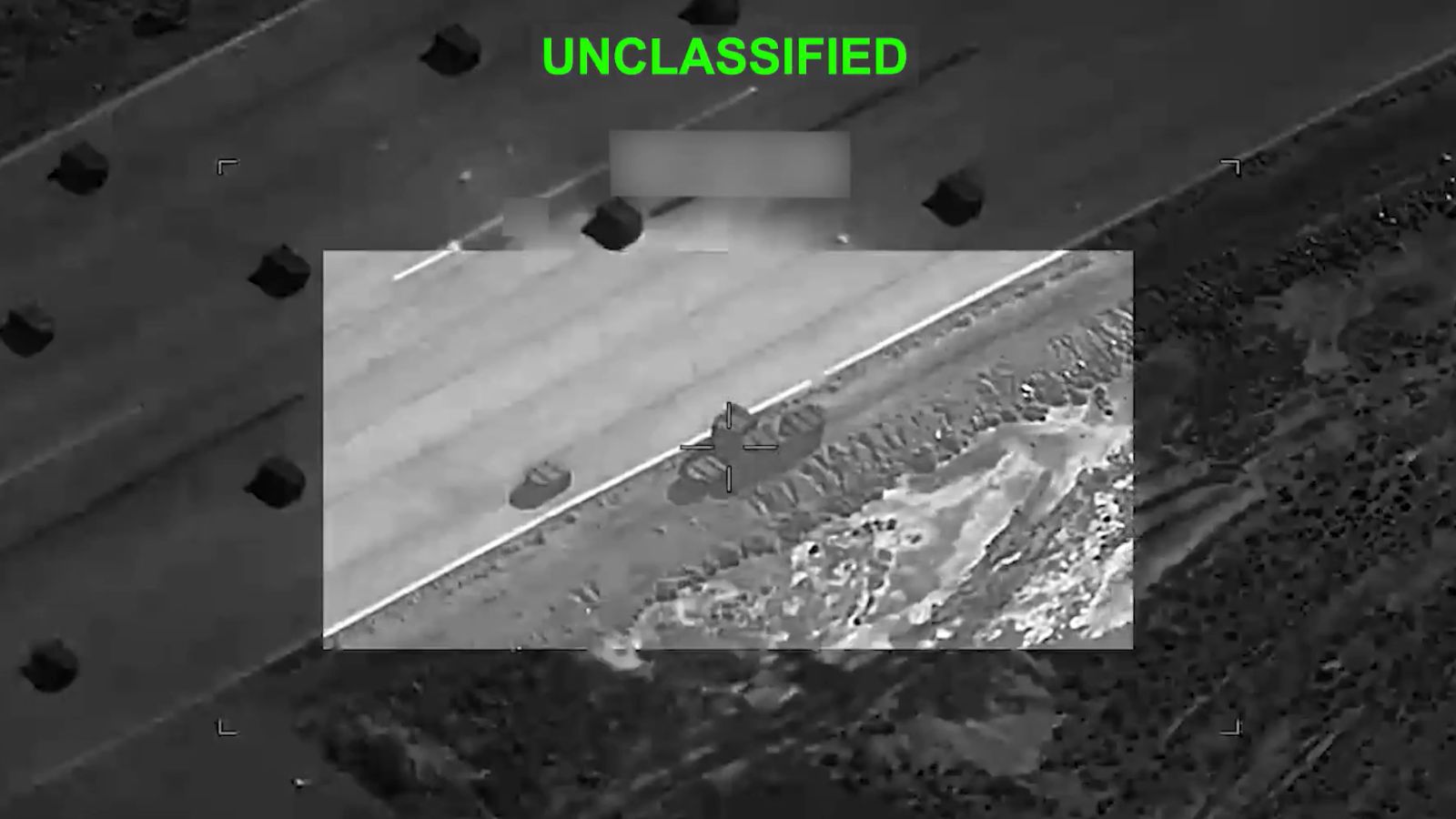
CENTCOM responded to the tanker attacks with an expansive aerial campaign, striking more than eighty targets across Iran’s southern coast. The strikes intentionally focused on the Islamic Revolutionary Guard Corps Navy assets, flattening drone launch sites, radar installations, and oblitering dozens of the fast-attack boats that Tehran uses to harass commercial shipping. The scale of the bombardment indicates that Washington had already mapped these targets weeks in advance, waiting for the political justification to execute the mission.
The Battle of Article Five
At the heart of this collapse lies a single, ambiguously worded clause in the April agreement. Article Five mandated that Iran use its best efforts to ensure the safe passage of commercial vessels through the Strait of Hormuz. This was the specific mechanism intended to restore international maritime confidence.
The two capitals interpreted those words through entirely different lenses.
The Trump administration viewed the clause as a straightforward demand for Iran to step back and allow international shipping to proceed unhindered under standard international maritime law. Hardline factions within the Iranian political hierarchy saw an opportunity. They argued that the text implicitly recognized Tehran’s primary administrative authority over the waterway, effectively legitimizing their right to police the channel.
+-----------------------------------------------------------------------------+
|              THE STRATIGRAPHIC SPLIT OVER ARTICLE FIVE                      |
+-----------------------------------------------------------------------------+
| Washington's Interpretation        | Tehran's Interpretation               |
+-------------------------------------+---------------------------------------+
| • Absolute freedom of navigation.   | • Shipping conditional on oversight.  |
| • International water status.       | • Designated routes approved by IRGC. |
| • Total removal of IRGC threats.    | • Exclusion of non-regional navies.   |
+-----------------------------------------------------------------------------+
This structural misunderstanding produced the current crisis. Iranian Parliament Speaker Mohammad Baqer Qalibaf confirmed this rigid stance, publicly declaring that the Strait would only operate under Iranian arrangements and would never yield to American threats. The IRGC immediately attempted to enforce this doctrine, demanding that transiting vessels utilize only state-designated lanes under direct military supervision.
CENTCOM counterattacked on the information front, releasing a stark digital directive asserting that Iran maintains absolutely zero legal control over the Strait of Hormuz. To back up this claim, military officials noted that American forces have actively escorted or assisted hundreds of commercial vessels carrying hundreds of millions of barrels of crude through the channel over the last two months. This is an active, heavily armed denial of a sovereign claim.
Fire Near the Nuclear Core
The friction peaked with a series of unexplained blasts in Bushehr province, the home of Iran's sole operational commercial nuclear power plant. Local officials reported that a projectile struck a military headquarters on the outskirts of the city, causing secondary fires at a nearby fishing pier in Bonood where civilian vessels were incinerated.
Iranian state media immediately blamed an American-Zionist strike package. The timing was highly symbolic, occurring just as the week-long burial ceremonies for the late Supreme Leader concluded in Mashhad. The optics of smoke rising near a nuclear site during a period of intense national mourning were clearly calculated to project vulnerability.
Washington has denied carrying out strikes during those specific hours. This leaves two distinct possibilities.
Either the explosions were the result of a covert operation conducted outside the official CENTCOM command structure, or they were caused by the catastrophic malfunction of Iranian air defense units reacting blindly to phantom targets. Local reports indicating that domestic surface-to-air missile batteries were actively firing into the night sky lend weight to the latter theory. In a highly saturated radar environment, nervous air defense crews frequently mistake routine technical anomalies or their own returning assets for incoming hostile cruise missiles.
The danger of this specific geographic flashpoint cannot be overstated. While the Bushehr reactor itself remains unhit, kinetic activity within its immediate periphery risks a localized environmental disaster and removes the final remaining inhibitions against targeting strategic infrastructure.
A Regional Flashpoint Ignites
Tehran did not absorb the coastal strikes passively. The regime launched a synchronized, long-range missile and drone assault targeting the web of American military installations scattered across neighboring Gulf states.
The geographical breadth of the retaliation reveals the true scale of Iran's surviving missile inventory. Ten ballistic missiles were directed toward Jordan's Azraq military base, a critical logistical node for Western aerial operations. Air defense batteries in Jordan managed to intercept the majority of the incoming threats, but the attack demonstrates a complete disregard for regional neutrality.
Simultaneously, the IRGC targeted Patriot missile installations in Kuwait, an early warning radar facility in Qatar, and a primary U.S. Army fuel depot in Bahrain. This was an explicit warning to the Arab monarchies hosting Western forces. Tehran is signaling that if its domestic infrastructure is destroyed, the entire economic and military infrastructure of the Persian Gulf will be dragged down with it.
       [IRANIAN MISSILE DIRECTION]
         /          |          \
        v           v           v
    [JORDAN]    [KUWAIT]    [BAHRAIN]
    (Azraq)     (Patriot)   (5th Fleet)
The response from these host nations has been a mix of military readiness and diplomatic panic. Kuwait confirmed the interception of a multi-tiered strike package consisting of cruise missiles, ballistic missiles, and low-flying loitering munitions. Debris field impacts caused civilian injuries on the ground, highlighting the impossibility of complete protection in a dense saturation environment. Bahrain, which houses the headquarters of the U.S. Navy's Fifth Fleet, placed its entire military apparatus on maximum alert while pleading for quiet diplomatic intervention via Qatari intermediaries.
The Shipping Bottleneck
The immediate casualty of this military escalation is the global energy market. The Strait of Hormuz is not an ordinary body of water. It is a narrow bottleneck through which roughly a fifth of the world's petroleum consumption flows daily.
Before the collapse of the ceasefire, shipping traffic had painfully clawed its way back to approximately half of its historical norms. Insurance underwriters were beginning to offer tentative coverage options for international tankers willing to make the transit. That fragile commercial momentum has dissolved.
Ship owners are ordering their fleets to drop anchor outside the Gulf of Oman or deviate entirely around the Cape of Good Hope. The mathematical reality of maritime shipping means that avoiding the Persian Gulf adds weeks to transit times and millions of dollars in fuel costs per voyage, an economic burden that will inevitably manifest at consumer fuel pumps globally.
                  [THE HORMUZ STRAIT TRANSIT CHOKE]

   Current Status: 50% Reduction in Commercial Volume
   Insurance Reality: War-risk Premiums Skyrocketing
   Alternative Routes: Cape of Good Hope (+14 Days Transit)
The situation is further complicated by American strikes hitting secondary logistical targets far from the coast. Fars News reported the destruction of a critical railway bridge in northern Iran, a vital link in the trade corridor connecting Iran to Turkmenistan, Russia, and China. By widening the target list to include transport infrastructure linked to Eurasian trade networks, the conflict is shifting from a localized maritime dispute into a broader geopolitical confrontation involving major global powers.
The diplomatic backchannels managed by Doha and Muscat are still buzzing with activity, but their influence has eroded. The parameters for a negotiated settlement no longer exist. Washington will not tolerate the ongoing targeting of international shipping, and the governing faction in Tehran cannot politically afford to abandon its sovereign claims over its coastal waters without facing an existential crisis of legitimacy at home.
The military reality has outpaced the diplomatic rhetoric. The United States has established a clear precedent. Any attempt to enforce Iranian oversight on the international shipping lanes will trigger an immediate, overwhelming kinetic response against domestic infrastructure. Tehran has responded by demonstrating its willingness to set fire to the entire regional security framework to preserve its stance. With the ceasefire abandoned and both militaries locked into a cycle of structural escalation, the focus has shifted from negotiating peace to managing the initial stages of a prolonged, high-intensity conflict.