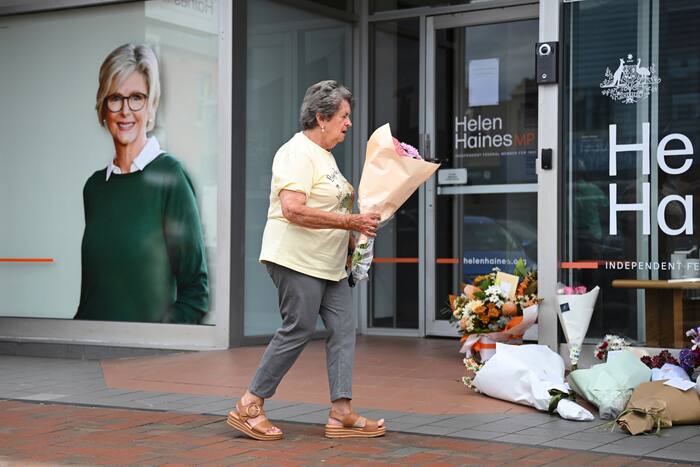
When a driver is charged with intentionally injuring an Australian federal lawmaker, the headline almost always stops at the arrest. Charges are filed. Statements are released. A news cycle spins and dies.
Yet in public life, a charge sheet is rarely the end of the story. It is a symptom of deeper pressures around political violence, parliamentary security, and the fragile boundary between public access and personal safety in democratic institutions. For an alternative look, read: this related article.
Having covered politics, courts, and public safety for decades, I have watched enough of these episodes to know that shock fades quickly while structural vulnerabilities linger. An incident involving an Australian federal lawmaker forces a harder question than whether a single accused individual acted with intent. It asks how open a representative democracy can remain when hostility toward elected officials is rising, how police and security agencies assess risk before harm occurs, and what happens to everyday civic life when fear enters the equation.
Because there is no verified source URL or specific case file attached to this reference, I will not invent names, dates, quotes, or court outcomes. Instead, I will examine what a charge of intentionally injuring an Australian federal lawmaker means in practice, how these matters move through the legal system, and why the real story lies in the institutional blind spots surrounding public-facing elected officials. Further coverage regarding this has been provided by NPR.
Why Charging Intent Changes the Stakes
A charge alleging intentional injury carries a weight far heavier than a routine traffic offence or careless driving. In criminal law, proving intent requires looking past the physical impact to the state of mind of the accused at the moment of the act.
Prosecutors examine conduct before, during, and after the event. That can include vehicle movement, verbal statements, prior behaviour, digital records, or witness accounts. Even where physical harm is limited, allegations of deliberate targeting elevate the matter from a road safety failure to an attack on personal integrity and potentially on the democratic process itself.
In Australia, federal lawmakers occupy a dual space. They are private citizens with families and ordinary routines, and they are public figures whose work depends on visibility. They attend community forums, walk through shopping strips, travel between electorates and Canberra, and meet constituents in offices that are rarely built like fortresses.
When a vehicle becomes the instrument of alleged intentional injury, the line between street-level hazard and targeted violence blurs. Roads and car parks are everyday spaces. Turning one into a flashpoint exposes how little physical separation exists between an angry or unstable individual and a member of parliament.
The Myth of the Fortress on the Hill
Many people picture parliamentary security as high walls, metal detectors, and armed guards everywhere a politician goes. That image fits Parliament House in Canberra far better than it fits the rest of a lawmaker's week.
An Australian federal lawmaker spends huge stretches of the calendar outside parliamentary precincts. Electorate offices, regional airports, local halls, railway stations, and suburban streets are public environments. Tightening security in every single one of those places is logistically impossible and politically counterproductive.
Democracy suffers when elected representatives become unreachable. If members of parliament retreat behind tinted glass, private compounds, and heavy escort teams, constituent access shrinks. People lose the sense that their local member is reachable at a market stall or community meeting.
At the same time, treating openness as a free pass for intimidation is naive. Security planners face a constant tension. Too little protection leaves lawmakers exposed to physical harm and coercive pressure. Too much visible force creates an atmosphere of siege that alienates voters and inflames extremists.
Consider a hypothetical example of a lawmaker leaving a local community event in a regional town after dark. A motorist accelerates toward the kerb where a small group is standing, clipping the lawmaker before swerving away. Even if the physical injury is minor, the psychological shock ripples through staff, volunteers, and local organisers who suddenly realise how thin the margin of safety is outside a guarded building.
How Threat Assessment Works Before and After an Incident
Security agencies and police forces rely on threat assessment to sort noise from genuine danger. Politicians receive plenty of abuse—angry emails, hostile calls, shouting outside offices—and most of it never crosses into physical violence.
That volume is itself a problem. When abusive messages and aggressive encounters become routine, teams risk becoming desensitised. A genuine physical threat can get lost inside a daily stream of bile.
Investigators looking into an alleged intentional injury have to reconstruct a timeline quickly. They look at whether there were prior warnings, fixation, grievance-driven behaviour, or sudden crisis. Sometimes an act appears impulsive on the surface, yet digital footprints or witness observations point to escalating preoccupation. Other times, a clash grows out of an immediate confrontation where tempers flare and judgement collapses.
Courts do not run on headlines or outrage. A charge is an allegation, not a finding of guilt. The accused has the right to a fair trial, and prosecutors must meet the criminal standard of proof beyond reasonable doubt.
That distinction matters in public commentary. Speculation moves faster than evidence. Calling an incident an attack on democracy before facts are tested in court can distort proceedings, while dismissing a charge as a mere traffic mishap ignores the seriousness of alleged intent.
The Chilling Effect on Staff and Local Democracy
When an Australian federal lawmaker is targeted, the impact rarely stops with the member. Electorate staffers, advisors, and local volunteers often stand in the front line.
Staffers answer phones, open mail, greet walk-in visitors, and set up public events. They frequently absorb the first wave of anger from constituents who are distressed, frustrated, or unhinged. Unlike elected politicians, many junior staffers are young, modestly paid, and unfamiliar with handling acute hostility.
A violent or potentially intentional incident changes workplace culture overnight. Office doors stay locked when they used to stay open. Staff double-check exits and parking areas. People start asking whether a public-facing political job is worth the risk.
Over time, that pressure shapes who runs for office and who stays. If serving in public life requires constant vigilance against physical harm, fewer ordinary citizens will put their hands up. A representative system loses breadth when fear narrows the pool of candidates to those willing to bear personal risk or afford heavy insulation.
There is also a counter-argument worth taking seriously. Some observers worry that over-emphasising threats can encourage copycat behaviour or prompt knee-jerk laws that curb legitimate protest. Peaceful assembly and fierce criticism of government are lifeblood features of Australian public life. Lawmakers have to tolerate harsh words, heckling, and angry demonstrations without conflating dissent with assault.
Drawing that line cleanly is hard work. A loud protest outside an office is not the same thing as using a vehicle to injure someone. Confusing the two weakens both free expression and genuine protection.
Legal Accountability and Institutional Blind Spots
When someone is charged with intentionally injuring an elected official, legal accountability rests primarily with the individual before the court. Criminal law focuses on culpability, harm, and sentencing principles.
Institutional accountability looks wider. Agencies and parliaments ask whether reporting channels worked, whether risk assessments reflected real-world travel patterns, and whether support for injured or shaken staff was adequate.
Several blind spots show up repeatedly in high-profile security reviews:
- Fragmented jurisdictions. A lawmaker moves across federal, state, and local spaces, sometimes in a single afternoon. Coordination between federal protective services, state police, and local venue operators is not always automatic.
- Uneven regional support. Security awareness and rapid response are often stronger in major capital cities than in outer suburbs or remote regional electorates.
- Under-reporting of lesser incidents. Near-misses, intimidation in car parks, and aggressive tailgating often go unlogged because people treat them as part of the job until something worse happens.
- Mental health and grievance dynamics. Many perpetrators of targeted harassment or physical acts are driven by personal grievances, paranoia, or acute distress rather than coherent ideology, complicating standard security playbooks.
None of these issues has a neat technical fix. Adding more cameras or harsher penalties on paper will not solve every breakdown in human behaviour. Yet ignoring structural gaps guarantees that institutions keep reacting after injury rather than adapting thoughtfully.
What This Moment Demands of Public Life
A charge against a driver accused of intentionally injuring an Australian federal lawmaker should prompt sober scrutiny rather than theatrical posturing. Politicians do not need sympathy speeches to do their jobs; they need clear protocols, reliable police support, and a political culture that refuses to treat intimidation as normal politics.
Citizens have a stake here too. Disagreement with a policy, a party, or a prime minister is central to democratic life. Turning streets, offices, and public events into sites of physical threat poisons the system for everyone—left, right, and centre.
Watch how the legal case unfolds, pay attention to what security reviews reveal about everyday vulnerabilities outside parliament walls, and hold both attackers and institutions to strict standards of accountability.