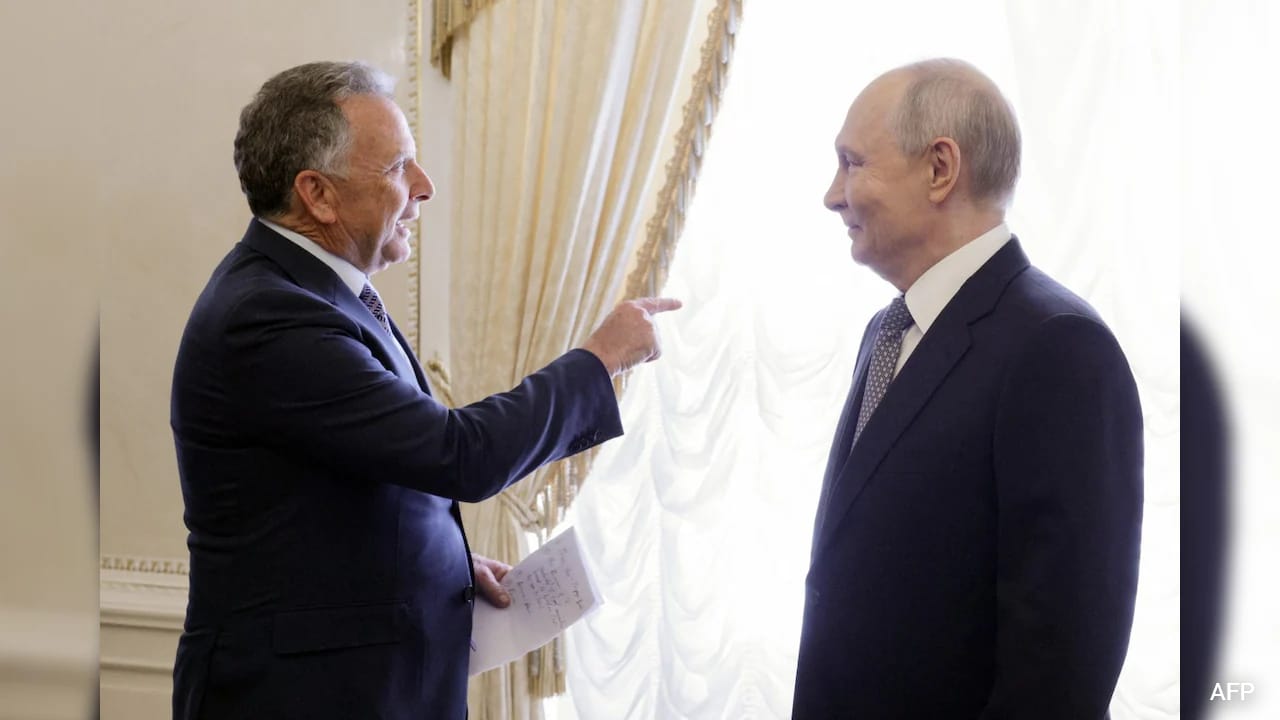
The theater of great power politics often relies on the visual of leaders shaking hands behind closed doors, projecting an illusion that the fate of distant nations can be settled over a conference table. When American, Chinese, and Russian officials gathered in Shenzhen for an unprecedented trilateral meeting, the headlines immediately pivoted to grand pronouncements about regional conflicts coming to a close. Yet behind the carefully curated photo opportunities and the optimistic declarations regarding global stability, the fundamental mechanics of the war in Ukraine remain entirely unaddressed by the format meant to resolve them.
To understand why declarations of an impending peace are premature, one must look past the superficial optimism and examine the structural divergence of the parties involved. Donald Trump’s insistence that peace is near stems from a belief in high-level transactional bargaining. For Washington, the objective is to compress complex, deeply rooted territorial disputes into an accelerated timeline through sheer force of executive will. But this approach treats sovereignty as a negotiable commodity rather than an existential boundary.
Meanwhile, Vladimir Putin’s primary objective in securing a seat at a trilateral table alongside the United States and China was never an immediate ceasefire on Kyiv's terms. The Kremlin achieved its core strategic victory simply by virtue of the photograph itself. Sharing a stage with the world's two largest economic powers visually dismantles the years-long Western effort to isolate Moscow diplomatically. For a domestic audience inside Russia, this imagery validates the narrative of a restored multipolar order where Russia dictates terms alongside peer competitors. Substance was routinely sacrificed for symbolism during the discussions, evidenced by a joint statement that omitted any explicit resolution framework for Ukraine while focusing instead on broad multilateral talking points.
Beijing’s posture throughout the summit introduced another layer of calculated ambiguity. While Chinese leadership routinely emphasizes the necessity of major powers living in harmony, Beijing’s pragmatic alignment with Moscow provides the economic cushion that sustains Russia's war machine. China’s presence at the trilateral talks signals a desire to shape any eventual postwar architecture, ensuring that Western-led security frameworks do not unilaterally dominate Eurasian geopolitics. However, Beijing has shown zero inclination to pressure the Kremlin into making the territorial concessions that Kyiv demands.
The friction between diplomatic theater and frontline reality is sharply defined on the ground. While delegations exchange pleasantries in luxury lakeside villas, the military calculus along the front lines has only intensified. Ukraine continues to absorb massive infrastructure damage while launching asymmetric counter-offensives, such as deep-strike drone operations targeting critical supply arteries like the Kerch Bridge. For Kyiv, any peace process that bypasses its direct leverage or trades away sovereign territory for temporary security guarantees is a non-starter. Ukrainian leadership understands that a coerced truce without ironclad, enforcement-backed defense arrangements simply grants Moscow the operational pause required to rearm for a future offensive.
Furthermore, the diplomatic track championed by Washington risks alienating European partners who view their exclusion from these core bargaining sessions with profound alarm. Any durable security framework for the European continent requires the direct buy-in of frontline states and regional powers who bear the direct consequences of Russian expansionism. When external superpowers attempt to sketch out European security architecture over the heads of the nations most affected, the resulting agreements routinely collapse under the weight of local resistance.
The war in Ukraine will not end because three leaders decide to declare victory over regional instability in a joint communique. Real termination of hostilities requires aligning military realities with enforceable political settlements—a convergence that remains entirely absent from current high-level summits. Until the fundamental disagreements over territorial integrity and security architecture are bridged on terms acceptable to the nation fighting for its survival, claims of an imminent end to the conflict remain wishful thinking masquerading as diplomacy.