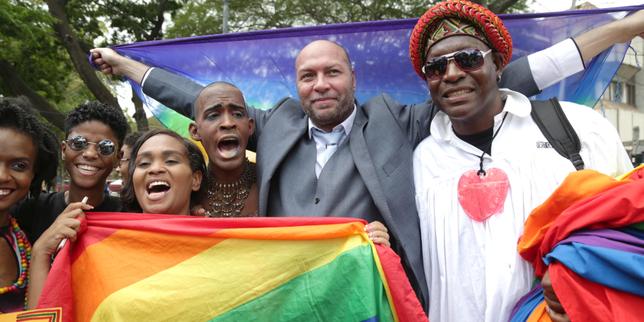
Courts in Trinidad and Tobago struck down colonial-era criminal prohibitions on consensual same-sex intimacy between adults, yet the real fight over homosexuality decriminalization in the twin-island republic never ended inside a courtroom. Decades of watching Caribbean constitutional politics teach a simple lesson. A judicial ruling can erase a statute on paper while leaving political coalitions, church pulpits, and everyday policing intact. When judges invalidate a law, lawmakers and constituencies often treat the decision not as settled history, but as a provocation that tests the limits of constitutional supremacy in a small, tightly knit society.
To understand what happened in Trinidad and Tobago, you have to look past the neat headlines announcing that homosexuality was decriminalized. Legal victories in Commonwealth Caribbean states rarely arrive in a vacuum. They collide with savings clauses, entrenched religious institutions, regional appellate review, and deep anxieties about sovereignty and moral order. What looks from abroad like a clean civil rights breakthrough frequently functions at home as an ongoing constitutional tug-of-war between the judiciary, the executive, and the Parliament.
Colonial Statutes and Constitutional Friction
Laws criminalizing same-sex intimacy in Trinidad and Tobago trace directly back to British colonial rule, when imperial administrators imported Victorian-era penal codes across the Caribbean. Those statutes were drafted by distant lawmakers who governed colonies through rigid hierarchy and criminal control. Over time, local post-independence penal legislation carried forward the prohibition on buggery and serious indecency, embedding colonial moral policing inside modern domestic law.
For decades, legal challengers in the region ran into a formidable doctrinal wall. That wall is the savings clause written into several Caribbean constitutions at independence. Designed to prevent sudden legal chaos when colonial territories became sovereign states, savings clauses shielded existing pre-independence laws from constitutional challenge even when those laws conflicted with newly guaranteed fundamental rights, such as privacy, liberty, and protection of the law.
In constitutional litigation, this creates a sharp interpretive fault line. One side argues that constitutional rights must be given a generous, living meaning that invalidates anachronistic laws inconsistent with human dignity. The other side argues that the text of the constitution expressly preserved pre-independence statutes, and that altering them belongs to elected legislators rather than unelected judges. When courts hold that existing laws can be modified or read down to conform with modern constitutional guarantees, critics accuse the bench of rewriting the social contract.
Why a Court Ruling Does Not End the Conflict
Anyone who covers legal reform long enough knows that winning a judgment is only the opening act. A declaration of unconstitutionality removes a criminal offense from active enforcement, yet it does not automatically settle the broader political struggle over same-sex rights, public morality, or institutional authority.
In Trinidad and Tobago, religious leaders, social conservatives, and political actors have repeatedly mobilized around the issue. Churches hold substantial moral and organizational influence across communities, cutting across ethnic and partisan lines that otherwise divide national politics. When courts intervene on questions of sexual morality, opponents frame the ruling as an imposition of external values or judicial overreach.
Appellate review adds another layer of complexity. Cases in the twin-island state can move through the local Court of Appeal and, historically, to the Judicial Committee of the Privy Council in London—the final appellate court for Trinidad and Tobago. That arrangement carries its own political friction. Having a London-based body weigh in on sensitive social questions in an independent Caribbean nation inevitably stirs debates over post-colonial sovereignty and whether local institutions should have the final word.
Even when prosecutors step back from bringing charges under struck-down provisions, everyday life on the ground changes slowly. Legal decriminalization removes a specific criminal charge, but social stigma, workplace vulnerability, family rejection, and informal harassment do not vanish because a judge signs an order. Advocates who work on public health and legal aid consistently point out that decriminalization is a necessary legal threshold, not a complete social transformation.
The Overlooked Dynamics of Caribbean Legal Reform
Outside commentators often flatten Caribbean legal battles into a simple story of modern progress clashing with traditional backwardness. That framing misses how Caribbean politics actually works.
First, public health realities have long complicated strict criminal enforcement. Public health officials, civil society groups, and international agencies have argued for years that criminalizing consensual adult intimacy pushes marginalized people away from testing, counseling, and medical care out of fear of arrest or exposure. When fear drives behavior underground, disease prevention becomes harder for everyone in the community.
Second, political incentives shape how governments respond. Elected leaders in closely contested democracies weigh every move against coalition dynamics, church constituencies, and voter sentiment. A government may appeal a high-profile constitutional ruling not necessarily out of personal zeal for prosecution, but because defending the state's existing statutory framework—or avoiding an unpopular stance ahead of elections—looks politically safer than embracing rapid social change.
Third, regional spillover matters. Neighboring Caribbean jurisdictions watch one another closely. A high-profile ruling in one country shapes legal strategy, activist coordination, and conservative pushback elsewhere in the region. Courts in different territories look to shared Commonwealth precedent while still navigating distinct national constitutions and political climates.
Consider a hypothetical example to see how enforcement works in practice. Suppose a young man in a small town is stopped by police during a late-night dispute. Even if a statute criminalizing consensual same-sex acts has been struck down as unconstitutional, an officer who holds personal bias might still rely on vague public-order or loitering provisions, or use the threat of outing him to his family, to intimidate him. Without clear administrative directives to police forces, training, and accountability mechanisms, a constitutional ruling can remain abstract to the very people most affected by it.
What Critics and Defenders Get Wrong
Debates over decriminalization in Trinidad and Tobago suffer from exaggerated claims on both sides.
Defenders of rapid judicial intervention sometimes assume that once a court declares a law unconstitutional, the moral debate is settled and social acceptance will follow in lockstep. In reality, court decisions on deeply contested social norms often trigger fierce political pushback, prolonged appeals, and renewed demands for constitutional amendments or legislative action. A legal victory can accelerate debate while leaving public attitudes deeply divided.
Critics of the courts, meanwhile, often warn that striking down colonial laws will destroy family life, undermine religious freedom, or force sweeping mandates on churches and citizens overnight. That argument conflates decriminalization—ending criminal punishment for private consensual conduct between adults—with forcing religious institutions to change their doctrines or ceremonies. Decriminalizing conduct removes state prosecution; it does not strip churches of their beliefs or erase constitutional protections for conscience and worship.
There is also a persistent myth that foreign pressure alone drives these cases. External human rights groups and international bodies do comment on Caribbean legal developments, yet the litigation itself has been driven by local lawyers, activists, and litigants who live in Trinidad and Tobago and bear the real-world consequences of the law. Reducing local legal struggles to outside interference ignores domestic agency.
Measuring Real Impact Beyond the Statute Books
When evaluating whether homosexuality decriminalization has taken root in Trinidad and Tobago, serious analysts look at concrete indicators rather than triumphant press releases.
- Appellate finality and statutory cleanup: Whether higher courts uphold the invalidation permanently and whether Parliament updates or repeals outdated penal provisions so the statute books match constitutional reality.
- Law enforcement practice: Whether police directives and training prevent selective harassment or misuse of adjacent offenses against LGBTQ+ residents.
- Access to healthcare and justice: Whether clinics, shelters, and legal services can operate openly and safely without fear of state hostility.
- Public discourse: Whether national debates move toward practical coexistence and equal protection under the law, or remain locked in zero-sum cultural warfare.
Law is a powerful instrument, yet it is also a blunt one. Removing a colonial criminal offense from the law of Trinidad and Tobago confronts a legacy that has shaped legal habits and social norms for generations, leaving the harder work of institutional trust and everyday coexistence to unfold long after the gavel comes down.


