The initial wire service reports filtering out of Caracas on Wednesday evening painted a grim but clean picture: 32 dead, 700 injured. In the desperate, early hours of a humanitarian disaster, these tidy figures offer a false sense of containment. The brutal truth is that Venezuela has just experienced its most catastrophic seismic event since 1900, a rare doublet earthquake sequence that hit the north-central coast with magnitudes of 7.2 and 7.5 in less than 60 seconds. While early official bulletins counted minor casualties, the actual scope of the destruction is vast, with local tallies rapidly surging past 164 confirmed fatalities, nearly a thousand injured, and more than 10,000 individuals reported missing amid collapsed concrete high-rises.
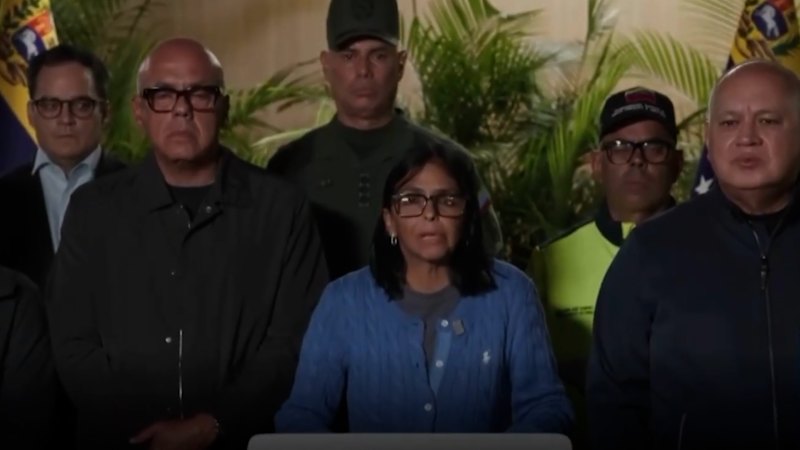
By focusing on the preliminary toll issued by interim leader Delcy Rodriguez during a chaotic midnight broadcast, global media missed the real story. The disaster is not a localized tragedy; it is an infrastructure failure of systemic proportions. Years of economic isolation, deferred maintenance, and unregulated construction have turned the densely populated valleys of Caracas and the coastal strip of La Guaira into structural traps. When shallow faults slip just ten kilometers beneath the earth, the physics of a strike-slip earthquake do not just shake buildings; they pancake them.
The Mechanics of a Doublet Strike
Seismologists refer to back-to-back ruptures of this scale as a doublet event. The first shock, registering at magnitude 7.2, struck Yaracuy State at 6:04 p.m. local time, acting as a massive foreshock that destabilized the local fault network. Just 39 seconds later, before residents could even clear swaying doorways, a second, more powerful magnitude 7.5 mainshock ripped through the same zone.
The proximity in time and space meant that structures already stressed and micro-fractured by the first wave of energy were entirely defenseless against the secondary, more violent shear waves.
Most earthquakes occur deep within the crust, allowing the earth to absorb a portion of the kinetic energy before it reaches the surface. This sequence ruptured at a shallow depth of roughly ten kilometers. The energy went directly into the foundations of cities built on alluvial soil, which amplifies seismic waves much like jelly in a bowl. In eastern Caracas neighborhoods like Altamira and Los Palos Grandes, multi-story concrete apartment buildings simply dissolved. A 22-story tower in Altamira collapsed into a pile of pulverized aggregate within seconds, trapping hundreds of families who were inside celebrating a national public holiday.
The Blackout and the Missing
The discrepancy between early media reports and the ground reality stems from a complete breakdown of the nation's fragile utility grid. Power failed across north-central Venezuela almost immediately after the second shock, taking cell towers and fiber-optic networks offline.
When Rodriguez addressed the nation, she admitted that her figures completely excluded La Guaira, the coastal state sitting directly on the fault line. La Guaira is home to the Simon Bolivar International Airport, the primary gateway into the country. The airport terminal suffered heavy structural failure, with ceilings collapsing onto check-in counters and runways cracking, forcing an immediate suspension of all flights.
Independent civilian networks and volunteer fire departments operating via satellite radios indicate that the destruction in La Guaira is far more severe than in the capital. Entire hillside barrios, where homes are stacked precariously on top of each other without steel reinforcement, slid into the valleys below. The estimate of 10,000 missing persons comes from local neighborhood tracking databases, where families are desperately logging the names of relatives who have not been heard from since the grid went dark.
Geopolitics on the Rubble
Natural disasters have a way of weaponizing geopolitical lines, and this catastrophe is no exception. The earthquakes occurred during a period of intense political transition within Venezuela, following a violent raid earlier in the year that disrupted the previous executive branch.
Offers of international aid have flooded in, but the logistical reality of deploying foreign search-and-rescue teams into a country with a crippled main airport and non-functioning communications is a nightmare. Rescuers from Qatar, Mexico, and El Salvador are reportedly en route, while neighboring Colombia has placed specialized canine units on standby at the border.
Even the United States, which has maintained a heavily adversarial stance toward the Caracas administration, offered assistance via social media, declaring a willingness to support the recovery.
Yet, translating diplomatic statements into boots on the ground requires clear channels of authority. Inside Caracas, internal security agencies led by Interior Minister Diosdado Cabello are scrambling to coordinate civilian defense, but they lack heavy lifting equipment, specialized acoustic concrete-listening devices, and thermal imaging cameras.
Emergency response teams are currently relying on civilian volunteers using crowbars, shovels, and their bare hands to clear thousands of tons of reinforced concrete debris.
The Long-Term Vulnerability
The U.S. Geological Survey uses a predictive modeling system called PAGER to estimate casualties based on population density and structural vulnerability. For the magnitude 7.5 shock alone, the system flagged a high probability that the final death toll will land between 1,000 and 10,000 victims.
This grim forecast is a direct reflection of decades of construction practices that ignored regional seismic risks. While Venezuela has comprehensive building codes on paper, economic realities mean that a massive percentage of the urban population resides in informal housing or older high-rises that were never retrofitted to withstand horizontal ground acceleration.
The focus now shifts to the immediate aftermath, where more than 20 aftershocks have already rattled the region, threatening to bring down weakened structures that are still standing. The education ministry has suspended classes indefinitely, repurposing surviving school buildings into makeshift shelters and collection points for water and medicine. With public services intermittent and major hospitals structurally compromised, the country faces an compounding health crisis if clean water cannot be delivered to the disaster zones within forty-eight hours.
The initial headline of 32 dead was a historical snapshot taken in the dark; the unfolding reality is a profound national trauma that will reshape the region for a generation.