The flashing blue lights of the Dooly County Sheriff's Office were already stationed near the perimeter when the first rounds cracked through the autumn air on Pine Street. More than one thousand people had converged on Vienna, Georgia, for a local homecoming celebration that quickly metastasized into a catastrophic mass casualty event. Two young men—Ja’Quavion Aderious Jackson, 21, and Macaleb Malik Jackson, 23—were left dead on the asphalt. Dozens more fell under a barrage of over fifty bullets fired across multiple locations in the span of chaotic seconds.
What happened in that rural south Georgia town is not an isolated aberration. It represents a terrifying evolution in how American mass violence unfolds, moving far beyond urban centers into small communities completely unequipped for the sheer volume of trauma.
The Anatomy of a Rural Logistics Nightmare
When a crowd swelling past a thousand attendees gathers in a town of roughly three thousand residents, local infrastructure buckles instantly. Law enforcement agencies in rural counties operate on lean budgets, minimal shift rosters, and vast geographic jurisdictions. When violence broke out at 1:25 in the morning on October 4, local deputies were handling crowd control at the edges of the block party, but the physical scale of the gathering rendered containment impossible.
The math of rural emergency response is unforgiving. When dozens of individuals suffer acute trauma simultaneously, local medical clinics are overwhelmed within minutes. Victims had to be triaged and scattered across multiple regional hospitals miles away in Crisp, Houston, and surrounding counties. Total injuries eventually climbed to 44, with 28 people sustaining direct gunshot wounds and others trampled in the frantic stampede that followed.
Sheriff Craig Peavy, with over four decades of law enforcement experience behind him, admitted publicly that the scale of the carnage caught authorities entirely off guard. In communities where everybody usually knows everybody, the introduction of external crowds and underground conflicts creates an unpredictable volatility that traditional policing methods cannot preempt.
The Multi-Jurisdictional Hunt and Gang Dynamics
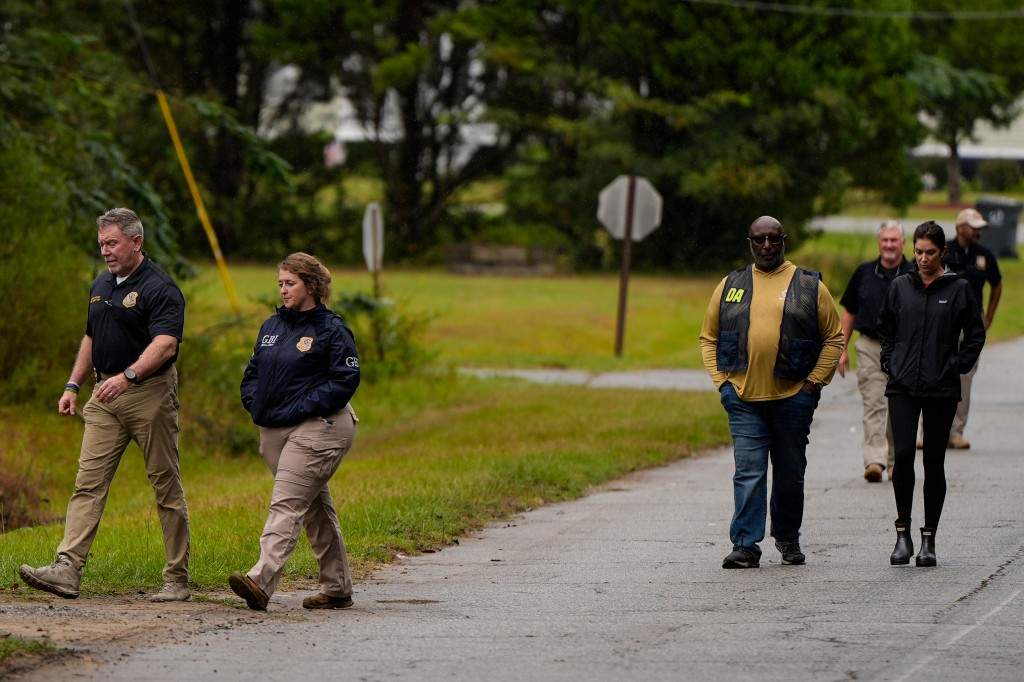
As the investigation unfolded through the following weeks, the Georgia Bureau of Investigation, alongside federal partners, revealed a web of arrests that pointed away from a random, spur-of-the-moment dispute and toward organized criminal networks operating across county lines. Authorities ultimately charged ten individuals, linking the bloodshed to criminal street gang activity.
The suspect list spans teenagers and adults alike, including young defendants charged with felony murder, aggravated assault, and gang participation. Yet, the dragnet also exposed the slow, grueling reality of modern manhunts. Weeks after the initial shooting, multiple suspects remained fugitives, forcing law enforcement to issue urgent public warnings urging citizens not to approach armed and dangerous individuals.
This dynamic highlights a grim reality of modern violent crime: regional boundaries are porous. Perpetrators vanish across county lines within minutes, utilizing interstate corridors to blend into neighboring jurisdictions. The GBI had to activate six separate investigative work units just to process the forensic and digital footprint left behind.
The Aftermath and the Illusion of Return
Days after the shooting, local officials pushed to reopen schools, invoking a sense of normalcy and resilience. Grief counselors were brought in, and temporary curfews were imposed by mayoral decree to clamp down on nocturnal assembly.
Yet, reopening classrooms does not sew shut the psychological wounds torn through a small town. The trauma experienced by teenagers who witnessed their peers falling on blood-soaked pavement lingers long after the police tape comes down. Small towns like Vienna pride themselves on homecoming traditions meant to anchor families and honor heritage. When those rituals are co-opted by mass gunfire, the communal trust that binds rural populations together fractures.
The investigation crawls forward, weighed down by uncooperative witnesses, digital encryption, and the sheer logistical weight of prosecuting multiple defendants involved in a decentralized shootout. The official record will eventually log the convictions, the prison sentences, and the closed case files. But the community of Vienna remains suspended in the shadow of a night that proved no zip code in America is immune to the cascading crisis of unchecked gun violence.