,webp/022/852/799/v2/2560x1440.210.webp)
The modern family farm is a multi-million-dollar corporation operating on a gas station margin. For the dairy and grain producers of western Wisconsin, those margins did not just shrink over the last year; they vanished entirely under the weight of a multi-front economic squeeze. Decades of generational survival are currently being erased by a combination of global trade maneuvers, a military conflict in the Middle East, and skyrocketing overhead costs.
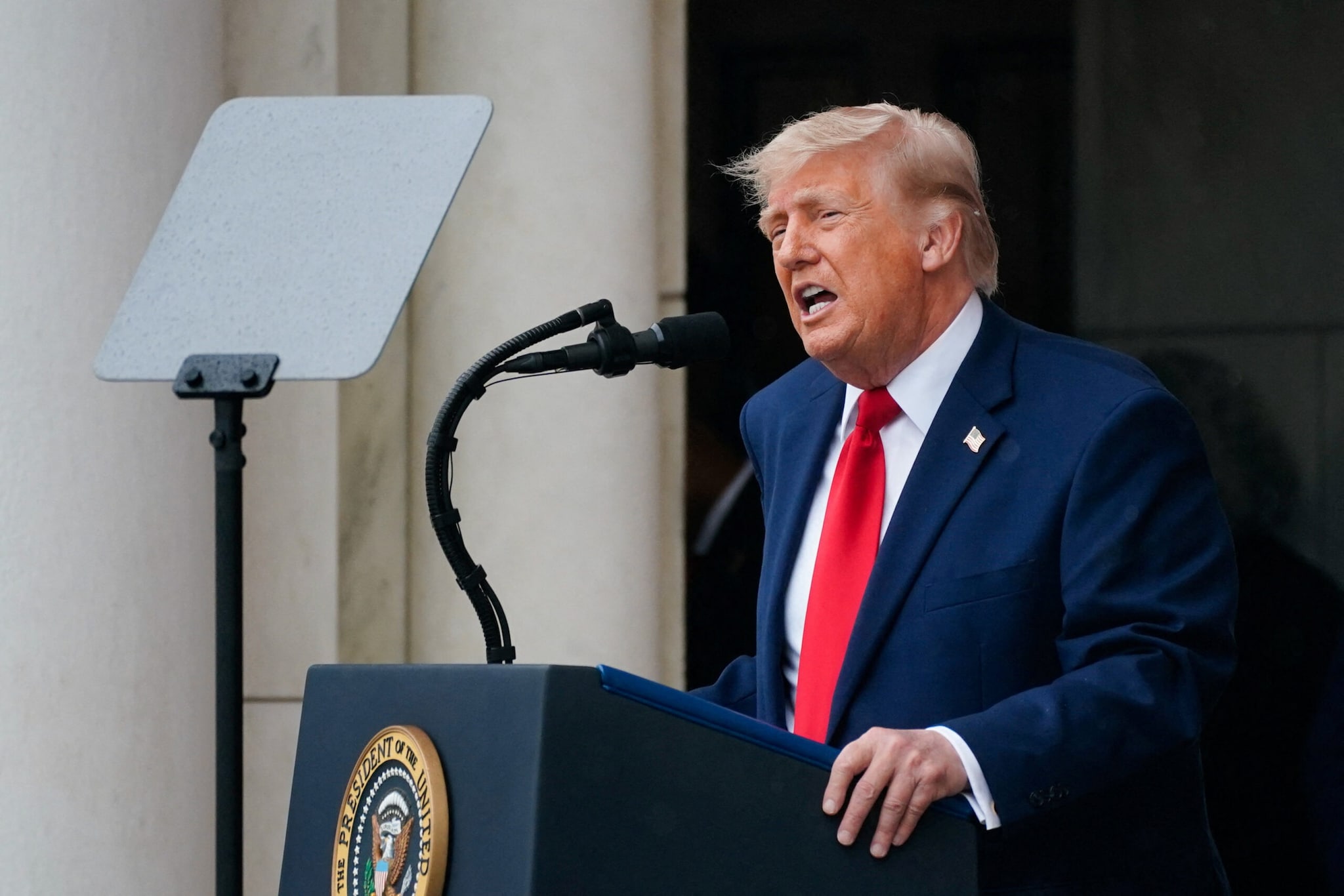
When Donald Trump arrived at Custer Farms in Chippewa Falls, he stepped into a region that voted overwhelmingly to return him to the White House. Yet the mood under the steel barn roofs was far from triumphant. The immediate challenge facing these agricultural communities is a structural bleeding of capital driven by the exact policy tools Washington uses to flex its muscle on the world stage.
Agricultural production requires long-term capital commitments. A crop planted in May relies on fertilizer purchased months prior and diesel fuel burned every day until the autumn harvest. When these input costs spike unpredictably, the economic calculus of a family operation shatters. The current crisis is not a temporary dip in the business cycle; it is a fundamental realignment of agricultural economics where the small operator carries all the risk and commands none of the leverage.
The Margin Squeeze in America's Dairyland
The economic pain vibrating through rural Wisconsin centers on a harsh mathematical reality. The price of milk and grain is largely set by global commodities exchanges, leaving individual producers with zero pricing power. Meanwhile, the cost of everything required to produce those goods is dictated by local retail markets heavily exposed to international supply shocks.
Consider the primary drivers of a farm budget.
- Diesel Fuel: The lifeblood of field operations saw historic spikes this spring. In Wisconsin, average pump prices climbed past $4.00 a gallon, driven upward by the outbreak of the war in Iran. For a mid-sized operation running heavy machinery across thousands of acres, an 80% year-over-year increase in fuel costs represents tens of thousands of dollars in unbudgeted weekly expenses.
- Fertilizer: Nitrogen, phosphorus, and potassium are highly energy-intensive to manufacture. Global fertilizer prices jumped 50% in recent months, directly tracking the disruption of international energy markets and regional trade blockades.
- Health Insurance: A frequently overlooked overhead cost for family farms. With recent legislative shifts targeting the Affordable Care Act marketplace, independent operators who buy self-insured policies face hundreds of dollars in premium increases this year, further draining household cash reserves.
This is the ground-level view that policy analysts in Washington miss when they look at aggregate economic data. When a soybean grower loses roughly $75 per harvested acre, as many did during the recent cycle, they are not just losing profit. They are burning through equity accumulated over decades.
The High Cost of Global Economic Warfare
The central contradiction of the current administration’s rural outreach is the reliance on sweeping global tariffs. While Washington promotes these trade barriers as a mechanism to protect domestic industries, the immediate retaliatory target for foreign nations is almost always American agriculture.
When the administration enacted a new 15% global tariff following a Supreme Court dispute over executive trade powers, the blowback was immediate. International buyers do not wait for trade wars to settle. They find new suppliers.
The structural damage to export markets is long-term and deep. For years, China was the premier destination for upper Midwest soybeans, anchoring the economic stability of regional growers. Following the escalating trade disputes of 2025, Chinese buyers diverted their supply chains to South American producers, primarily Brazil and Argentina.
A trade relationship takes decades to build but can be severed by a single executive order. Once a foreign conglomerate updates its logistics, modifies its port agreements, and signs multi-year purchasing contracts with southern hemisphere growers, they do not return just because Washington adjusts a tariff rate. The loss of these export channels left local silos full and domestic prices depressed, creating an artificial surplus that further suppresses the income of Wisconsin growers.
The Illusion of the Federal Safety Net
To counter the fallout of these trade policies, federal interventions frequently rely on direct bailout packages and emergency subsidies. During his Chippewa Falls appearance, Trump assured the crowd that domestic energy production would soon bring fertilizer and fuel costs back down to baseline levels, promising that help was on the horizon.
Direct government payments can temporarily prevent a foreclosure, but they introduce a toxic element of volatility into agricultural planning. Farming by subsidy replaces market predictability with political whim. A producer cannot comfortably secure a bank loan for a new tractor or silage bunk based on the hope of an upcoming federal relief check.
Bank lenders require predictable cash flows. When a farm’s primary revenue shifts from reliable commercial buyers to emergency federal distributions, commercial credit tightens. Small to medium-sized operations, lacking the deep cash reserves of multinational corporate agricultural conglomerates, are the first to be squeezed out by local banks. The resulting consolidation is permanent. Every independent dairy farm that liquidates its herd is swallowed by a larger, industrial-scale facility, permanently altering the demographic and economic fabric of rural towns.
The Geopolitical Wildcard
The economic pain in the Midwest is deeply intertwined with the administration's foreign policy choices, particularly the escalation of hostilities in the Middle East. The conflict in Iran directly destabilized global oil markets, sending a shockwave straight through the balance sheets of domestic food producers.
Petroleum is not just fuel for tractors. It is the foundational component of modern agricultural chemistry. The manufacturing of nitrogen-based fertilizers relies heavily on natural gas and oil derivatives. When global energy supplies contract due to geopolitical conflict, the price of fertilizer climbs instantly.
The administration has maintained that the domestic political pressure of high fuel prices will not dictate its timeline for international military engagements. For the farmer watching the diesel pump spin at a rural co-op, that stance offers little comfort. The geopolitical strategy executed in Washington manifests as a direct tax on the production of American food, forcing producers to absorb the financial shock of global warfare while receiving stagnant prices for their actual output.
The Disconnect of the Political Barnstorm
The reality of a modern political event highlights the gap between executive rhetoric and agricultural reality. The Chippewa Falls gathering was billed as an intimate roundtable discussion, a space for struggling producers to voice their concerns directly to the executive branch.
The structure of the event told a different story. The presentation quickly transitioned into a traditional campaign format, dominated by lengthy executive remarks that veered far from the immediate crisis of input costs. Time was spent discussing the structural refurbishment of architectural fountains in Washington, D.C., and local political endorsements for upcoming gubernatorial and congressional races, while the farmers on the panel were encouraged to keep their personal accounts brief.
Rural communities often maintain intense loyalty to the administration's broader cultural and political vision, a fact reflected in the solid voting margins across western Wisconsin. This loyalty creates a complicated psychological dynamic. Growers genuinely want to believe that the economic pain they are experiencing is a short-term necessity, part of a larger plan to reset global trade in America's favor.
Faith is an unreliable risk-management tool. A business cannot pay its seed bills with political alignment. As the 2026 planting season gives way to summer maintenance, the gap between optimistic political messaging and the balance sheets of rural banks is widening to a dangerous degree.
The fundamental flaw in national agricultural policy is the assumption that family farms can operate as resilient shock absorbers for broader geopolitical and macroeconomic experiments. They cannot. The capital requirements of modern farming are too high, and the margins are far too narrow to withstand prolonged, artificial volatility. Without a stable return to predictable international markets and normalized energy costs, the rhetoric delivered on western Wisconsin farm fields will do little to stop the steady, quiet disappearance of the independent American farmer.