Legal scholars love to play a specific, academic game of pretend. They sit in mahogany-paneled rooms and debate whether a U.S. blockade of the Strait of Hormuz fits into the tidy boxes of the UN Charter or the UN Convention on the Law of the Sea (UNCLOS). They weigh "proportionality" against "necessity." They split hairs over whether a blockade constitutes an "act of aggression" or "anticipatory self-defense."
It is a charming performance. It is also entirely irrelevant.
The question of whether a blockade of the Strait of Hormuz is "legal" is the wrong question. It assumes that international law is a functioning set of rules that governs superpower behavior. It isn't. International law is a language used to justify actions already decided by geography, kinetic capability, and economic desperation. In the Strait of Hormuz, the only law that matters is the law of the "Fleet-in-Being."
The Myth of the "Right of Innocent Passage"
Most legal experts will tell you that the Strait of Hormuz is governed by the regime of "transit passage" because it connects one part of the high seas or an exclusive economic zone (EEZ) with another. They point to UNCLOS Part III. They claim that even if Iran and Oman claim territorial waters that overlap in the 21-mile-wide choke point, they cannot legally stop the flow of global commerce.
Here is the reality check: The United States has never even ratified UNCLOS.
We claim to follow it as "customary international law," which is the diplomatic equivalent of saying, "I didn’t sign the contract, but I’ll follow the rules as long as they benefit me." Iran hasn't ratified it either. You have the world’s most powerful navy and the region’s most disruptive coastal force both operating outside the very framework people use to judge the "legality" of their actions.
When a U.S. carrier strike group enters the Persian Gulf, it isn't exercising a "right." It is projecting a reality. If the U.S. decides to shutter the Strait to Iranian oil exports while allowing everyone else through, calling it "illegal" under Article 2(4) of the UN Charter won't stop a single Arleigh Burke-class destroyer from enforcing the line.
Blockades are not "Police Actions"
The competitor's view usually frames a blockade as a legal remedy or a sanctioned response to a violation. This is a fundamental misunderstanding of what a blockade actually is. A blockade is an act of war.
There is no such thing as a "legal" blockade in peacetime. The moment the U.S. Navy prevents a commercial tanker from passing through Hormuz, the "rules-based order" hasn't been triggered—it has been incinerated.
To discuss the legality of a blockade is to discuss the legality of the war it initiates. Under the San Remo Manual on International Law Applicable to Armed Conflicts at Sea, a blockade must be declared, notified, and effective. But these are procedural hurdles for a reality that has already shifted from diplomacy to violence.
The Strait of Hormuz carries roughly 20% of the world's daily oil consumption. That is approximately 20 million barrels per day. If the U.S. blockades the Strait, the price of crude doesn't just "rise." The global economy suffers a cardiac arrest. In that scenario, does anyone honestly believe a ruling from the International Court of Justice (ICJ) three years later will matter?
The "Customary Law" Trap
The "lazy consensus" among pundits is that the U.S. could justify a blockade as "countermeasures" or "collective self-defense." This logic is hollow.
- Countermeasures: These must be reversible and proportional. A blockade that triggers a global recession and potential nuclear escalation in the Middle East is neither.
- Self-Defense: Article 51 of the UN Charter requires an "armed attack." Economic sabotage or "threats" don't qualify under a strict reading.
I’ve watched policy analysts twist themselves into pretzels trying to find a legal loophole for a "Pacific Blockade"—a relic of 19th-century gunboat diplomacy where a power blocks ports without technically declaring war. It’s a fantasy. In the modern era, if you stop the ships, you are at war.
The U.S. military knows this. The lawyers are just there to write the press release.
Iran’s Home Field Advantage vs. Legal Theory
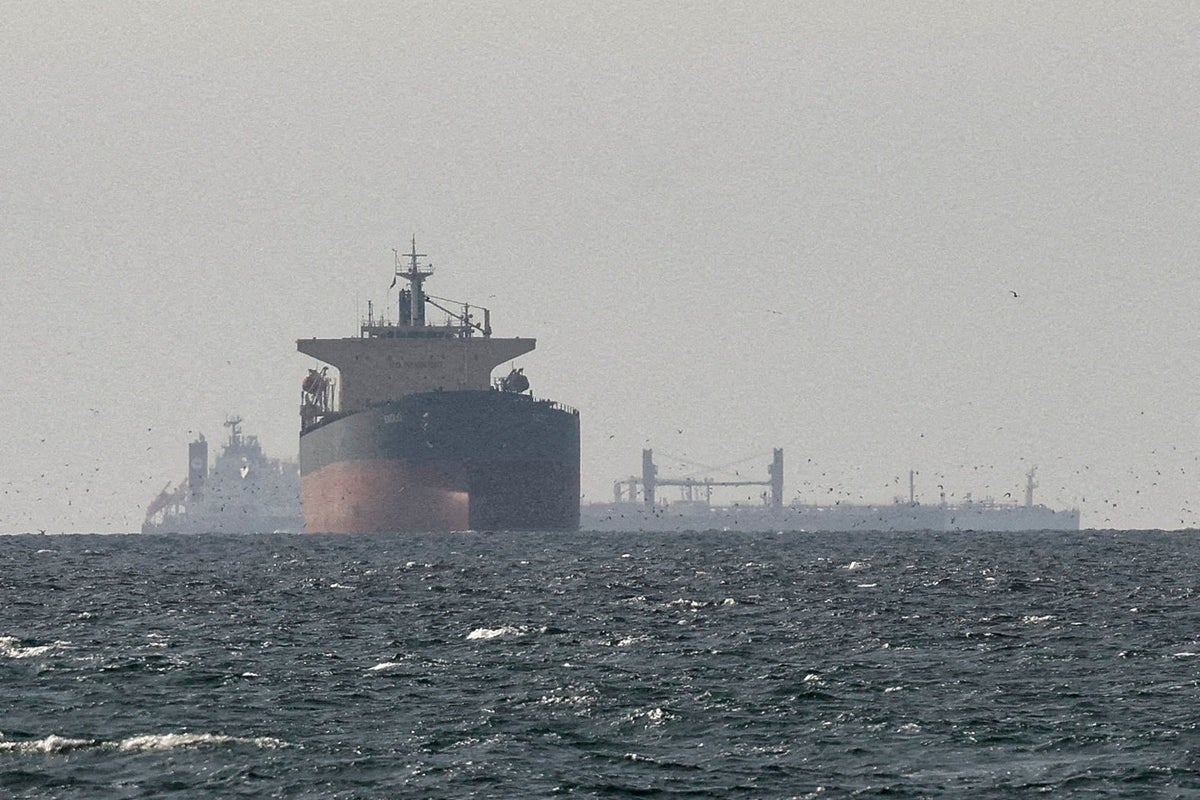
The debate over legality ignores the tactical nightmare that makes legal theory moot. The Strait is shallow, narrow, and congested. Iran doesn't need a "legal" justification to close it; they have the geography. Between the thousands of smart mines, the ASCMs (Anti-Ship Cruise Missiles) tucked into the cliffs of the Musandam Peninsula, and the swarm of fast-attack craft, Iran can create a de facto blockade without ever filing a legal brief.
If Iran closes the Strait, and the U.S. responds with a "counter-blockade" or an escort mission (Operation Earnest Will 2.0), we aren't in a courtroom. We are in a localized "Zone of Exclusion."
In these zones, "law" is replaced by "Rules of Engagement" (ROE). ROE are not dictated by international treaties; they are dictated by the commander's assessment of a "hostile act" or "hostile intent." If a civilian tanker is deemed a threat or a carrier of contraband, it will be stopped. The legality is settled by the 5-inch gun on the foredeck, not the 500-page manual in the Pentagon.
The Sanctions Loophole
We are currently witnessing a "paper blockade." The U.S. uses the SWIFT system and secondary sanctions to do what the Navy used to do with wooden ships and iron men.
Is it "legal" to threaten a Japanese shipping company with total exclusion from the U.S. financial market if they carry Iranian oil? Under the sovereignty of the nation-state, yes. But in effect, it is a blockade. It’s a financial siege.
The reason the "legal experts" focus on physical blockades is that they are uncomfortable with the fact that the U.S. already violates the spirit of "freedom of navigation" every day through financial warfare. We have replaced the physical boarding of ships with the freezing of ledgers. It is cleaner, quieter, and just as coercive.
The Cost of the "Legal" Illusion
The danger of obsessing over whether a blockade would be "legal" is that it provides a veneer of civility to an inherently barbaric act.
A blockade is designed to starve an economy. It is a weapon that hits the poorest people in the target nation first. By debating the "legality" of such an act, we normalize the idea that global trade—the very thing that keeps billions of people alive—is a faucet that can be turned off by a single superpower whenever its "interests" are threatened.
The U.S. military strategy in the Persian Gulf isn't built on the UN Charter. It is built on the Carter Doctrine, which states that the U.S. will use military force to defend its interests in the Persian Gulf. That doctrine is a direct violation of the Westphalian sovereignty that international law is supposed to protect.
Stop Asking if it’s Legal
If the U.S. moves to blockade the Strait of Hormuz, the world has already failed.
The supply chains for everything from neon gas for semiconductors to the plastic in your medical devices will shatter. The insurance premiums for maritime transit (Lloyd’s of London "War Risk" ratings) will make shipping through the region impossible, regardless of whether a single shot is fired.
A "legal" blockade that kills the global economy is still a catastrophe.
Instead of looking for a legal justification, we should be looking at the sheer fragility of a world where one 21-mile strip of water can bring civilization to its knees. We are one tactical miscalculation away from realizing that our "international law" is a thin coat of paint on a very old, very violent fence.
If you are waiting for the UN Security Council to give a thumbs up or down on a blockade, you’ve already lost the plot. The Security Council has a veto system designed specifically to ensure that the "law" never applies to the people who write it.
The U.S. will blockade Hormuz if it feels it must. It will cite "customary international law" and "inherent rights of self-defense" as a courtesy to its allies. But the ships will stop moving because the guns are pointed at them, not because the legal arguments were sound.
The ocean doesn't care about your treaties.