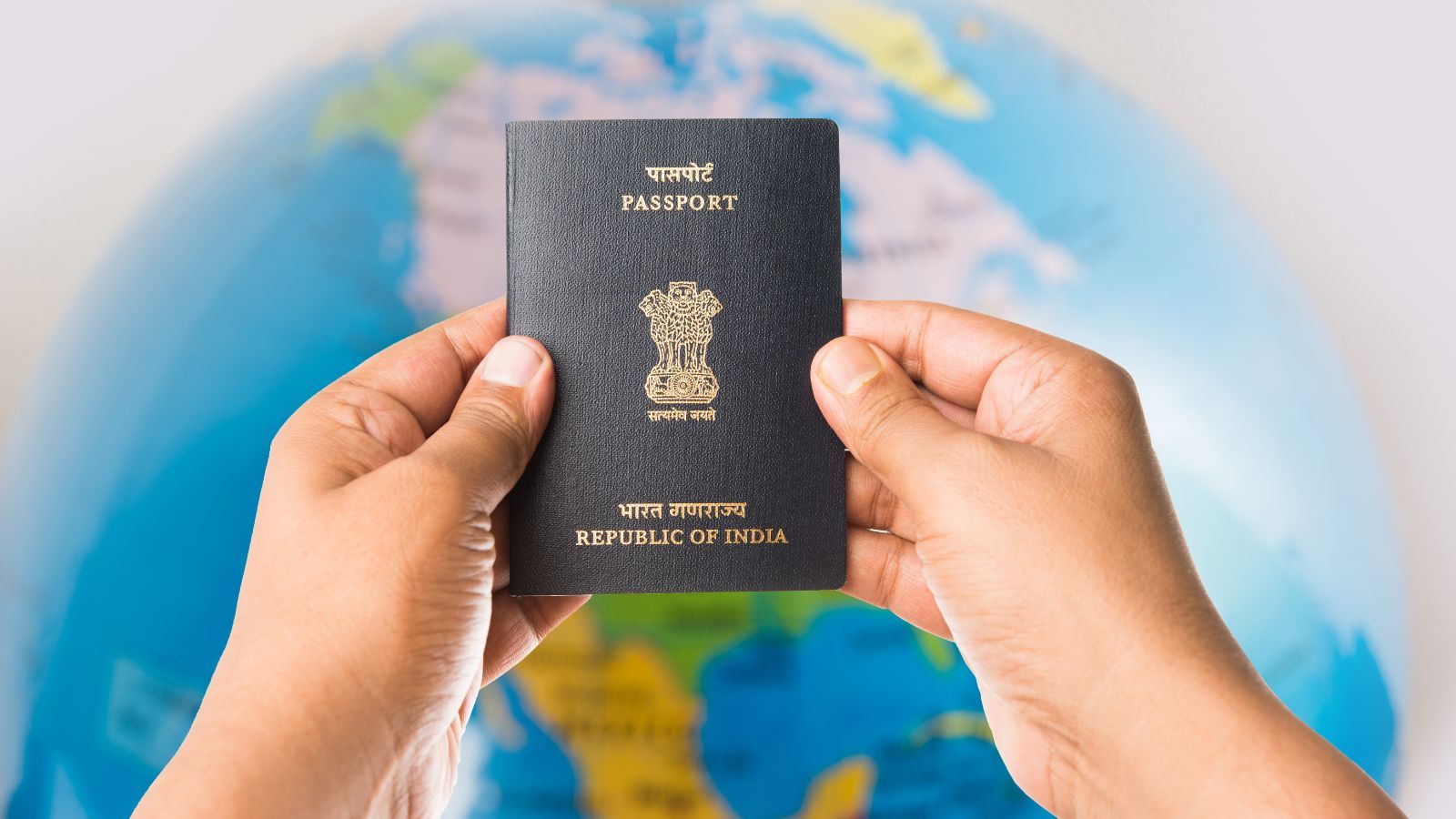
The golden era of automatic enrollment for American and British universities is over. For decades, admissions offices in Boston, London, and Oxford barely had to try because the prestige of an Anglo-Saxon degree did all the heavy lifting. That arrogance is finally catching up with them. Recent global survey data confirms what those of us working in international education have watched unfold in slow motion over the past two years. Visa barriers and shifting immigration rules are actively pushing international students away from the US and UK and straight into the open arms of universities across Asia and continental Europe.
It isn't just a minor dip in applications. We're witnessing a massive structural realignment of global talent. When governments treat incoming scholars like suspicious border threats rather than vital economic contributors, those scholars take their tuition money elsewhere. Honestly, you can't blame them. Who wants to spend fifty thousand dollars a year only to deal with bureaucratic hostility, arbitrary processing delays, and constant anxiety about whether they'll be kicked out the second they graduate?
The Visa Squeeze That Broke the Camel's Back
Let's look at why this shift accelerated so rapidly between 2024 and 2026. Both Washington and Westminster decided to use international students as easy political punching bags to satisfy domestic anxieties about net migration numbers.
In the United Kingdom, the government slapped severe restrictions on student dependent visas, barring most taught postgraduate students from bringing family members along. Almost overnight, applications from key markets like Nigeria and India plummeted. Universities across Britain suddenly found themselves staring at massive budget holes because international tuition subsidizes domestic research and undergraduate teaching. Then came the endless political hand-wringing over the Graduate Route visa, leaving prospective students wondering if their two-year post-study work window would vanish before they even finished their dissertations.
Meanwhile, the United States continued to shoot itself in the foot with an antiquated, broken immigration system. Getting an F-1 student visa interview in hubs like New Delhi, Lagos, or Beijing often requires waiting months, sometimes forcing admitted students to defer enrollment entirely. Even if you make it through the embassy gauntlet, the post-graduation reality is a brutal lottery. The H-1B visa cap remains stuck at numbers set decades ago, leaving brilliant engineers and researchers at the mercy of a random draw. Combine that with heightened scrutiny and visa revocations tied to geopolitical tensions, and the American dream starts looking like an expensive gamble with terrible odds.
Where the Smart Money and Talent Are Going Instead
Students aren't giving up on studying abroad. They're just getting smarter about return on investment. When the traditional Big Four destinations—the US, UK, Canada, and Australia—all tighten their borders simultaneously, the market adapts fast.
Continental Europe has quietly become the biggest winner in this shakeup. Countries like Germany, France, the Netherlands, and Spain realized early on that aging populations require an influx of young, educated workers. Germany overhauled its Skilled Immigration Act, making it vastly easier for international graduates to stay, work, and transition to permanent residency. Better yet, public universities in Germany and several Nordic nations still charge minimal or zero tuition fees compared to the eye-watering price tags in the Anglosphere. You don't even need to speak the local language to get started anymore, because thousands of master's programs across Europe are now taught entirely in English.
Asia is pulling off an equally impressive coup, though for slightly different reasons. Regional powerhouses like South Korea, Japan, Singapore, and Malaysia have stopped acting solely as sender countries and transformed into aggressive recruiters.
- South Korea launched its Study Korea 300K project, explicitly aiming to attract three hundred thousand foreign students by 2027 through streamlined visa rules, expanded part-time work allowances, and dedicated scholarship tracks.
- Japan has aggressively expanded its English-taught degree offerings and simplified the path from a student visa to a working visa for graduates of Japanese institutions.
- Malaysia and Singapore offer transnational education hubs where students can earn degrees affiliated with Western institutions at a fraction of the cost, without the visa nightmares or extreme living expenses of London or New York.
For a student in Jakarta, Ho Chi Minh City, or Nairobi, staying closer to home in a booming Asian economy makes complete financial sense. Flights are cheaper. Cultural shock is milder. And the job markets in Seoul, Tokyo, and Singapore are hungry for multilingual talent that understands regional business dynamics.
What Most People Get Wrong About University Prestige
Whenever I bring up this migration shift to university administrators in the US or UK, they usually scoff and fall back on rankings. They assume that as long as their institution sits in the top fifty of the QS World University Rankings or Times Higher Education lists, students will endure any amount of red tape to attend.
That mindset is completely out of touch with reality. Prestige only carries weight if it translates into career mobility.
Ten years ago, a degree from a mid-tier British or American university was a golden ticket to a global career. Today, employers care far more about practical skills, internships, and legal work authorization than the crest on your diploma. If a student graduates from a university in Munich or Seoul with zero debt, two years of local internship experience, and a guaranteed eighteen-month job-seeker visa, they are in a dramatically stronger position than a peer who spent a fortune in Manchester or Chicago only to be forced onto a plane home ninety days after graduation.
Surveys from organizations like QS, IDP Education, and the Institute of International Education consistently highlight the exact same priority shift among Gen Z applicants. Career outcomes and post-study work rights now outrank institutional prestige for the vast majority of international students. They treat higher education like a calculated financial transaction rather than a romantic coming-of-age experience. If the visa math doesn't work, they walk away.
The Hidden Financial Reality Behind Tuition Fees
We need to talk about the sheer cost of living, because visa barriers rarely exist in a vacuum. Immigration authorities in the UK, Australia, and Canada have repeatedly hiked the minimum financial proof requirements needed just to apply for a student visa. You don't just need enough money for tuition anymore; you have to prove you have tens of thousands of dollars sitting untouched in a bank account to cover inflated rent and grocery costs.
Take London or Sydney. A modest studio apartment or shared flat can easily eat up fifteen hundred to two thousand dollars a month. When governments simultaneously restrict the number of hours students are allowed to work off-campus—capping them at twenty hours a week during term time—the financial pressure becomes suffocating.
Compare that to studying in places like Taiwan, Spain, or Poland. Living costs are manageable, public transit actually works, and visa financial thresholds reflect realistic budgets rather than arbitrary barriers designed to filter out middle-class applicants from the Global South. When you factor in the currency exchange rates that have battered families in South Asia, Africa, and Latin America over the past few years, the Anglo-Saxon education model has priced itself out of the middle-class market.
How Western Universities Are Trying to Survive
Universities in the US and UK aren't blind to the bleeding, even if their national politicians are. Because they can't fix federal immigration laws on their own, smart institutions are finding workarounds to keep international revenue flowing.
The biggest trend right now is Transnational Education, or TNE. Instead of asking students to cross hostile borders, universities are exporting their campuses directly to the students. British and Australian universities are opening branch campuses at breakneck speed in places like Egypt, India, Malaysia, and the United Arab Emirates. India's decision to allow foreign universities to set up shop in GIFT City was a massive milestone that triggered a gold rush among Western institutions desperate to capture Indian students without forcing them through the UK or US visa systems.
Other schools are leaning heavily into dual-degree pipelines. A student might spend their first two years studying at a partner university in China or Vietnam, paying local tuition rates, and only transfer to the US or UK campus for their final year. It cuts the total cost in half and reduces visa exposure.
Still, these are defensive plays. Branch campuses rarely replicate the full research ecosystem or networking power of a flagship home campus, and they certainly don't solve the domestic labor shortages facing Western economies.
Practical Moves for Students Planning Their Next Step
If you're an international student—or advising one—trying to map out university applications right now, stop defaulting to the traditional playbook. The rules have changed, and relying on advice from five years ago will cost you time and money.
- Audit the post-study visa before looking at the syllabus. Never fall in love with a degree program until you've verified the exact legal pathway to stay and work after graduation. Check how many years the job-seeker visa lasts, whether employers need to pay exorbitant sponsorship fees to hire you, and whether time spent on a student visa counts toward permanent residency.
- Look closely at English-taught tracks in non-Anglophone countries. Don't limit your search to countries where English is the primary street language. Explore programs through portals like DAAD for Germany, Campus France, or Study in Korea. You'll often find higher teaching quality and vastly lower tuition than at second-tier universities in the US or UK.
- Calculate total net cost, not sticker price. Factor in mandatory health insurance surcharges—like the UK's hefty Immigration Health Surcharge—alongside visa application fees, currency conversion losses, and realistic local rent. A "cheaper" one-year master's program in Britain often ends up costing more out-of-pocket than a two-year program in continental Europe once living expenses and visa fees are tallied.
- Target regional growth hubs. Look at where multinational companies are actually expanding their regional headquarters. Cities like Singapore, Dubai, Frankfurt, and Seoul are actively pulling corporate talent away from older financial centers, creating massive entry-level hiring pipelines for international graduates who already hold local residency rights.
The monopoly held by American and British higher education was never permanent. Talent flows toward opportunity, clarity, and welcome mats. Until Washington and London remember how to roll those out again, Europe and Asia will gladly keep taking their best future innovators.