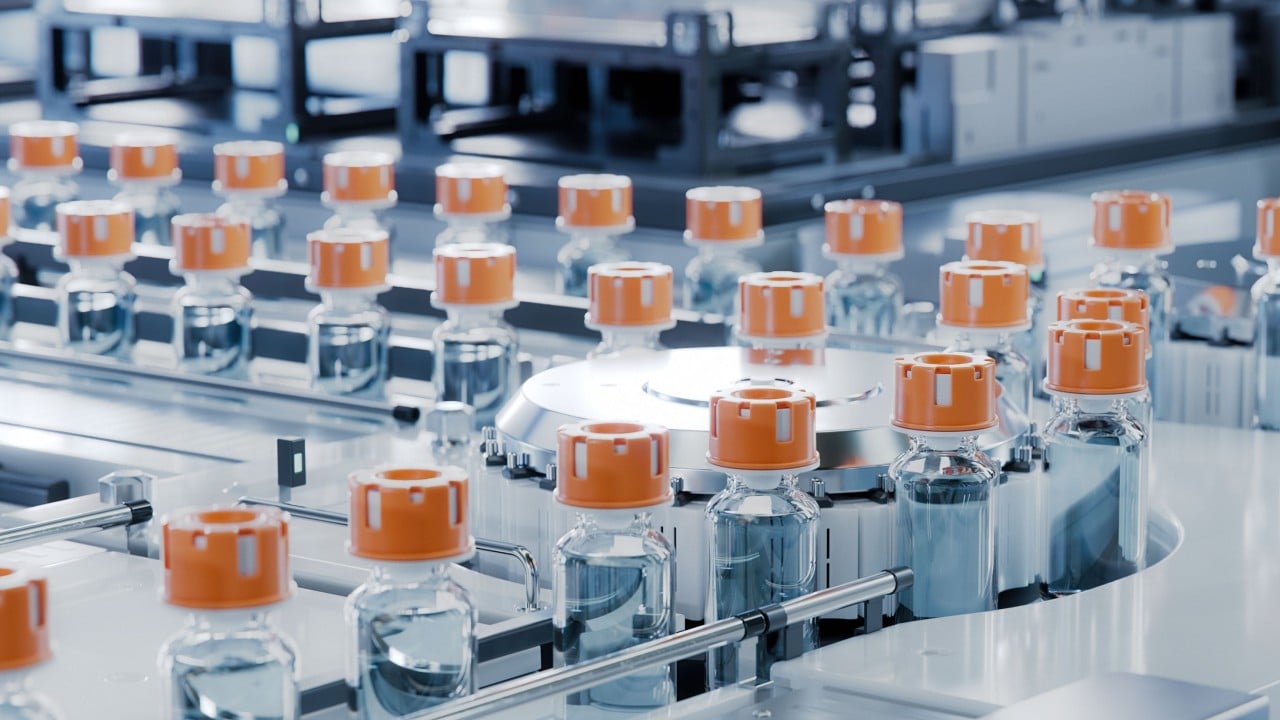
Everyone thought US lawmakers had killed WuXi AppTec's growth story. They didn't.
When news broke that the Chinese biotech giant raised its 2026 outlook after a sharp profit surge, Wall Street analysts had to scramble. For the past two years, the consensus narrative around Chinese contract research and manufacturing organizations (CDMOs) was pretty simple: Washington's BIOSECURE Act was going to choke off American revenue, western drugmakers would flee to European or Indian competitors, and Shanghai-based firms would slowly bleed out.
That didn't happen. Instead, WuXi AppTec posted surging profits and felt confident enough to hike its full-year 2026 guidance. If you're watching healthcare stocks, pharmaceutical supply chains, or US-China trade dynamics, you need to understand why the doom-and-gloom predictions missed the mark—and what this revised outlook actually signals for the global drug development pipeline.
Why WuXi AppTec Raised Its 2026 Guidance Right Now
Companies don't raise full-year guidance in this regulatory climate unless their order books are genuinely overflowing. WuXi AppTec's management is notoriously conservative when political scrutiny is high, so bumping up 2026 expectations after a profit surge tells you the underlying demand isn't just surviving—it's accelerating.
Here's the blunt reality of pharmaceutical manufacturing. Moving a complex drug molecule from one contract manufacturer to another isn't like switching cloud storage providers. It takes years of regulatory validation, massive capital expenditure, and serious risk of FDA delays. Big Pharma executives talk a good game on earnings calls about "de-risking" their supply chains, yet behind closed doors, their R&D teams keep signing contracts with WuXi AppTec because nobody else matches their speed or unit economics.
I've watched biotech procurement teams try to replace Chinese CRDMO (Contract Research, Development, and Manufacturing Organization) partners over the last twenty-four months. Most of them hit a brick wall. Western facilities in places like North Carolina or Switzerland are either booked solid until 2028 or charge three times as much for early-stage chemistry work. When a mid-sized biotech is burning cash and needs Phase II clinical material yesterday, ideology takes a back seat to survival.
The Profit Surge Behind the Headlines
Let's look at what's actually driving the bottom line. WuXi AppTec isn't relying on a single lucky blockbuster drug to pad its numbers. Its integrated "CRDMO" business model—which captures a client during early discovery chemistry and holds onto them through late-stage commercial manufacturing—acts like a compounding machine.
Several specific engines powered the recent earnings beat:
- TIDES business expansion. WuXi's TIDES division, which handles oligonucleotides and peptides, has become an absolute juggernaut. With global demand for GLP-1 weight-loss drugs and targeted peptide therapies exploding, pharmaceutical companies are desperate for peptide synthesis capacity. WuXi built out massive reactor volume ahead of the curve, and now they're collecting the rent.
- Operating efficiency and margin recovery. During the post-pandemic biotech funding slump in 2023 and 2024, capacity utilization dipped across the entire contract manufacturing sector. As biotech venture capital funding stabilized heading into 2026, WuXi's utilization rates snapped back. Higher factory utilization drops almost straight to net profit because fixed depreciation costs stay flat.
- Non-US market resilience. While American headlines obsess over Capitol Hill hearings, WuXi AppTec has quietly expanded its footprint across Europe, Japan, and domestic Chinese biopharma. European pharma giants haven't faced the same political pressure to decouple, and their clinical pipelines rely heavily on WuXi's testing and chemistry labs.
Honestly, the market priced WuXi AppTec as if its US revenue would drop to zero overnight. Even under the strictest versions of US legislative proposals, existing contracts have multi-year grandfather clauses stretching into the early 2030s. That gives WuXi a massive runway to collect cash flow from legacy American programs while backfilling new capacity with European and Asian clients.
What the BIOSECURE Act Narrative Missed About Drug Supply Chains
If you only read political commentary, you'd think decoupling from Chinese biotech is a done deal. It isn't. The pharmaceutical supply chain is way too entangled for clean breaks.
Consider how small-molecule active pharmaceutical ingredients (APIs) actually get made. Even when a European or American manufacturer claims they produce a drug "locally," they frequently buy the starting chemical intermediates from China. WuXi AppTec dominates the early-stage chemical synthesis space—specifically through its WuXi Chemistry unit—where thousands of chemists synthesize custom compounds in weeks rather than months.
When US lawmakers targeted WuXi AppTec and its sister company WuXi Biologics, they underestimated two critical friction points:
- The Talent Bottleneck. China graduates orders of magnitude more synthetic organic chemists every year than the United States and Western Europe combined. You can subsidize factory construction in Ohio or Massachusetts with federal grants, but you can't conjure ten thousand experienced process chemists out of thin air.
- The Cost of Delay. For a pharmaceutical company holding a patent with a finite twenty-year clock, every month spent transferring technology to a new manufacturer costs millions in lost peak sales. Big Pharma boards know this. They've lobbied relentlessly to soften legislative timelines precisely because sudden cutoffs would trigger drug shortages across American hospitals.
WuXi AppTec's raised 2026 outlook proves that customers aren't walking away en masse. They're hedging, sure. Many multinational drugmakers now run a "China plus one" strategy, keeping parallel suppliers in Europe or India for new programs. Still, "China plus one" means China stays in the mix—and WuXi remains the anchor tenant.
How WuXi AppTec Compares to Western and Indian Rivals
Investors often ask whether competitors like Lonza, Catalent (now split following Novo Holdings' acquisition), Samsung Biologics, or Indian players like Syngene and Divi's Laboratories are stealing WuXi's lunch. The short answer is no—at least not fast enough to dent WuXi's profit growth.
Look at how the competitive field actually shakes out right now:
- Samsung Biologics is crushing it in large-scale monoclonal antibody manufacturing, yet their core strength sits in large-molecule biologics rather than the small-molecule chemistry and peptide work where WuXi AppTec thrives.
- Lonza commands premium pricing and strong regulatory trust in Europe and North America, though their lead times and cost structures make them tough to justify for early-stage biotech startups watching every dollar.
- Indian CDMOs have won plenty of inquiries from American pharma scouts looking for alternatives. The catch? India's infrastructure for complex, high-potency APIs and large-scale peptide synthesis still lags behind WuXi's integrated campuses in Wuxi, Shanghai, and Changzhou.
WuXi AppTec's real moat isn't just cheap labor—that's an outdated 2010s stereotype. Their moat is speed and integration. A client can hand over a target protein on Monday, have WuXi's discovery team screen millions of compounds, optimize the lead molecule, run animal toxicology studies in their testing division, and scale up process chemistry under one corporate umbrella. No western competitor offers that entire end-to-end chain at the same velocity.
The Risks That Still Hang Over WuXi AppTec
Don't mistake a raised 2026 outlook for smooth sailing. Investing in or partnering with WuXi AppTec still carries real geopolitical risk that you can't afford to ignore.
First, US legislative risk hasn't vanished—it's just evolved. Even without immediate contract bans, American biotech startups raising Series A or Series B venture rounds face intense pressure from US-based venture capitalists to avoid Chinese vendors from day one. VCs don't want geopolitical baggage complicating an eventual IPO or acquisition by an American pharma giant. That means WuXi's future pipeline of brand-new US early-stage startups could shrink slowly over the next three to five years, even while current late-stage contracts print money.
Second, pricing pressure remains fierce. To keep customers locked in and fend off Indian and European rivals, WuXi has had to stay sharp on pricing in certain commoditized chemistry segments. Their profit surge relied heavily on high-margin segments like TIDES and late-stage manufacturing offsetting softer pricing in basic discovery services. If GLP-1 peptide demand cools off faster than expected or competitors flood the market with new peptide capacity by 2027, those fat margins will compress.
Third, currency swings and domestic Chinese healthcare policies always add noise. While WuXi generates the bulk of its revenue overseas in US dollars and euros, fluctuations in the offshore yuan affect reported earnings and capital allocation decisions.
How Investors and Biotech Operators Should Play This
If you're tracking this sector, stop reacting to every sensational headline out of Washington and start watching actual operational metrics. Headlines create volatility; order backlogs create value.
For investors, watch WuXi AppTec's backlog growth excluding COVID-19 commercial projects, and pay close attention to capital expenditure guidance. When WuXi spends aggressively on new peptide or oligonucleotide facilities in Singapore, Switzerland, or the US (like their facility investments in Delaware), they're building non-Chinese footprints specifically designed to neutralize geopolitical objections. Track the ratio of non-US revenue growth versus US revenue retention—if European and Asian growth keeps compounding above double digits while US revenue holds flat, the bear thesis stays broken.
For biotech founders and R&D leaders, take a pragmatic approach to vendor selection. Don't let political panic force you into a slow, overpriced western vendor if you're running early discovery chemistry where intellectual property transfers cleanly. Use WuXi or comparable Asian partners for rapid early-stage synthesis and hit-to-lead optimization, then build a dual-source manufacturing plan before you enter Phase II clinical trials. That gives you speed when cash is tight and supply-chain insurance before regulators or big pharma acquirers scrutinize your CMC (Chemistry, Manufacturing, and Controls) package.
WuXi AppTec's decision to raise its 2026 outlook sends a clear message to the pharmaceutical industry. Politics can slow down globalization, add compliance paperwork, and force companies to build backup factories, yet it still can't rewrite the basic math of drug development speed and manufacturing scale.