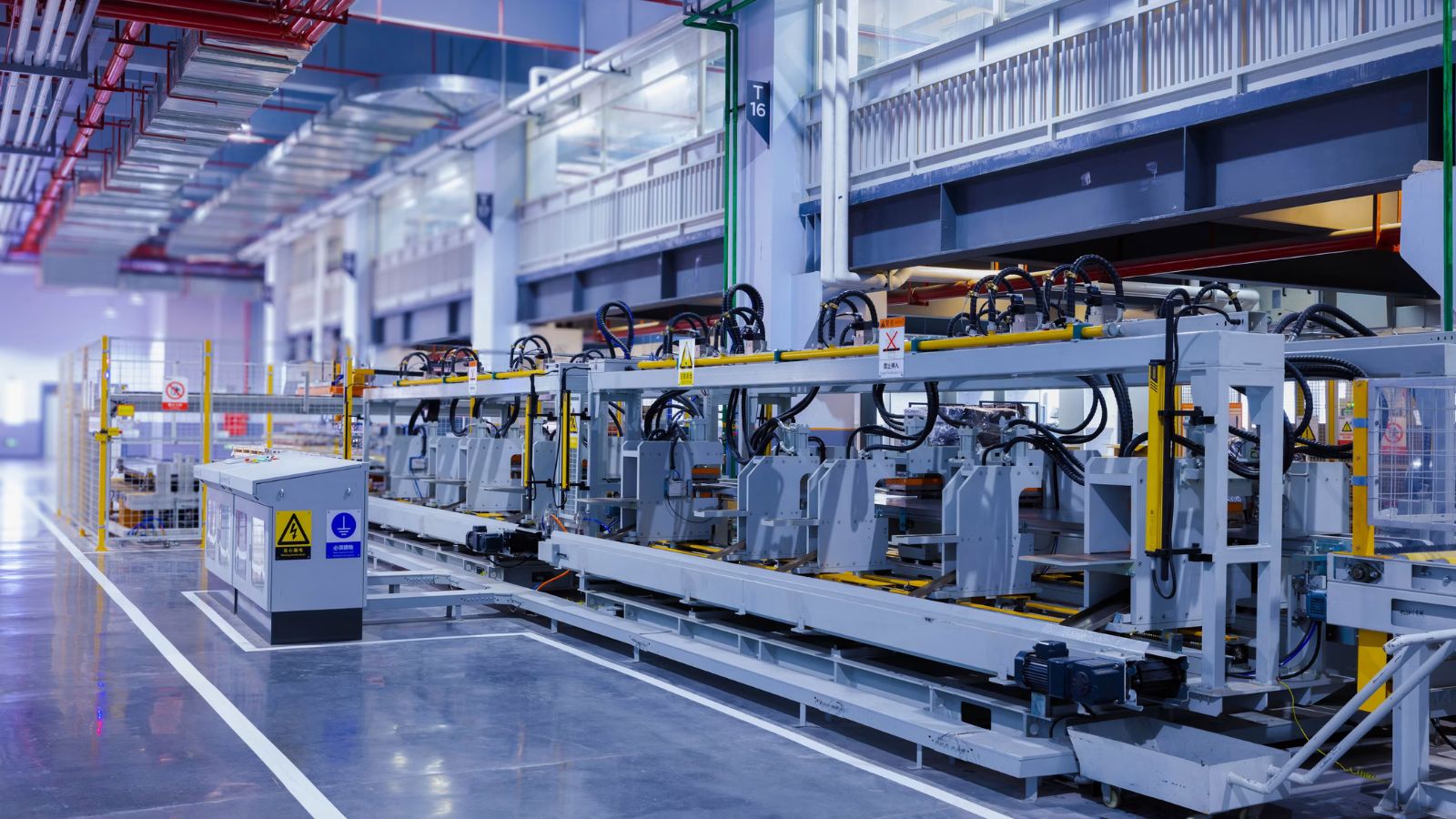
In a quiet industrial corner of Pune, the air smells of ozone and rain-slicked pavement. A young engineer named Aarav stands before a high-precision milling machine, his fingers tracing a serial number etched in German steel. This machine traveled seven thousand miles across oceans and through customs bottlenecks to land in his workshop. It represents more than just a capital investment; it is a physical tether connecting a family-owned firm in the Black Forest to a bustling suburb in Maharashtra.
Aarav doesn’t think about trade deficits or diplomatic communiqués. He thinks about the micron-thin precision required for a medical device that will eventually save a life in a Delhi hospital. He is one thread in a massive, shimmering web that most people never see. Don't forget to check out our previous post on this related article.
While the world’s attention remains fixed on the shouting matches of global superpowers, a quieter, more profound integration is happening beneath the surface. New data reveals that nearly 6,000 European Union firms are now operating within India. This is not a sudden gold rush. It is a slow, methodical anchoring of two distant worlds.
The Human Scale of Six Thousand
Numbers that large tend to lose their meaning. We hear "six thousand companies" and our brains conjure images of cold glass skyscrapers and automated bank transfers. But look closer. These firms are not just the household names etched onto the side of luxury sedans or the logos on our smartphones. To read more about the context of this, Business Insider offers an informative breakdown.
The vast majority are the "Mittelstand"—the medium-sized, often family-run enterprises that form the backbone of the European economy. These are companies built on generational knowledge, specializing in things most people never consider: specialized valve seals, high-efficiency water pumps, or the specific software architecture required to manage a modern power grid.
When these companies move to India, they don’t just bring cash. They bring a specific philosophy of work.
Consider the cultural friction that occurs when a century-old French engineering firm opens a plant in Tamil Nadu. It isn't just about translating manuals. It is a collision of worlds. You have the European obsession with rigid process meeting the Indian genius for "jugaad"—that instinctive, improvisational brilliance that finds a way when the formal system fails.
At first, this friction produces heat. Arguments over shift timings, different definitions of "urgent," and the agonizingly slow dance of local bureaucracy. But eventually, something else happens. The friction produces light. The European firm learns to be more agile, more responsive to a market that moves at the speed of a monsoon flood. The Indian workforce masters the art of relentless, uncompromising precision.
The Engine Under the Hood
The report from the EU-India Business Council suggests these firms are "driving growth," but that phrasing is too clinical. It suggests a chauffeur-driven car. The reality is more like a transplant. These 6,000 entities have embedded themselves into the very circulatory system of the Indian economy.
They employ over 1.7 million people directly. That is 1.7 million households where the monthly mortgage, the school fees, and the weekend cricket match are supported by this cross-continental partnership. If you include the indirect jobs—the logistics providers, the local component suppliers, the canteen operators—the number swells into the tens of millions.
This isn't charity. It is a cold-eyed recognition of a shifting gravity. Europe possesses the refined technology and the aging capital; India possesses the raw demographic energy and a digital infrastructure that is leapfrogging the West.
The stakes are invisible until they aren't. We see them when a new metro line opens in Bangalore, powered by European signaling systems. We see them when an Indian pharmaceutical plant uses Dutch filtration technology to produce affordable vaccines for the global south. The growth isn't a line on a chart; it’s the sound of a city breathing more easily because its infrastructure finally works.
The Ghost in the Machine
Behind the success stories lies a labyrinth of frustration that rarely makes it into the official reports. Talk to any CEO of a mid-sized German firm trying to navigate the Indian regulatory environment, and you will see the gray hairs earned in real-time.
The paperwork is legendary. One executive described it as "trying to run a marathon through waist-deep honey." There are the overlapping jurisdictions, the shifting tax codes, and the perennial challenge of infrastructure that remains "under construction" for a decade.
Why stay? Why fight through the honey?
Because the alternative is irrelevance. For a European company, India is no longer an "emerging market" to be dabbled in. It is the crucible. If your technology can survive the heat, the dust, and the chaotic scale of the Indian subcontinent, it can survive anywhere. India has become the ultimate testing ground for global durability.
This relationship has changed the way these companies think about themselves. They are no longer "German companies with an Indian branch." They are becoming hybrid entities. Their R&D centers in Bangalore are now solving problems for their headquarters in Munich. The apprentice who started on the factory floor in Pune is now managing a division in Lyon.
The Digital Handshake
The most significant shift isn't happening in factories, though. It’s happening in the "bits" rather than the "atoms."
The digital bridge between the EU and India is perhaps the most fortified structure of the 21st century. As Europe leads the world in data privacy and ethical AI regulation, India provides the sandbox where these theories are put into practice at a scale of 1.4 billion people.
Imagine a software developer in Kraków collaborating in real-time with a data scientist in Hyderabad. They are building an algorithm to optimize solar panel efficiency across a desert in Rajasthan. They aren't just exchanging code; they are exchanging a vision of a sustainable future. The European developer brings a focus on long-term systemic stability; the Indian scientist brings an obsession with cost-efficiency and mass deployment.
When these two perspectives fuse, the result is often something neither could have built alone. This is the "growth" the reports talk about—not just a rise in GDP, but an expansion of what is technologically possible.
The Weight of Expectation
There is a danger in painting this picture with too much gold leaf. The relationship is fragile. It is susceptible to the whims of protectionist politics and the volatile swings of global energy prices. There is a persistent fear in Europe about the "brain drain" or the hollowing out of their own industrial base. Conversely, in India, there is a deep-seated wariness of a new kind of economic colonialism, where the high-value intellectual property stays in the West while the labor stays in the East.
But these fears are increasingly outdated. The flow is no longer one-way. Indian firms are now among the largest investors in the European Union, rescuing iconic brands and revitalizing stagnant industrial zones from the UK to Romania.
The 6,000 EU firms in India are the vanguard of a new kind of globalism. It isn't the hyper-speed, faceless globalism of the 1990s that gutted local communities. It is a "local-global" model. These firms have to become Indian to succeed. They have to understand the nuances of the local festivals, the complexity of the caste system’s echoes in the workplace, and the specific needs of a consumer who wants world-class quality at a fraction of the Western price.
The Quiet Transformation
Late at night in a boardroom in Brussels, a set of slides is projected onto a screen. The charts show "Total Foreign Direct Investment" and "Compound Annual Growth Rates." The men and women in the room nod, satisfied with the trajectory.
But seven thousand miles away, the reality is much noisier.
It is the sound of a heavy-duty turbine spinning up in a coastal power plant. It is the sound of a young woman in a rural village using a mobile app—developed by a Swedish-Indian joint venture—to secure a fair price for her harvest. It is the sound of a billion people moving, slowly but with the force of a tectonic plate, into a middle-class life that was once a fantasy.
The report says there are 6,000 firms. But the firms are just the scaffolding. The real story is the bridge itself—a structure built of millions of individual handshakes, shared meals, and solved problems.
As Aarav finishes his shift in Pune, he wipes the grease from his hands and looks at the machine one last time. He knows exactly how it works. He knows its quirks, its strengths, and how to fix it when it breaks. He doesn't see a German machine anymore. He sees his own future, etched in steel.