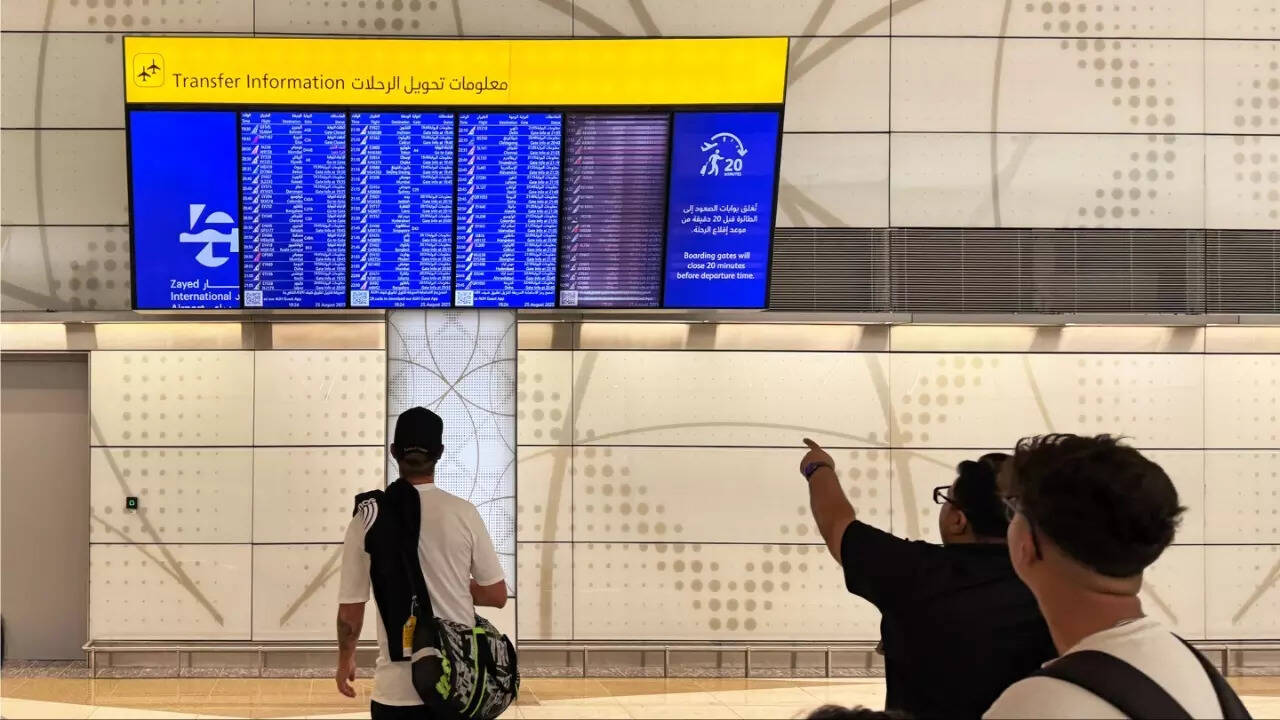
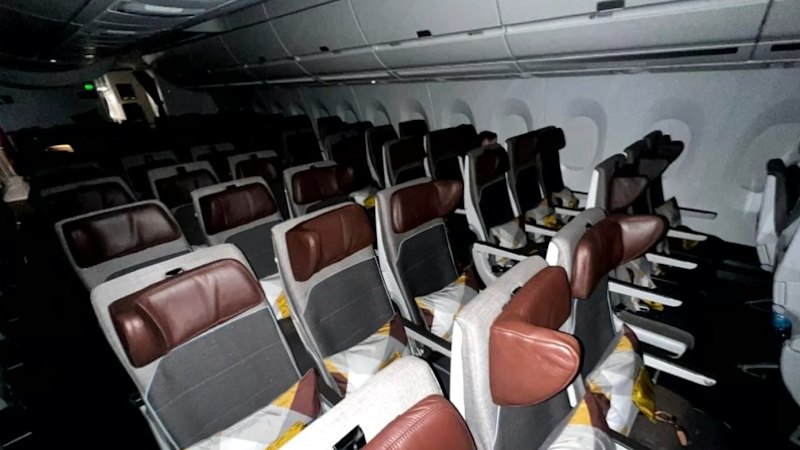
The air inside Terminal 3 at Abu Dhabi International—now the sweeping, cinematic expanse of Zayed International Airport—doesn't just smell like duty-free oud and high-end espresso. It smells like anticipation. It is a sterile, pressurized limbo where thousands of lives intersect for a fleeting moment before scattering to the corners of the map.
But lately, that anticipation has been laced with a jagged edge of anxiety.
Consider Sarah. She isn’t real, but she is every traveler standing in a check-in queue today. She is flying from London to Sydney, with a brief, high-stakes layover in the desert. To her, Abu Dhabi is more than a destination; it’s a pivot point. If her flight from Heathrow is delayed by even thirty minutes, or if she fumbles her paperwork at the gate, her entire itinerary collapses. The "key advice" issued by Etihad Airways isn't just a corporate memo. It is the difference between Sarah seeing her sister’s wedding and Sarah sleeping on a row of plastic chairs under the hum of an air-conditioning unit.
The Mathematics of the Sky
Etihad’s recent updates are often framed as dry logistics. You might see a headline about "operational changes" or "check-in windows," and your eyes naturally glaze over. We have been conditioned to treat travel news like a software update—something to click through as fast as possible.
But aviation is a symphony of terrifyingly precise math.
Think of a major hub like Abu Dhabi as a giant, spinning clock. Every flight is a gear. When one gear slows down—perhaps because a passenger decided to buy one last souvenir and arrived at the gate five minutes late—it doesn't just affect that one plane. It creates a friction that ripples through the entire system. Etihad’s insistence on passengers arriving four hours before their flight isn't a suggestion born of a desire to see people spend more money on lattes. It is a buffer. It is the grease that keeps the clock from seizing.
The airline has been remarkably clear: check-in for most flights closes exactly 60 minutes before departure. For US-bound travelers, that window is even tighter. If you are one minute late, the system locks. The seat you paid for becomes a liability. The ground crew begins the frantic process of offloading your bags—a security requirement that costs the airline thousands in fuel and delay penalties.
The Human Cost of Sixty Seconds
We live in an era of digital convenience, where we expect the world to bend to our personal timelines. We "leverage" technology—pardon the expression—to bypass physical presence. But the physical reality of moving 300 tons of aluminum and 400 human souls across an ocean remains stubbornly analog.
A gate agent in Abu Dhabi isn't just a clerk. They are a gatekeeper in the most literal sense. When they tell a frantic traveler that the flight is closed, they aren't being bureaucratic for the sake of it. They are protecting the 300 people already on the plane who have connections to make, funerals to attend, and business deals to close.
The "key advice" recently reiterated by Etihad centers on the digital transition. The airline is pushing hard for travelers to use the Etihad app, not because it’s a fancy toy, but because it removes the friction of the physical queue. By checking in online, you aren't just saving yourself time; you are thinning out the crowd for the person who actually needs manual assistance—the elderly traveler who doesn't own a smartphone or the family traveling with three strollers and a mountain of luggage.
The Weight of the Boarding Pass
There is a specific kind of silence that descends on a boarding gate once the final call has been made. The agents retract the retractable belts. The jet bridge door hisses shut.
For the person standing on the wrong side of that door, the world feels very small.
Etihad’s advice isn't merely about the "when." It’s about the "what." The airline has tightened its scrutiny on document verification, particularly for destinations with complex visa requirements. In the post-pandemic landscape, the rules haven't just changed; they’ve become more granular. A missing QR code or an expired health declaration is the modern equivalent of a lost passport.
Imagine a businessman who has spent six months preparing a pitch. He arrives at Abu Dhabi, ready for his final leg to Singapore. He has his ticket. He has his bags. But he didn't check the latest update on entry requirements. He is denied boarding. The "invisible stakes" here aren't just a missed flight; it’s the potential loss of a career-defining contract. The airline’s advice to "check and re-check" your destination’s requirements is an attempt to prevent these quiet tragedies.
The Desert Hub and the Global Pulse
Abu Dhabi sits at a unique crossroads. It is the bridge between the West and the East. When Etihad issues an update, it’s a signal to the global nervous system.
The airline has seen a massive surge in passenger numbers as Zayed International Airport settles into its new skin. This isn't just about growth; it’s about density. More people means more variables. More variables mean a higher chance of a breakdown. This is why the four-hour arrival window is now the gold standard. It allows for the unexpected—the traffic jam on the E11, the snag at the security scanner, the sudden realization that your carry-on is two kilograms over the limit.
The advice also touches on the "City Check-in" options. In Abu Dhabi and Dubai, you can drop your bags and get your boarding pass 24 hours in advance at specific locations. This is perhaps the most human-centric piece of the puzzle. It allows you to spend your final day in the UAE as a guest, not a passenger. You can have a leisurely lunch, visit the Louvre Abu Dhabi, or walk the Corniche without dragging a suitcase behind you like a ball and chain.
The Finality of the Gate
We often talk about travel as a "seamless" experience—that word again—but it never truly is. It is a series of controlled stresses.
The real secret to navigating the modern Abu Dhabi flight update isn't found in a list of rules. It’s found in a shift of perspective. If you view the airline’s advice as a set of hurdles, you will find yourself frustrated and exhausted. But if you view it as a set of guardrails designed to keep you and your fellow travelers safe and on time, the experience changes.
The gate closes. The engines whine to life. The plane pushes back from the stand.
High above the desert sands, at 35,000 feet, the petty stresses of the check-in desk vanish. The cabin is quiet, save for the low thrum of the turbines. Down below, the lights of Abu Dhabi fade into a shimmering grid. You are here because you listened. You are here because you respected the sixty-minute rule, the four-hour window, and the digital paperwork.
The seat next to you is empty. You lean back, the tension finally leaving your shoulders. You aren't just a data point in an Etihad report anymore. You are a traveler who made it through the eye of the needle.
Somewhere back in the terminal, the clock is still ticking for someone else. But for you, the journey has finally begun.