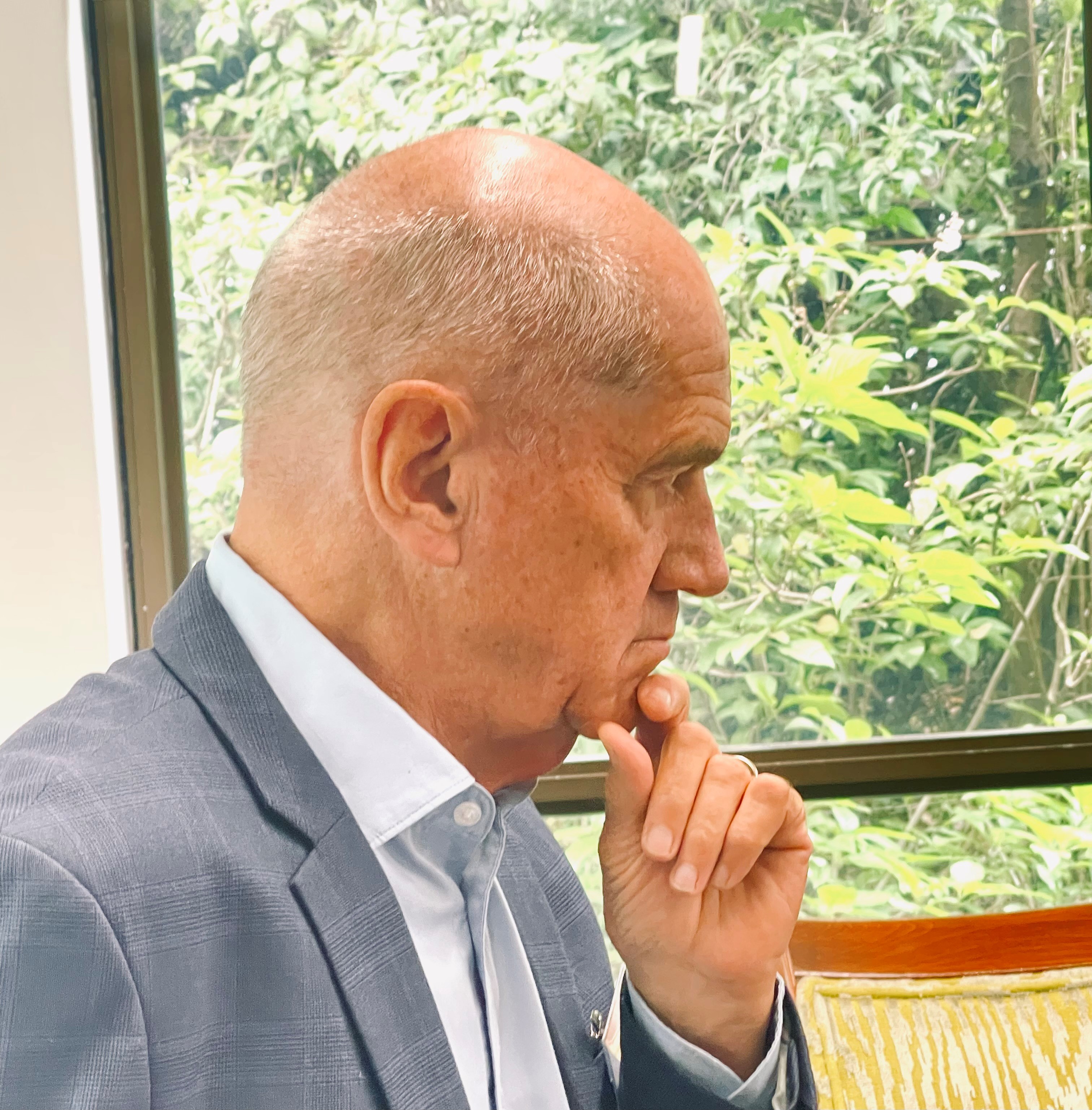
The air in Washington D.C. rarely smells like salt, but in the windowless rooms where national security is weighed by the ounce, it often smells like old coffee and ozone. Behind the heavy oak doors of the Rayburn Building, a specific kind of quiet persists. It is the silence of a vulnerability being realized too late. When news broke regarding Representative Eric Swalwell and his proximity to a suspected Chinese intelligence operative known as Fang Fang, the headlines focused on the salacious. They chased the friction of a political scandal.
They missed the terrifyingly mundane machinery underneath.
This isn't just a story about one politician or one spy. It is a story about the structural rot in how we protect the nervous system of the free world. It is about how a single, well-placed individual can walk through the front door of democracy not with a crowbar, but with a smile and a volunteer clipboard.
The Long Game of the Social Engineer
Intelligence work in the modern era is rarely about James Bond crashing through a skylight. It is about a slow, methodical accumulation of social capital. Think of it like a gardener planting a perennial that won't bloom for five years.
Christine Fang didn't arrive with a manifesto. She arrived with a network. By targeting up-and-coming local politicians in California’s East Bay, she wasn't just looking for immediate secrets. She was investing in futures. When you are a twenty-something city council member, you are hungry for donors, volunteers, and validation. You are accessible. You are vulnerable.
The "Swalwell Affair" serves as a brutal case study in this "seedling" strategy. By the time a target reaches a position of true influence—like a seat on the House Intelligence Committee—the operative is already a fixture in their world. They have helped with fundraising. They have staffed events. They have become part of the psychological furniture.
The danger here isn't necessarily a "honey pot" in the cinematic sense. It is the danger of proximity.
The Porous Walls of Capitol Hill
Consider a hypothetical legislative aide named Sarah. Sarah is twenty-four, earns sixty thousand dollars a year in one of the most expensive cities on earth, and works fourteen hours a day. She handles sensitive memos, schedules classified briefings, and has the ear of a Senator. Sarah is also lonely, exhausted, and desperate to feel like her work matters.
When a charming, well-connected "consultant" begins inviting Sarah to dinners or offering insights into her career path, Sarah doesn't see a threat. She sees a mentor. She sees a friend.
This is the deeper rot that the Swalwell incident exposed. The infrastructure of our government relies on thousands of "Sarahs"—young, underpaid, and largely unvetted individuals who act as the gatekeepers to power. The FBI can vet the Congressman, but can they vet every person who bought the Congressman a drink at a fundraiser three years before he was elected?
The answer is a resounding, echoing no.
The Digital Shadow and the Human Target
We spend billions on cybersecurity. We build firewalls that could withstand a solar flare and encrypt data behind layers of mathematical complexity. Yet, we leave the human hardware completely unshielded.
In the Swalwell case, the operative utilized the most basic "hack" in existence: the human ego. By assisting with a "bundling" campaign for political donations, Fang made herself indispensable. She didn't need to hack a server when she could simply stand in the room while the server's password was being discussed.
The rot isn't just a lack of security; it is a lack of cultural suspicion. We have built a political system that rewards transparency and networking, which are the exact two traits an intelligence service exploits. Every handshake is a potential entry point. Every campaign donation is a potential hook.
The Cost of a Clean Bill of Health
When the FBI finally stepped in to give Swalwell a "defensive briefing" in 2015, the damage was already a matter of public record, even if the classified record remained hidden. The Bureau essentially told him his friend was a foreign agent. He cut ties. He wasn't charged with a crime.
But the "all clear" from the DOJ is a cold comfort to a nervous public.
The real problem lies in the gap between what is legal and what is secure. It is entirely legal to accept help from a charming stranger who seems to share your political vision. It is entirely legal to build a friendship with someone who later turns out to be a ghost. However, in the high-stakes theater of global hegemony, "legal" is a low bar.
The stakes are invisible until they are absolute.
Imagine the intelligence gathered not from stolen documents, but from observing a target’s temperament. Is the Congressman prone to anger? Does he have gambling debts? Is he unfaithful? This "soft" intelligence allows a foreign power to build a psychological map of our leadership. They know when to push, when to pull, and when to wait.
The Quiet Erosion of Trust
The most devastating impact of these scandals isn't the lost data. It is the erosion of the social contract. When the public sees a member of the Intelligence Committee entangled—even unwittingly—with a foreign operative, the internal logic of the institution begins to crumble.
Trust is a non-renewable resource.
We are currently operating in a landscape where the perimeter of our national security is no longer at the border. It is at the happy hour in Arlington. It is in the LinkedIn DM. It is in the campaign office in a suburban strip mall.
The Swalwell incident was a flare sent up in the middle of a dark night. It illuminated, for a brief moment, just how many figures are moving in the shadows of our political process. The "deeper rot" isn't a single conspiracy; it is the systemic failure to recognize that in the twenty-first century, the most effective weapon isn't a missile.
It is a conversation.
The Mirror in the Room
We like to think of ourselves as immune to such manipulation. We believe we would see the strings. But the brilliance of modern foreign influence is that it feels like our own idea. It feels like our own ambition.
When we look at the rot on Capitol Hill, we are looking at a reflection of our own hyper-connected, over-shared lives. We have traded privacy for influence and security for access. The politicians are merely the most visible casualties of a war that is being fought for the "user data" of our souls.
The halls of power are still quiet. The coffee still smells the same. But the oak doors don't feel quite as thick as they used to. You realize that the lock wasn't picked.
The door was held open by someone we thought we knew.
The key is still under the mat, and the whole world knows exactly where we keep it.