The ink on the ledger does not bleed, but the numbers do. Four thousand.
It is a clean, orderly digit until you stand on the red earth of the Democratic Republic of Congo and watch a family wash the clothes of someone who no longer breathes. Then it becomes something else entirely. It becomes a shadow stretching across valleys, a quiet terror moving through market squares where women sell cassava and children chase dust devils down dirt roads.
Statistics are easy to digest from six thousand miles away. They arrive on glowing screens as cold updates, neat bullet points, clinical summaries of an outbreak spiraling past a grim threshold. But numbers are just human stories abbreviated.
Consider a man named Joseph. He is hypothetical only in his exact name, yet he occupies every mud-brick home in the North Kivu region right now. Joseph wakes up before dawn. The air smells of woodsmoke and damp foliage. His youngest daughter, six years old with bright, curious eyes, tugs at his sleeve because her head aches and her stomach turns. He does not think of geopolitical instability. He does not think of fractured healthcare infrastructure or the logistical nightmares of international aid distribution. He thinks of cold water and whether he has enough damp cloths to cool her skin.
By sunset, the fever has stolen her voice.
This is how an epidemic actually unfolds. Not in soaring government briefings or polished conference rooms in Geneva, but in the agonizing calculus of a father deciding whether to trust the men in white biohazard suits or the traditional healer down the lane whose grandfather knew every root in the forest.
Outbreaks are won or lost in the spaces between fear and understanding.
For months, the numbers have climbed upward, breaching the four-thousand mark not because science has failed, but because human beings are complicated, frightened, and fiercely protective of their rituals. When death comes wearing a spacesuit, wrapped in bleach and protocols that forbid a mother from holding her child one last time, suspicion takes root faster than the virus itself. How do you convince a community that the cure has arrived when the cure looks like an eviction from grief?
You have to walk through the fire with them.
Public health workers know this truth intimately. They are the frontline ghosts moving through humid heatwaves in heavy rubber gear, carrying not just medications and rehydration salts, but an exhausting burden of patience. Imagine wearing layer upon layer of synthetic armor under a tropical sun, your vision fogged by sweat, your hands clumsy inside thick gloves, kneeling beside a trembling patient who looks at you with absolute terror. You cannot smile. You cannot touch them with bare skin to reassure them that they are safe. You have to speak entirely through your eyes.
Trust is heavier than any oxygen tank.
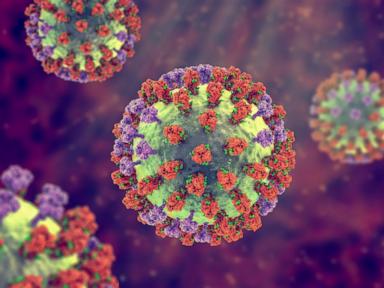
The Ebola virus is an ancient predator of the rainforest, waking periodically from its hidden reservoirs in fruit bats and forest creatures to remind humanity of its biological fragility. It exploits our deepest instincts. We are social animals. We care for our sick. We cradle our dying. We gather to bury our ancestors. Every single one of these fundamental acts of love becomes a weapon in the hands of the virus.
To stop the spread, public health officials must demand the impossible: that people unlearn their humanity in the moments they need it most.
That is why the death toll rises. It is not merely a failure of syringes or vaccines. It is a collision between an invisible microscopic killer and the unbreakable gravity of human tradition. When a community buries its dead with song and touch, telling them to surrender their dead to strangers in plastic body bags feels like an unspeakable betrayal of the soul.
Yet, resilience takes strange, stubborn forms.
In towns carved out of the jungle, local leaders are rewriting the playbook. They are stepping forward, taking the microphone in dusty market squares, and saying what foreign doctors never could. They bridge the gap. They stand beside the treatment centers, translating clinical jargon into the cadence of local dialects, showing by example that survival is possible.
In the red zones, survivors are the true royalty.
They walk back into the treatment wards where they once lay dying, now wearing the scrubs of community health workers. They carry cups of water. They hold the hands of the newly admitted, using gloved fingers to trace reassurance onto palms. They whisper the only words that carry any real weight in that stifling room: I was where you are. I walked out.
That is the pivot point of the entire crisis. Not the arrival of a new serum, though serums matter. Not the dispatch of funds from distant capitals, though funds are the lifeblood. The turning point arrives the moment fear is answered by empathy.
Look closer at the map of Central Africa. Behind the jagged borders and the alarming headlines lies an intricate web of resilience. Mothers walking miles through dense brush to ensure their surviving children receive vaccinations. Mobile laboratories traveling over roads carved into mud by monsoon rains, processing blood samples in hours instead of weeks. Young scientists analyzing genetic sequences on laptops powered by noisy diesel generators, tracking the mutation of the pathogen in real time.
They are outmatched, outfunded, and often exhausted. But they do not stop.
The tragedy of four thousand lives lost is permanent. Those chairs at the dinner tables will remain empty. Those stories are finished too soon, clipped short by a pathogen that cares nothing for potential, ambition, or love.
We owe it to them to look past the cold arithmetic of the headline. We have to understand that public health is not a mechanical engineering problem. It is an act of translation. It is the arduous, daily work of building bridges over chasms of ancestral trauma and institutional distrust.
The outbreak will eventually recede. The numbers will freeze, plateau, and finally fade from the front pages of the world's newspapers as the cameras turn elsewhere. The aid workers will pack their tents. The mobile labs will roll away.
But the red earth will remain. The families will rebuild their homes. And the invisible line between survival and devastation will be redrawn by the people who refused to let their neighbors face the dark alone.
Listen closely to the quiet after the storm passes. That is the sound of life picking up its broken pieces, refusing to surrender to the dust.