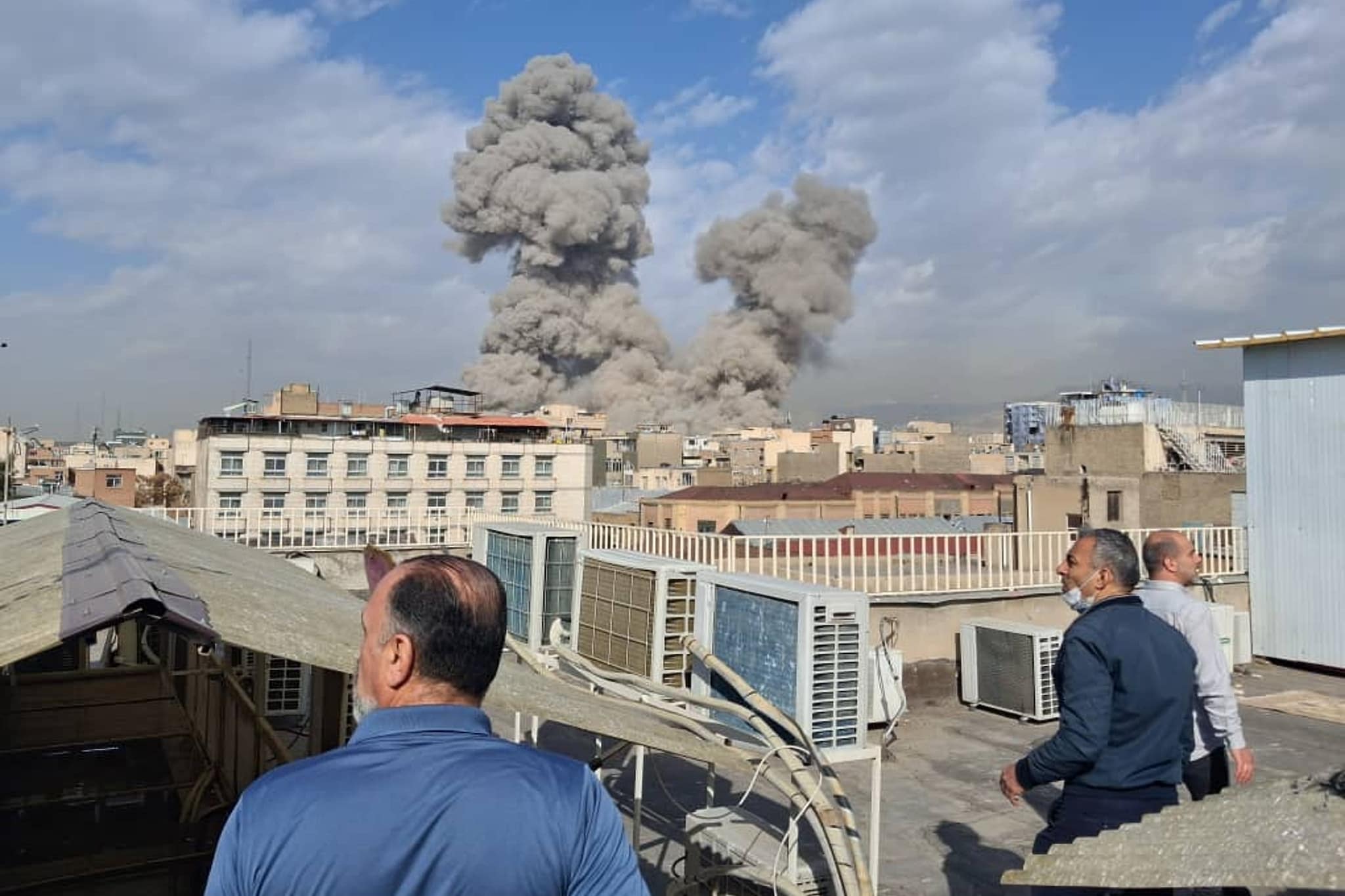
The intelligence operation that culminated in three high-precision strikes within a single minute was not the result of a sudden breakthrough. It was the terminal phase of a patient, multi-layered surveillance campaign that turned the physical and digital world around Iranian leadership into a transparent cage. For months, the CIA and its regional partners mapped the biological rhythms of their targets, utilizing a mesh of signals intelligence and human assets that outpaced the security protocols meant to protect the Islamic Revolutionary Guard Corps (IRGC) elite.
This was a victory of technical endurance. While the world saw a sixty-second burst of kinetic energy, the real work happened in the quiet, monotonous collection of metadata, thermal signatures, and intercepted encrypted communications that were eventually broken by brute force or social engineering. The objective was never just to find them once. The goal was to understand their patterns so intimately that their location at any given second became a mathematical certainty.
The Architecture of Constant Observation
Modern espionage has moved past the era of the lone operative with a camera. Today, it is a numbers game played with massive datasets. To track high-value Iranian targets, intelligence agencies deployed a strategy of persistent technical surveillance that combined orbital assets with low-altitude drone presence.
The IRGC leadership relies on a complex system of couriers and "clean" phones to avoid detection. However, even the most disciplined operative creates a footprint. By monitoring the movement of security details and the sudden silencing of civilian cellular towers in specific sectors, analysts could infer the presence of a high-ranking official. This is known as "pattern of life" analysis. It involves documenting where a person eats, how long they sleep, and which specific routes their motorcades prefer.
When the CIA tracks a target for months, they are looking for the "drift." This is the moment when a target becomes complacent or is forced by circumstance to break their own security rules. It might be a visit to a family member or a meeting in a location they falsely believe is a dead zone for Western sensors. Once that drift is identified, the window for an operation swings wide open.
The Sixty Second Window
The execution of the strikes in such a rapid sequence indicates a level of synchronization that relies on real-time data streaming. To hit three distinct targets in sixty seconds, the command center required a "god-of-the-sky" view, where multiple weapon systems were slaved to a single intelligence feed.
This wasn't just about speed. It was about preventing a reaction.
In previous eras, the first explosion would serve as a flare, sending every other target in the region into deep cover or hardened bunkers. By compressing the timeline to a single minute, the agency ensured that the second and third targets had no time to process the first strike. They died before they could reach for a radio or step into an armored vehicle.
The technology facilitating this is a blend of edge computing and satellite-linked fire control. High-definition video feeds are processed by onboard sensors to confirm the identity of the target through gait analysis or facial recognition software, even from altitudes where a human observer would see nothing but a speck. The decision-making loop—the time between identifying the target and pulling the trigger—has been shrunk to near-zero.
The Failure of Iranian Counterintelligence
Tehran’s security apparatus is often portrayed as an impenetrable wall of ideological loyalty and paranoia. The success of this operation suggests otherwise. For the CIA to maintain a lock on these individuals for months, there had to be a significant breakdown in Iranian internal security.
Information leaks usually happen at the intersections. The IRGC must coordinate with civilian ministries, transport hubs, and local police. Every time a high-ranking leader moves, a dozen people who aren't part of his inner circle might catch a glimpse of the preparations. Western intelligence has become incredibly adept at "financial incentivization"—offering life-changing sums of money to low-level staffers who have access to travel manifests or gate logs.
Furthermore, the hardware the Iranian government uses is often vulnerable. Despite their efforts to build a "Halal Internet" and domestic encrypted platforms, much of the underlying infrastructure is built on global standards that have known, or secretly held, vulnerabilities. If an officer’s "secure" device is compromised via a zero-day exploit, his movements are no longer a secret; they are a broadcast.
The Cost of the Deep Watch
The logistics of keeping eyes on three separate leadership targets simultaneously for months is a staggering financial and human commitment. It requires a dedicated "cell" of analysts working 24-hour shifts, rotating through time zones to ensure that not a single frame of footage is missed.
- Orbital Maintenance: Repositioning satellites to maintain constant coverage over specific Iranian corridors costs millions in fuel and lost mission time elsewhere.
- Human Assets: Maintaining informants inside a hostile regime requires a constant stream of "black budget" funding and complex extraction plans that may never be used.
- Data Processing: The sheer volume of intercepted audio and video requires massive server farms to sift through noise to find the one relevant conversation.
The decision to move from "tracking" to "striking" is as much a political calculation as a military one. Intelligence is often more valuable when the target is alive and talking. To burn months of work for a sixty-second operation implies that the threat posed by these individuals had reached a threshold where their existence was more dangerous than the loss of the intelligence stream they provided.
Why Signal Intelligence Isn't Enough
There is a common misconception that drones and satellites do all the work. In reality, signals intelligence (SIGINT) is often a "dirty" medium. It is full of deception, decoys, and misinformation. To verify that the person entering a vehicle is actually the target and not a body double, you need human intelligence (HUMINT).
An operative on the ground, perhaps a disgruntled local or a long-term deep-cover asset, provides the final confirmation. They are the ones who notice the specific way a target walks or the fact that he is carrying a briefcase he never lets go of. Without this "boots-on-the-ground" verification, the risk of a high-profile mistake—such as hitting a civilian convoy—is too high for a mission of this magnitude.
The three strikes in sixty seconds were a choreographed display of what happens when HUMINT and SIGINT are perfectly aligned. One confirmed the identity, the other provided the coordinates, and the machine did the rest.
The Regional Ripple Effect
The precision of these attacks sends a specific message to the remaining leadership in Tehran: the walls have ears, and the sky has eyes. It forces the opposition to change their behavior in ways that actually make them easier to track.
When leaders are afraid of technology, they stop using it. They move to more primitive forms of communication, which are slower and more prone to interception via human couriers. They move more frequently, which increases their visibility to satellite surveillance. They become more paranoid, purging their own ranks and creating internal instability.
The goal of such a high-profile, synchronized hit is not just to remove three individuals from the battlefield. It is to degrade the operational tempo of the entire organization. If every commander is looking over his shoulder, wondering if the drone above is watching him or someone else, he is not focusing on planning attacks.
The Mathematical Certainty of Modern Warfare
We are entering an era where the concept of "hiding" is becoming obsolete for public figures, even those in the shadows of the IRGC. The integration of artificial intelligence into surveillance allows agencies to scan months of historical data to find anomalies that a human eye would miss.
If a target's car always stops at the same bakery at 8:05 AM, it's a pattern. But if that car starts taking a slightly different route every Tuesday, AI can cross-reference that change with thousands of other variables—weather, local news, other motorcade movements—to determine if a secret meeting is being signaled.
The strikes weren't just a display of firepower. They were a display of total information dominance. The CIA didn't just find their targets; they owned their schedules. When the order was finally given, the execution was the easiest part of the entire mission. The hard part was the months of staring into the screen, waiting for the target to blink.
The reality for those on the other side is now very clear. You can change your phone, you can swap your car, and you can hide in a basement. But as long as you have to move, as long as you have to communicate, and as long as you exist in a physical space, you are leaving a trail that is being recorded, indexed, and analyzed.
The sixty-second strike was a conclusion. The real story is the silence that preceded it.
Identify the digital fingerprints your own organization is leaving behind before an adversary does.