The humanitarian industrial complex loves a mystery. It sells. It keeps the donations flowing and the think-tank panels scheduled. When the media screams about "invisible shipwrecks" in the Mediterranean, they are painting a picture of a supernatural void—a Bermuda Triangle of human misery where boats simply vanish because of bad luck or "migrant desperation."
Stop buying the ghost stories.
There are no invisible shipwrecks. In an era where a $500 satellite transceiver can track a single shipping container across the globe and military-grade surveillance covers every square inch of the Central Mediterranean, "vanishing" is a choice. It is a logistical outcome. These boats don’t disappear; they are erased by a deliberate breakdown in the data chain between NGOs, coast guards, and commercial shipping lanes.
The standard narrative blames "unseaworthy vessels." That’s like blaming gravity for a plane crash after the pilot turned off the engines. We need to talk about the data-sharing blackout and the weaponization of maritime law that makes "not seeing" a boat the most profitable legal strategy for every state actor involved.
The Surveillance Paradox: We See Everything, We Rescue No One
Let’s dismantle the biggest lie first: the idea that we lack the technology to track these crossings.
I’ve spent years looking at the backend of maritime monitoring systems. Between Frontex’s Heron drones, the AIS (Automatic Identification System) requirements for commercial vessels, and the high-frequency radar arrays lining the Southern European coast, the Mediterranean is the most monitored body of water on Earth.
When a boat "vanishes," it usually happens in the gap between a distress call being logged and a jurisdictional handoff. In maritime law, the SAR (Search and Rescue) zone defines who is responsible. But in practice, SAR zones have become hot potatoes. If an Italian maritime coordination center acknowledges a boat in the Libyan SAR zone, they are legally tethered to the outcome.
The Strategy of Calculated Ignorance
- Sensor Siloing: Data from aerial surveillance is often classified or restricted to "border management" rather than "search and rescue."
- Frequency Jamming: Not literal radio jamming, but the clogging of emergency channels with bureaucratic disputes over who has "primary responsibility."
- The Merchant’s Dilemma: Commercial ships are legally obligated to help, but the economic cost of a 48-hour delay and the legal nightmare of being denied entry to a port (like the Maersk Etienne standoff) creates a massive incentive for captains to "not see" the rubber dinghy on their radar.
Imagine a scenario where a Boeing 747 disappears over Paris. No one would call it an "invisible crash." They would call it a systemic failure of air traffic control. Yet, when a boat carrying 400 people disappears 50 miles off the coast of Lampedusa, we treat it like a freak accident of nature.
The NGO-State Feedback Loop of Death
The competitor articles love to frame this as a battle between "heroic NGOs" and "evil governments." The truth is messier and more cynical.
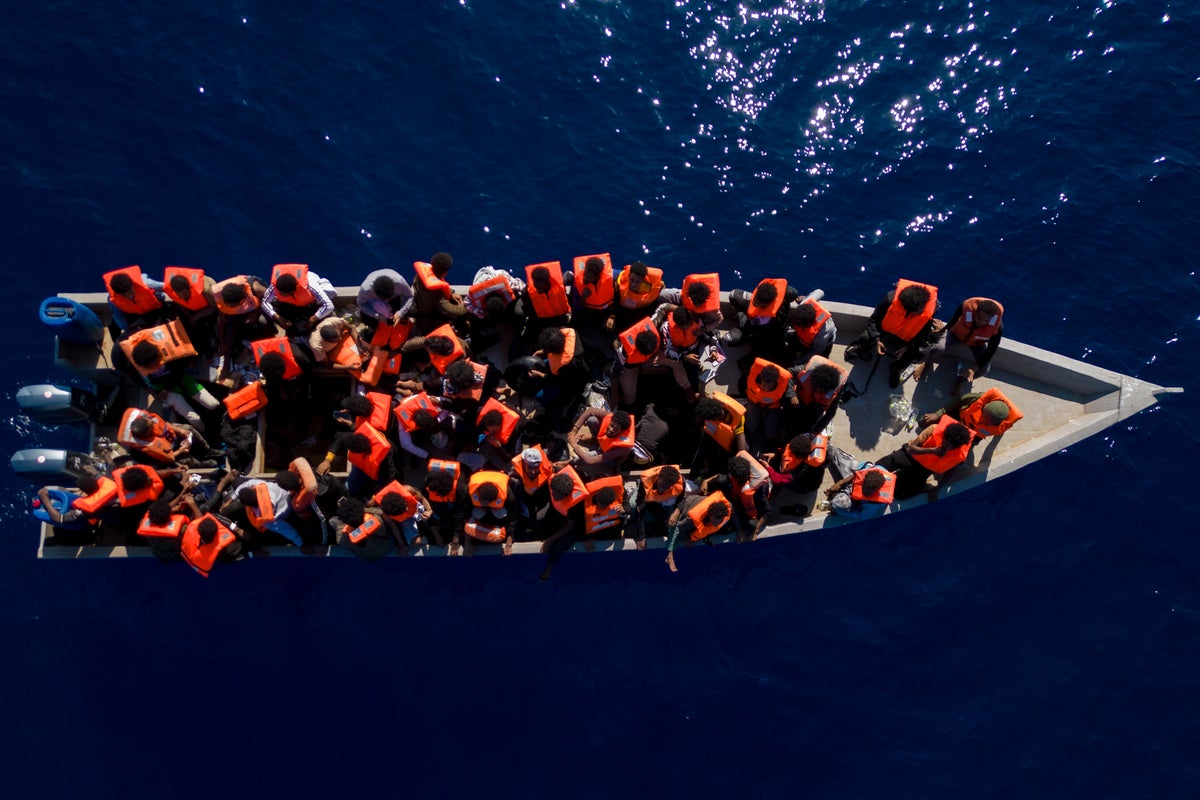
NGOs provide a vital service, but their presence has inadvertently fueled a shift in the smuggling business model. Smugglers no longer need to provide a boat that can actually reach Italy. They only need a boat that can reach the 12-mile limit of territorial waters, or even just the path of a known rescue vessel. This has led to the "disposable vessel" era—unpainted wood, PVC tubes held together with hope, and engines that seize after three hours.
The state, in response, has criminalized the very act of rescue. By seizing NGO ships for minor "technical irregularities," they remove the eyes from the water.
When the NGOs are in port fighting a legal battle and the government drones are busy tracking "threats" instead of "distress," that is when the shipwrecks become "invisible." They aren't invisible to the satellites; they are invisible to the people who are legally allowed to do something about them.
The Logistics of the "Ghost Boat"
What actually happens during an invisible shipwreck? It’s not a sudden plunge into the abyss. It is a slow, agonizing technical failure.
- Fuel Dilution: Smugglers often mix gasoline with seawater or cheap additives. The engine dies. The boat loses steerage.
- Structural Fatigue: Inflatable boats are designed for lakes, not the chop of the Mediterranean. Once the floorboards crack, the center of gravity shifts.
- The "Silent" Distress: Many of these boats carry Thuraya satellite phones. They call relatives. They call activist hotlines like Alarm Phone. The coordinates exist. The data is real.
The "invisibility" occurs when that coordinate data is passed to a Coast Guard that refuses to log it as an official "distress" event. If it’s not logged, it didn’t happen. If it didn’t happen, there is no body to recover and no investigation to launch.
Why We Stop Asking About the "Why"
People also ask: "Why don't they just take the legal route?" This question is a fundamental misunderstanding of the global visa architecture. For a 20-year-old in Sub-Saharan Africa, there is no "legal route." The waitlist for a labor visa is longer than a human lifespan in some regions.
But the more brutal truth that nobody wants to admit is that "invisible shipwrecks" serve a political purpose. They are a passive deterrent. If every shipwreck were filmed, tracked, and publicized with the precision of a SpaceX launch, the public outcry would force a policy change. By allowing these events to remain "invisible," European states can maintain a veneer of humanitarian concern while effectively using the sea as a graveyard to discourage future crossings.
The Actionable Truth for the Industry
If we actually wanted to stop the vanishing, we wouldn't buy more patrol boats. We would mandate Open-Source Maritime Data.
- Break the Classification: Force Frontex to release real-time aerial surveillance feeds to a multi-agency body that includes non-state actors.
- Immunity for Merchant Vessels: Remove the legal and economic risk for commercial ships. If a tanker picks up 50 people, they should have a guaranteed berth at the nearest safe port within six hours.
- The "Black Box" Requirement: If we can put a GPS tracker on a $15 Amazon package, we can certainly track vessels known to be carrying hundreds of humans.
The downside to this? It would expose the sheer scale of the crisis. It would remove the "plausible deniability" that politicians use to win elections. It would turn a "tragedy" into a "data point," and data points require accountability.
Stop Calling Them Accidents
A shipwreck is an accident. An invisible shipwreck is a policy.
We are currently watching a massive, high-tech exercise in looking the other way. We have the hardware, the software, and the satellite bandwidth to ensure no one ever dies in silence again. We simply choose to keep the screen dark.
The next time you read about a "mysterious disappearance" at sea, don't wonder where the boat went. Ask who held the coordinates and decided they weren't worth a log entry.
Accountability isn't found in the water; it’s found in the data logs of the agencies that claim they couldn't find a 60-foot boat in a puddle.
The Mediterranean isn't swallowing people. We are burying them in the gaps between our spreadsheets.