The sea does not care about sovereign borders, yet it carries the weight of every dry political calculation made in air-conditioned rooms thousands of miles away.
To understand how a spark in the narrow corridor of the Strait of Hormuz can set fire to the sky over Yemen, you have to look past the military briefings. You have to look at the people who actually occupy the spaces where steel meets water. Discover more on a related topic: this related article.
Consider a merchant sailor, perhaps a twenty-four-year-old from Kerala, standing on the deck of a commercial tanker. Let's call him Amit. Above him, the sky is a heavy, bruised violet. The air is so thick with humidity it feels like breathing hot water. Beneath his boots, millions of gallons of crude oil hum with a low, vibrating energy. He is paid to keep his head down, monitor the pressure gauges, and dream of home.
But today, he is staring at the horizon because he knows that twenty miles away, the geopolitical plates of the earth are grinding against one another. He knows that his ship has become a moving target in a high-stakes poker game. Additional journalism by NPR highlights similar perspectives on the subject.
The Friction in the Narrows
For decades, the global economy has relied on a fragile illusion: the belief that the oceans are an infinite, free highway. They are not. The world has choke points, and none are more claustrophobic than the Strait of Hormuz.
When the United States and Iran exchange heavy strikes, the shockwaves do not dissipate into the deep ocean. They bounce off the jagged cliffs of Oman and travel straight down the Arabian Peninsula. The decision to reinstate naval blockades and threaten unilateral shipping fees of 20% transforms this crucial passage from an open waterway into a pressurized chamber.
   [Strait of Hormuz] <---> [The Arabian Sea] <---> [The Gulf of Aden] <---> [Yemen]
         ^                                                                     ^
         |                                                                     |
   Escalating US-Iran                                                  Houthi-Saudi Truce
    Naval Strikes                                                       Collapses Under
                                                                           Pressure
The immediate result is a quiet, terrifying paralysis. Commercial vessels, the lifeblood of global trade, begin turning off their tracking transponders. They go dark. On satellite tracking screens, a busy, buzzing highway suddenly looks like a ghost town.
But you cannot hide a 100,000-ton supertanker in the dark for long.
When an Emirati oil tanker transiting Omani waters is suddenly struck by a cruise missile, the abstract vocabulary of "maritime security" and "geopolitical leverage" instantly evaporates. It is replaced by the smell of burning fuel oil, the deafening screech of tearing metal, and the frantic screams of a crew trying to save their lives. A young sailor, just like Amit, loses his life. Eight others are badly burned.
This is the real price of the toll road.
The Echo in the Desert
It is a basic law of physics that pressure in an enclosed space must find a way out. In the Middle East, that pressure inevitably bleeds into Yemen.
To the average observer, the civil war in Yemen and the naval skirmishes in the Persian Gulf might seem like separate dramas played out by different actors. They are not. They are different limbs of the same beast.
When the situation in the Strait tightens, the delicate, informal truce that has kept Yemen from slipping back into total catastrophe begins to fray like an old rope.
Imagine a family in Sana'a. They have survived years of blockade, hunger, and airstrikes. For the past few years, a fragile, imperfect peace has allowed them to breathe, to think about the future, to hope that the worst had finally passed.
Then, the sky opens up again.
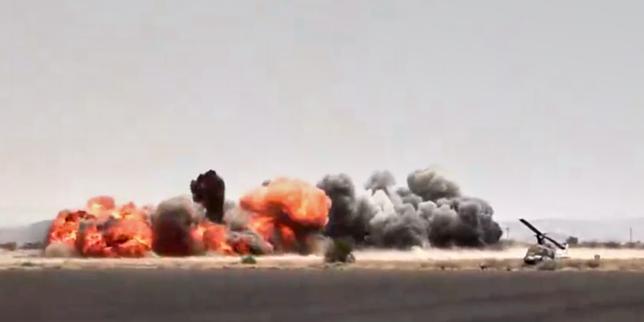
The Yemeni government, backed by regional allies, strikes the runway of Sana'a International Airport to stop an Iranian flight from landing. Hours later, Houthi forces retaliate, sending a volley of missiles screaming toward Abha International Airport in southern Saudi Arabia. The illusion of safety is shattered in a single afternoon.
This is not just an exchange of military hardware. It is the destruction of a fragile normalcy that took years of painstaking diplomacy to build.
Why This Corner of the World Matters to You
It is tempting to look at a map of the Middle East and feel a sense of detachment. The geography feels distant, the historical grudges too complex, the political knots too tight to untangle.
But the reality is that your daily life is tethered to the fate of those narrow waters by a thousand invisible threads.
- The Cost of Everyday Life: The oil that moves through the Strait of Hormuz does not just power cars. It dictates the price of the plastic in your child's toys, the cost of shipping food to your local grocery store, and the stability of your retirement portfolio. When a tanker burns, your wallet feels the heat.
- The Fragility of Peace: War is an infectious disease. It does not stay contained within the borders of the countries that choose to fight. A flare-up in maritime tension quickly drags neighboring states—from Oman to Jordan to Saudi Arabia—into the line of fire.
- The Human Cost: Beyond the balance sheets and energy markets are the thousands of seafarers, port workers, and civilians who have no say in the conflict but pay the ultimate price when the shooting starts.
The Ground Truth
We often talk about these conflicts in terms of grand strategy, as if the nations involved are playing a clean game of chess. They are not. The board is muddy, the pieces are human lives, and the rules are rewritten on the fly.
The United States asserts its right to keep global shipping lanes open, framing its presence as a public service. Iran views the same waters as its sovereign backyard, a defensive moat against foreign encirclement. Yemen sits at the crossroads of these competing ambitions, a nation whose internal struggle is constantly hijacked by the larger regional cold war.
There are no easy answers here. Military strikes might degrade offensive capabilities in the short term, but they do nothing to resolve the underlying grievances or the deep-seated mistrust that fuels the cycle of violence.
As the sun sets over the Red Sea, the tension does not fade. It simply changes shape.
In the villages of Yemen, families look up at the night sky, listening for the distinctive drone of incoming aircraft. On the water, captains scan the dark waves, knowing that a single flash of light on the horizon could mean the difference between making it home and becoming another statistic in a war they did not start.
The world watches the oil prices rise, but the real cost of this conflict is measured in the quiet, terrified heartbeats of the people caught in the crossfire.