The Shift in the Air
Water has always felt like a simple thing. It is the cold glass beside the bed in the middle of the night. It is the heavy spray of a garden hose on a blistering afternoon. We trust it completely because we must. To survive, we have to believe that the basic elements surrounding us are benign, waiting quietly to serve our daily routines.
Then the news breaks. Meanwhile, you can find other events here: Institutional Visibility and Healthcare Delivery Mechanics.
Health officials confirm what many thought impossible in modern sanitation networks. Two lives lost. Not from a dramatic accident or a sudden structural failure, but from something microscopic, ancient, and utterly indifferent to human scale. A parasitic infection outbreak has breached the boundary between wild aquatic environments and human biology.
Suddenly, the glass of water looks different. The ordinary becomes heavy with unseen stakes. To see the full picture, check out the excellent article by Medical News Today.
To understand how a microscopic organism can upend a life, we have to look past the sterile clinical reports and step into the reality of what happens when the invisible becomes invasive.
The Anatomy of an Invasion
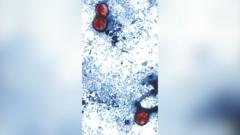
Imagine a standard summer afternoon. A community park, laughter echoing off the pavement, the distinct smell of warm asphalt and cut grass. A local resident—let us call him Mark—takes a dip in a local body of warm freshwater to escape the humidity. He does not know it, but the water harbors a single-celled organism belonging to a genus known scientifically as Naegleria fowleri.
This amoeba does not hunt. It simply drifts.
When water containing the organism enters the nasal passage, a terrifying chain reaction begins. The creature does not stop at the sinuses. It finds the olfactory nerve—the direct highway to the mind. Along this delicate bundle of fibers, the amoeba travels upward, consuming neural tissue as it goes.
Primary amoebic meningoencephalitis. The medical name is clinical and cold. The human reality is a rapid, devastating descent. Within days, a healthy person experiences a severe frontal headache, fever, nausea, and vomiting. Soon, confusion sets in. Stiff necks turn into seizures. The body fights desperately, but against an organism that destroys brain tissue piece by piece, the margins for survival shrink to near zero.
This is why the recent confirmation of two fatalities hits so hard. It is not just about the numbers. It is about the absolute speed and finality of the transition from vitality to tragedy.
The Quiet Geography of Risk
People often ask how something so rare can feel so terrifying. The answer lies in our relationship with probability versus impact.
These infections do not happen in treated municipal swimming pools or properly chlorinated water systems. The amoeba thrives in warm, freshwater environments—shallow lakes, slow-moving rivers, thermal springs, and unmaintained splash pads during the peak heat of summer. As global temperatures climb year after year, the thermal envelope for these organisms expands. Waters that once stayed too cool for them to flourish now reach the exact incubation temperatures they prefer.
We are standing at the intersection of climate shifts and biological persistence.
Consider what happens next in public health response loops. When a case is identified, local agencies scramble. They test water sources, issue advisories, and urge caution. Yet, telling people to avoid swimming in natural bodies of water during a heatwave feels like telling them not to breathe the air. It clashes with human instinct. We want to cool off. We want to live our summers unbound by invisible fears.
This creates a psychological friction. Do we surrender our outdoor traditions to a statistical anomaly, or do we accept a calculated risk that most of us never truly understand until it is too late?
Living with the Unknown
Fear thrives in the dark. The antidote is not blind optimism, but precise, unvarnished awareness.
Medical researchers point out that while the infection is exceptionally aggressive, it is also exceptionally rare. Millions of people swim in warm freshwater lakes every year without incident. The amoeba cannot be caught by swallowing contaminated water; it must be forced up the nose with enough pressure to reach the olfactory nerve. Simple precautions—like using nose clips, keeping your head above water in shallow thermal areas, or avoiding stirring up sediment at the bottom of shallow lakes—drastically alter the equation.
We do not need to panic. But we do need to pay attention.
The two lives lost in this recent outbreak serve as a stark reminder that nature does not negotiate with our assumptions of safety. They leave behind grieving families, bewildered communities, and a quiet mandate for all of us to respect the environments we share.
The glass of water on the nightstand is still clear. The garden hose still sparkles in the sun. But the world feels a fraction larger now, older, and infinitely more complex than it did yesterday.
The heat rises. The water ripples. And somewhere beneath the surface, life continues its ancient, silent work, reminding us just how fragile the boundary is between our daily routines and the wild forces that surround us.


