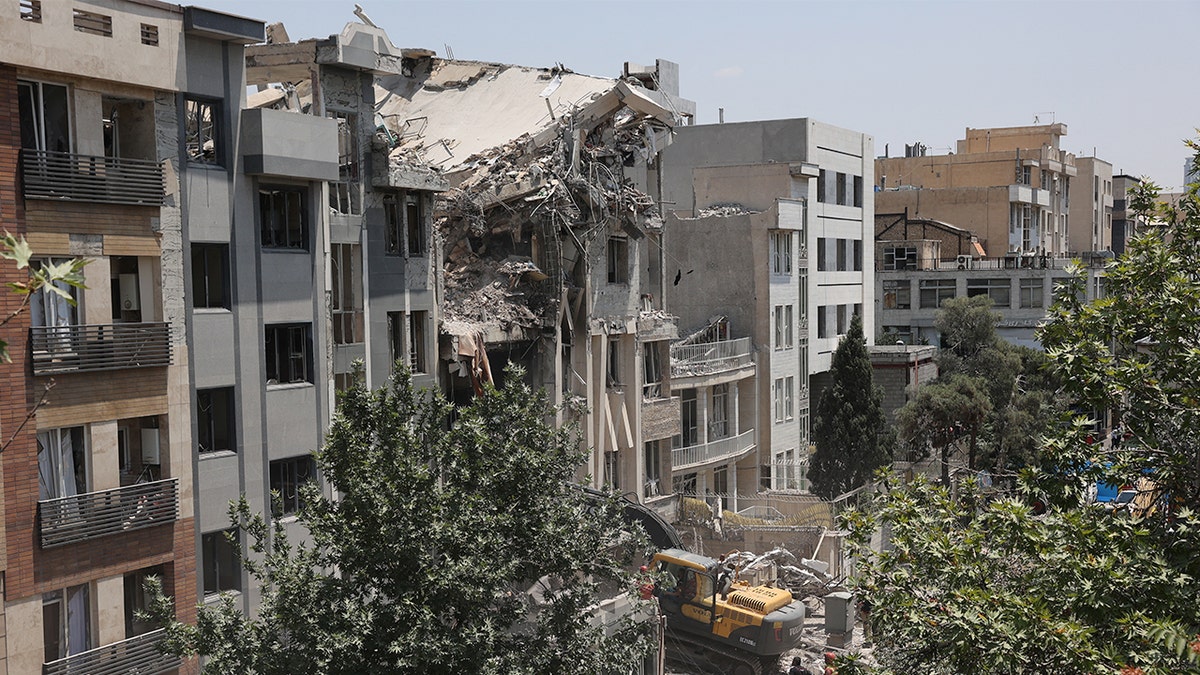
Reports are swirling out of Tehran that the Iranian military shot down a U.S. A-10 Thunderbolt II, famously known as the Warthog. It’s a massive claim. If true, it marks a violent escalation in an already charred regional climate. But before you buy into the headlines, you've got to look at the massive gap between state-run rhetoric and the tactical reality on the ground. Military friction in the Middle East often plays out as much in the media as it does in the skies.
The Iranian army says it has shot down a US A-10 aircraft amid regional tensions, but the Pentagon hasn't confirmed a loss. This isn't the first time we've seen these "ghost shoot-downs." In a region where perception is power, claiming you've dropped a legendary American tank-killer is a PR win, whether the wreckage exists or not.
Behind the Iranian claim of downing an A-10
Iran’s state media outlets are pushing a narrative of "sovereignty defended." They claim the aircraft violated their airspace or was acting aggressively near sensitive borders. It’s a classic move. By naming the A-10 specifically, they’re targeting a symbol of American CAS—Close Air Support. The Warthog isn't just a plane. It's a flying gun. It’s the platform that provides cover for ground troops. Claiming to knock it out is a direct message to U.S. ground assets: "You aren't safe."
But here's where things get murky. Modern aerial warfare leaves a footprint. We’re talking about radar tracks, distress signals, and satellite imagery that catches heat signatures of crashes. So far, the evidence is purely verbal. When the IRGC (Islamic Revolutionary Guard Corps) or the regular Iranian army makes these statements, they often omit the "receipts." No high-resolution photos of tail numbers. No video of the impact. Just a bold statement released during a week of high-octane political posturing.
Why the A-10 Thunderbolt II is such a high stakes target
The A-10 is an aging beast. It’s rugged, slow, and loud. It was built to eat Soviet tanks for breakfast in the Fulda Gap. Because it flies low and slow to support troops, it’s technically more vulnerable to Man-Portable Air-Defense Systems (MANPADS) than a high-flying F-35. Iran knows this. They know that claiming to hit a stealth fighter sounds like a lie, but claiming to hit an A-10 sounds plausible. It’s a calculated choice of target for a propaganda campaign.
The Warthog is also a psychological tool. When those engines whine overhead, everyone knows what’s coming. For Iran to say they’ve neutralized one is an attempt to strip away that psychological edge. It’s about telling their own domestic audience—and their regional proxies—that the "Great Satan’s" armor has a massive hole in it.
The geography of escalation and the risk of miscalculation
Where this supposedly happened matters. Most of these reported intercepts occur near the Strait of Hormuz or along the border with Iraq. These are crowded corridors. You’ve got drones, tankers, and fighter jets from half a dozen nations all screaming through the same narrow strips of sky. A simple navigation error or a trigger-happy SAM (Surface-to-Air Missile) operator can spark a global crisis in seconds.
If Iran actually pulled the trigger on a manned U.S. aircraft, the response wouldn't be a diplomatic letter. It’d be kinetic. The U.S. military operates on a doctrine of proportional response, but "proportional" in the Pentagon’s eyes usually involves deleting the battery that fired the missile. The fact that we haven't seen a massive retaliatory strike suggests that either the claim is a complete fabrication or the "incident" was far less dramatic than the Iranian army is letting on.
The role of electronic warfare and decoys
It’s entirely possible that Iran tracked something and "engaged" it, only to hit a decoy or lose the track due to electronic countermeasures. The U.S. flies sophisticated EW (Electronic Warfare) platforms in these regions. These planes can make a single drone look like a squadron of A-10s on a radar screen. If an Iranian commander saw a blip disappear after firing a missile, he might genuinely believe he scored a kill.
In 2019, Iran successfully shot down a U.S. Global Hawk drone. That was a real event. They had the wreckage. They showed it off. The silence on physical evidence this time is deafening. Without a smoking engine block or a captured pilot, these claims remain part of a "shadow war" designed to test nerves rather than destroy hardware.
What you should watch for in the coming days
Don't just watch the news tickers. Watch the flight trackers. If the U.S. is actually down an airframe, you’ll see a massive uptick in Search and Rescue (SAR) patterns over the Persian Gulf. You’ll see "Combat Sent" and "Rivet Joint" reconnaissance planes circling the area to vacuum up every bit of Iranian radio chatter.
The U.S. Central Command (CENTCOM) usually takes a few hours to verify these things before issuing a denial. If they stay silent, it’s usually because nothing happened. If they issue a flat denial, check the wording carefully. Sometimes "no aircraft were lost" means no manned aircraft were lost, which leaves the door open for a drone shoot-down that Iran is misidentifying as an A-10 for the sake of the headline.
Tactical reality vs political theater
You’ve got to understand the internal pressure in Iran. The government is dealing with a sagging economy and internal dissent. Nothing rallies a fractured base like "defeating" a high-profile American weapon. It’s a distraction. By framing the Iranian army as a giant-killer, they shift the focus away from domestic failures.
On the flip side, the U.S. is trying to pivot its focus elsewhere while keeping the Middle East from exploding. Admitting an A-10 was lost to a "low-tech" adversary would be a massive embarrassment for the Air Force, especially while they’re fighting to keep the A-10 fleet from being decommissioned. Both sides have a reason to spin the story.
The danger of the "boy who cried wolf"
This cycle of unverified claims is dangerous. If Iran keeps claiming shoot-downs that don't happen, the international community stops listening. Then, if a real incident occurs—a genuine mistake or a deliberate provocation—the lack of credibility could lead to a disastrous delay in de-escalation. Misinformation in a theater of war isn't just annoying. It’s lethal.
Verify everything. Look for third-party satellite confirmation. Don't trust a single source that has a vested interest in the outcome. The A-10 is a tough bird, and it’s survived much worse than a headline.
Stay skeptical of any report that lacks visual evidence in the age of the smartphone. If an A-10 went down in a populated or contested area, someone would have a video of the smoke trail on Telegram within ten minutes. The absence of that footage is the loudest part of this story. Follow the open-source intelligence (OSINT) accounts on social media; they usually find the truth faster than the state departments. If you're tracking regional stability, watch the movement of carrier strike groups in the Arabian Sea. That’s the real indicator of how serious the Pentagon is taking these threats. Keep your eyes on the data, not the drama.


