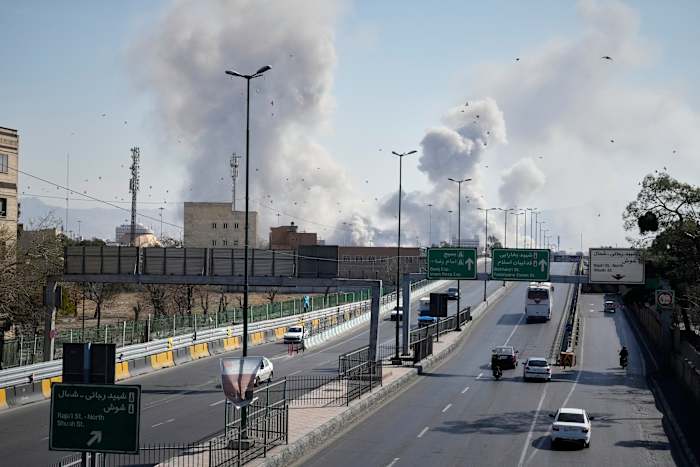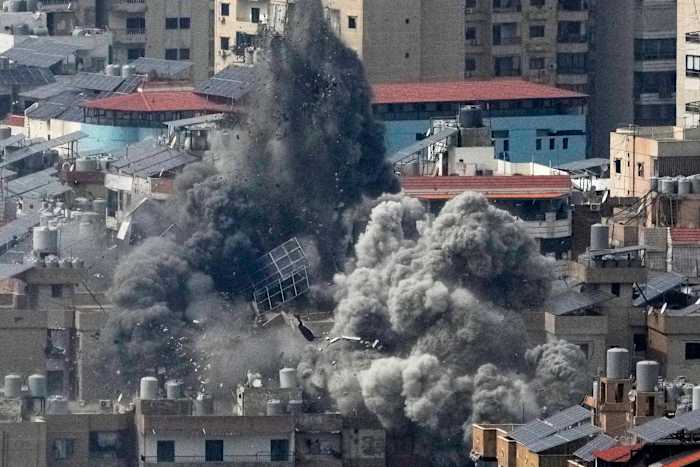
The Middle East hasn't seen a week like this in decades. One week into a war that feels like it’s swallowing the map, Iranian President Masoud Pezeshkian did something you don't see often in Tehran. He apologized.
In a grainy, seemingly rushed video, he looked into the camera and said he was sorry for the strikes hitting his neighbors. But here’s the problem. While he was talking, Iranian drones were still buzzing toward the Gulf and missiles were still shaking the ground in Saudi Arabia and the UAE. It’s a mess. Also making headlines recently: Finland Is Not Keeping Calm And The West Is Misreading The Silence.
If you're wondering how a president can apologize for attacks while his military keeps launching them, you're not alone. It points to a massive, dangerous crack in the Iranian government.
The Apology That Nobody Expected
Pezeshkian is currently part of a three-man council trying to hold things together after the February 28 airstrike that killed Supreme Leader Ayatollah Ali Khamenei. That strike, part of the U.S. and Israeli "Operation Epic Fury," didn't just kill the leader; it blew a hole in the entire chain of command. More insights regarding the matter are detailed by USA Today.
On Saturday, Pezeshkian went on state TV to try and play the diplomat. He told the world that Iran has no intention of invading its neighbors. He even said the interim leadership agreed to stop hitting neighboring countries unless an attack on Iran comes directly from their soil.
"I must apologize on my own behalf and on behalf of Iran," he said. That's a huge statement. But it feels hollow when Dubai International Airport has to suspend flights because of explosions nearby just hours later.
A Military Out of Control
You’ve got to understand how Iran’s power is actually structured to see why this apology is so weird. The Islamic Revolutionary Guard Corps (IRGC) doesn't report to the president. They reported to Khamenei. With him gone, the guys with their fingers on the missile buttons are basically acting on "fire at will" authority.
The IRGC isn't interested in Pezeshkian’s diplomacy. While the president talks about peace, hard-liners like Parliament Speaker Mohammad Bagher Ghalibaf are on social media saying the strikes won't stop as long as U.S. bases exist in the region.
It's a classic case of the left hand not knowing—or caring—what the right hand is doing.
- The President: Wants to de-escalate and stop the country from being completely obliterated.
- The IRGC: Is doubling down, hitting oil fields and airports to prove they’re still a threat.
- The Result: Total chaos for the neighbors caught in the middle.
Trump and the Surrender Demand
While Tehran is arguing with itself, Washington is turning up the heat. President Donald Trump hasn't been subtle. He’s been posting on Truth Social demanding "UNCONDITIONAL SURRENDER."
He’s even framed Pezeshkian’s apology as a sign that Iran is "being beat to HELL." Pezeshkian, for his part, fired back. He called the idea of surrender a "dream they should take to their grave."
So, we’re stuck. One side wants total capitulation. The other side is a fractured mess where the "moderate" face of the government can’t actually control the military.
What This Means for the Region
This isn't just about politics; it’s about real people and global markets.
- Travel is Dead: Dubai International (DXB) is a ghost town right now. When the world's busiest international hub shuts down, global travel feels the ripple everywhere.
- Oil is Spiking: Strikes on Saudi Arabia’s Shaybah oil field and Qatari gas facilities are sending energy prices through the roof.
- The Death Toll: It’s already past 1,200 in Iran. Over 200 in Lebanon. These aren't just numbers—they're families.
Honestly, the apology feels like a desperate attempt to keep the Gulf states from fully joining the U.S.-Israeli side. If Iran keeps hitting Saudi and Emirati infrastructure, any "neutrality" those countries were trying to maintain is going to evaporate fast.
The Reality on the Ground
If you’re living in Manama or Abu Dhabi right now, an apology from a guy in Tehran doesn't mean much when the sirens are going off for the fifth time today. The UAE has already reported civilian deaths from intercepted missile debris.
The IRGC is betting that if they make it painful enough for the neighbors, those countries will pressure the U.S. to stop the bombing. It’s a high-stakes gamble that ignores the fact that their own president is publicly saying the strategy is a mistake.
Hard-Liners Are Pushing Back
Back in Tehran, the "apology" hasn't gone over well with the religious elite. Lawmakers in Qom called the president's remarks "humiliating." They’re pushing the Assembly of Experts to pick a new Supreme Leader immediately to restore "authority."
Basically, Pezeshkian is stuck between a vengeful U.S. military and a domestic group of hawks who think any sign of regret is treason. It’s a bad place to be.
Moving Forward in a War Zone
Don't expect the missiles to stop just because a video was posted on Telegram. Until a new Supreme Leader is named or the IRGC is forced into a corner, the "independent" operations will continue.
If you’re tracking this for business or travel, watch the Strait of Hormuz. That’s the real tipping point. If the IRGC follows through on threats to fully close it, we aren't just looking at a regional war—we’re looking at a global economic heart attack. For now, keep an eye on the friction between Pezeshkian and his own generals. That’s where the real story is hiding.